ICYMI, Friday's links are here, and include the Ides of March, a couple who have eaten at the same restaurant six nights a week for 15 years, Saint Patrick’s Day origins, seat belt history, and Spring cleaning in the 19th Century.
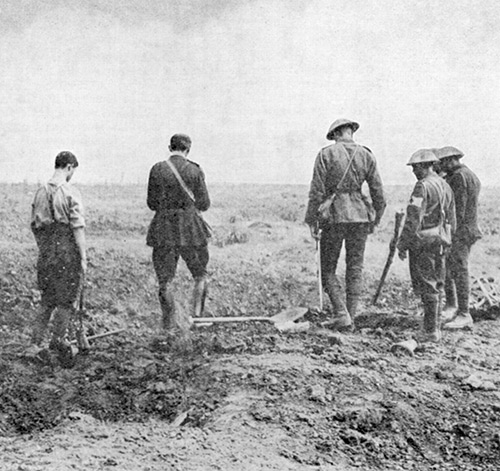
I've always wondered what he would have been capable of if he hadn't died in the line of duty at the age of 25. Here's a harrowing excerpt from one of Owens' anti-war poems, the final stanza of "Dolce Et Decorum Est":
If in some smothering dreams, you too could pace
Behind the wagon we flung him in,
And watch the white eyes writhing in his face,
His hanging face, like a devil's sack of sin;
If you could hear, at every jolt, the blood
Come gurgling from the froth-corrupted lungs,
Obscene as cancer, bitter as the cud
Of vile, incurable sores on innocent tongues -
My friend, you would not tell with such high zest
To children ardent for some desperate glory,
The old Lie: Dulce et decorum est
Pro patria mori.
For conspicuous gallantry and devotion to duty in the attack on the Fonsomme Line on October 1st/2nd, 1918. On the company commander becoming a casualty, he assumed command and showed fine leadership and resisted a heavy counter-attack. He personally manipulated a captured enemy machine gun from an isolated position and inflicted considerable losses on the enemy. Throughout he behaved most gallantly.
~ Citation for the award of the Military Cross to Wilfred Owen, 30 July 1919
Dulce et decorum est pro patria mori is a line from the Roman poet Horace's Odes (III.2.13). The line can be roughly translated into English as "It is sweet and fitting to die for your country." Kenneth Branagh reads the poem here:
March 18 is the anniversary of the birth of English "war poet" Wilfred (Edward Salter) Owen (1893-1918) (wiki) (online archive) (BBC History), whose verse forms much of the text of the celebrated War Requiem (wiki) of Benjamin Britten*. Born in Oswestry and raised in Shrewsbury, Owen became the "lay assistant" to a vicar in nearby Dunsden in 1911 and later tutored English in France.
After the outbreak of World War I, he returned to England to enlist and eventually served on the Somme. Severely "shell-shocked," he was invalided home in May 1917 then returned to active duty in France in August 1918. Owen was awarded the Military Cross posthumously for gallantry in an action two months later, but he was killed, at the age of 25, by German machine-gun fire while leading an attack on the Sambre-Oise canal just a week before the Armistice in November 1918.
A BBC production on Owen's life entitled Wilfred Owen: A Remembrance Tale:
Here's a live television broadcast of Benjamin Britten conducting his own War Requiem in 1964:
Sir... the Irish are not in a conspiracy to cheat the world by false representations of the merits of their countrymen. No, Sir, the Irish are a FAIR PEOPLE; - they never speak well of one another.
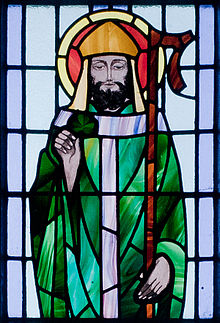
The 17th of March is St. Patrick's Day (wiki), commemorating the patron saint of Ireland, Padraig mac Caiprainn (ca. 390-461?). Much of Patrick's life is shrouded in legend, but he is said to have been born in Roman Britain and was captured and enslaved by Irish raiders until he managed to escape to Gaul. There, he entered the priesthood but returned to Ireland as a missionary and made many converts, reportedly by using the leaves of the shamrock to explain the three-in-one mystery of the Trinity.
In 445, with the approval of Pope Leo the Great (reigned 440-461), he established his arch-episcopal see at Armagh, and by the time of his death, Ireland was largely Christianized. Our principal source about St. Patrick's life is his own Confessions, written in his last years.
My personal favorite Irish joke:
"An Irishman walked out of a bar... " (that's all of it).
The story of St. Patrick:
Some of the stories and traditions associated with Saint Patrick (wiki) are actually probably from another man that preceded Patrick by a 1-3 decades (exactly how much isn’t known), Palladius. It has also been argued by some scholars that the blending of these two’s accomplishments was done purposefully to bolster the prestige of Saint Patrick. Palladius was one of the earliest missionaries to Ireland, ordained by Pope Celestine the first as the “First Bishop to the Irish believing in Christ”. However, accounts seem to indicate the Palladius and his companions’ mission was fairly unsuccessful and Palladius himself was eventually banished by the King of Leinster, at which point he went to Northern Britain to preach to the Scots. Nevertheless, much of what Palladius did accomplish while in Ireland has long since been credited to Saint Patrick instead and it’s difficult to tell in most cases exactly which of them accomplished what.
King George III in 1783 created a “Most Illustrious Order of Saint Patrick”, which is an order of knights of Saint Patrick given to certain people associated with Ireland who the monarchy wishes to honor. It’s been decades since the last person was inducted into this order and the last person in the order died in 1974, Prince Henry the Duke of Gloucester. Nevertheless, the order still technically exists with the Queen functioning as the Sovereign.
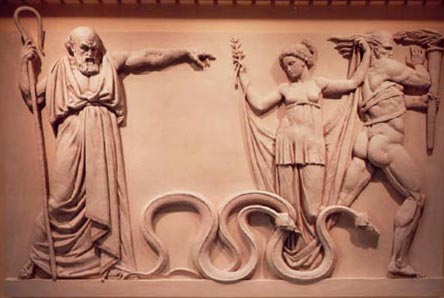
Saint Patrick, Druids, Snakes, and Popular Myths explains the pros and cons of the theory that the “snakes” that Patrick drove out of Ireland were the Druidic priests, who had serpents tattooed on their forearms.
The epic poem Ballad Of The White Horse (link is to a free Kindle version) tells the fascinating story of Alfred the Great's stand against the Danes in 878 - or read about the subject at Wikipedia. Per Amazon:
More than a thousand years ago, the ruler of a beleaguered kingdom saw a vision of the Virgin Mary that moved him to rally his chiefs and make a last stand. Alfred the Great freed his realm from Danish invaders in the year 878 with an against-all-odds triumph at the Battle of Ethandune. In this ballad, G. K. Chesterton equates Alfred's struggles with Christianity's fight against nihilism and heathenism—a battle that continues to this day.
One of the last great epic poems, this tale unfolds in the Vale of the White Horse, where Alfred fought the Danes in a valley beneath an ancient equine figure etched upon the Berkshire hills. Chesterton employs the mysterious image as a symbol of the traditions that preserve humanity. His allegory of the power of faith in the face of an invasive foe was much quoted in the dark days of 1940, when Britain was under attack by Nazis.
ICYMI, Thursday's links are here, and include Pi Day, secrets of the world's greatest art thief, videos on making medieval manuscripts, and Einstein's birthday (including the post-mortem travels of his brain)


.jpg%2F235px-Wilfred_Owen_plate_from_Poems_(1920).jpg&container=blogger&gadget=a&rewriteMime=image%2F*)