 |
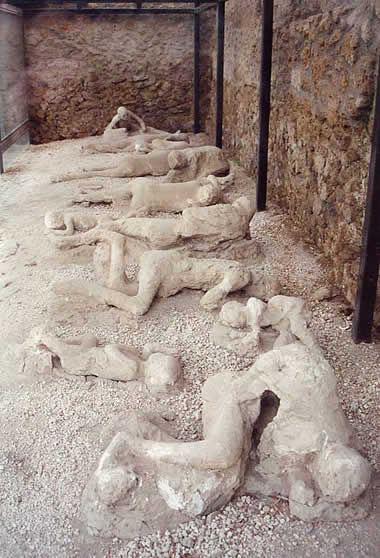
Plaster casts of people who died (buried by ashfall) in
Pompeii during the 79 AD eruption of Mount Vesuvius
|
He [Pliny the Elder] was at Misenum* in his capacity as commander of the fleet on the 24th of August, when between two or three in the afternoon my mother drew his attention to a cloud of unusual size and appearance. He had had a sunbath, then a cold bath, and was reclining after dinner with his books. He called for his shoes and climbed up to where he could get the best view of the phenomenon. The cloud was rising from a mountain - at such a distance we couldn't tell which - but afterwards learned that it was Vesuvius. I can best describe its shape by likening it to a pine tree.
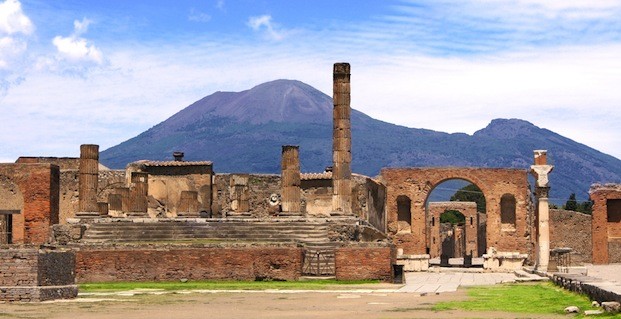 |
| Vesuvius viewed from the ruins of Pompeii |
It rose into the sky on a very long "trunk" from which spread some "branches." I imagine it had been raised by a sudden blast, which then weakened, leaving the cloud unsupported so that its own weight caused it to spread sideways. Some of the cloud was white, in other parts there were dark patches of dirt and ash. The sight of it made the scientist in my uncle determined to see it from closer at hand.
~ Gaius Plinius Caecilius Secundus (Pliny the Younger (wiki)) (letter to Tacitus, ca A.D. 95, describing the eruption of Mount Vesuvius and the death of Pliny the Elder (wiki))
Natura vero nihil hominibus brevitate vitae preaestitit melius.
~ Gaius Plinius Secundus (Pliny the Elder) (Historia naturalis, VII, 50, 168)
(Nature has granted man no better gift than the shortness of life.)
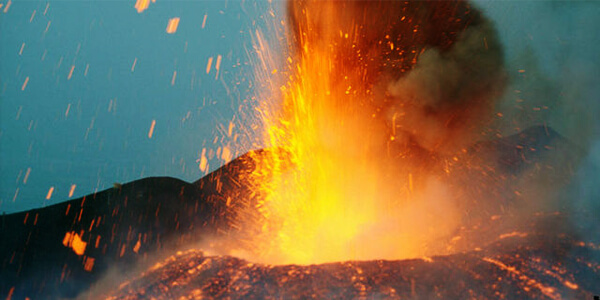
Today is the anniversary of the catastrophic eruption of Mount Vesuvius in A.D. 79 and the death of Pliny the Elder (born A.D. 23) in that event. The eruption, which followed several years of precursor ground movements, buried the cities of Pompeii and Herculaneum and is thought to have killed as many as 15,000 people.
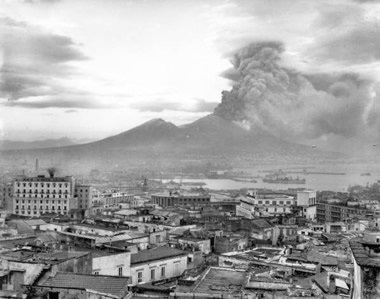 |
A view of Naples at the height of the eruption of Mount
Vesuvius in 1944. Photo by Melvin C. Shaffer
|
Subsequent major eruptions occurred in 1631, 1906, and 1944, the last just after the Allies had taken the city of Naples in World War II. Pliny the Elder is remembered primarily for his "Natural History," a comprehensive compendium of ancient knowledge of the natural world. His scientific curiosity led him to take ship across the Bay of Naples to see the Vesuvius eruption at close quarters, and he was killed there by ash and poisonous fumes from the volcano. The account of his nephew and adopted son, Pliny the Younger (A.D. 61-ca. 114), is the only eyewitness description we have of the eruption of Mount Vesuvius, and it goes on to provide further detail about on-site conditions near the disaster and his own experiences farther afield.
* N.B. Misenum (near modern-day Bacoli) was on the opposite shore of the Bay of Naples from Mount Vesuvius. During ancient times, it was Rome's principal naval base on the west coast of Italy.
Here's a brief re-enactment:
And a newsreel about the eruption in 1944:
Recommended reading:
I first read Pliny the Younger's account of the eruption in the excellent Eyewitness to History, a book that I've also given to several kids and grandkids.
The thoroughly engaging novel Pompeii by Robert Harris is the story of a Roman engineer trying to repair an aqueduct in the lead-up to the eruption of Mount Vesuvius. Full of interesting technical and historical detail.

