Amazon Deals

New at Amazon

Showing posts with label dancing. Show all posts

Thursday, August 22, 2019

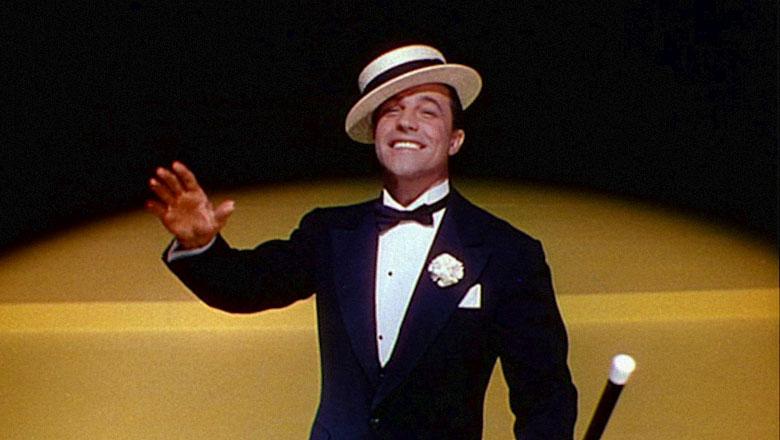
Gene Kelly's birthday: here the famous "Singin' In The Rain" dance and a top 10 compilation

August 23rd is the anniversary of the birth in 1912 of extraordinary American dancer (Eu)Gene Curran Kelly (wiki) (1912-1996) in Pittsburgh, Pennsylvania. Kelly worked his way through college as a dancer and teacher and joined a Broadway chorus line in 1938. Within two years, he had scored the dance lead in Pal Joey, and went on to Hollywood for his film debut in For Me and My Gal (1942). 

Kelly served in the Navy during World War II but soon resumed his career after the conflict in such films as On the Town (1949), An American in Paris (1951), and Singin' in the Rain (1952) - each appearance marked by his spirited, athletic, and seemingly effortless dancing. Subsequently, he became a celebrated choreographer, played straight dramatic roles in such films as Inherit the Wind (1960), and directed the 1969 film version of Hello, Dolly! 

His performance in the title song of Singin' in the Rain is perhaps his most memorable. Watch full screen!


And here's a top 10 Gene Kelly dance scene compilation (via @LandryST)


Related posts:

It's Fred Astaire's birthday - here are clips of some of his best dancing.

Happy Birthday, Rita Hayworth: here's an excellent compilation of her dancing, set to Stayin' Alive.

Monday, April 30, 2018

The mysterious dancing epidemic of 1518

Engraving of Hendrik Hondius portrays three women
 affected by the plague. Work based on original 
drawing by Pieter Brueghel, who supposedly 
witnessed a subsequent outbreak in 1564 in Flanders
In their free time, some scientists and doctors like to try to figure out causes of medically-related historical events. For example, the authors of this study investigate what may have caused the crazy dancing “epidemic” of 1518 (wiki) in Strasbourg:
“Some time in mid-July 1518 a lone woman stepped into one of its narrow streets and began a dancing vigil that was to last four or even 6 days in succession. Within a week another 34 had joined the dance. And by the end of August, one chronicler asserts, 400 people had experienced the madness, dancing wildly, uncontrollably around the city."
This wasn’t a sedate affair; the dancers’ feet often ended up bruised and bloody. The authors were not able assign a biological cause to the epidemic (it seems unlikely that hallucinogenic compounds from the rye fungus ergot were involved), but they suggest that hunger and psychological stress were the likely culprit, with a healthy dose of religious belief thrown in: “In times of acute hardship, with physical and mental distress leaving people more than usually suggestible, a fear of St. Vitus could rapidly take hold. All it then took was for one or a few emotionally frail people, believing themselves to have been cursed by St. Vitus, to slip into a trance. Then they would unconsciously act out the part of those who had incurred his wrath: dancing wildly, uncontrollably for days on end.” 

Excerpts from the full text are below this BBC documentary:


In a spin: the mysterious dancing epidemic of 1518.
“In 1518, one of the strangest epidemics in recorded history struck the city of Strasbourg. Hundreds of people were seized by an irresistible urge to dance, hop and leap into the air. In houses, halls and public spaces, as fear paralyzed the city and the members of the elite despaired, the dancing continued with mindless intensity. Seldom pausing to eat, drink or rest, many of them danced for days or even weeks. And before long, the chronicles agree, dozens were dying from exhaustion. What was it that could have impelled as many as 400 people to dance, in some cases to death?”
Bonus quotes from the full text:
“As the dance turned epidemic, troubled nobles and burghers consulted local physicians. Having excluded astrological and supernatural causes, the members of the medical fraternity declared it to be a ‘natural disease’ caused by ‘hot blood’. This was orthodox physic, consistent with Galen’s view that bloody fluxes could overheat the brain, causing anger, rashness and madness. But the response of the authorities was neither to bleed nor to provide cooling diets. Instead they prescribed ‘more dancing’. To this end they cleared two guildhalls and the outdoor grain market and they even had a wooden stage constructed opposite the horse fair. To these locations the dancers were taken so they could dance freely and uninterrupted. The victims would only recover their minds, said the authorities, if they persisted both day and night with their frantic movements. And to facilitate this supposed cure, the authorities next paid for musicians and professional dancers to keep the afflicted moving.
 Half bird’s-eye view of Strasbourg in 1572.
Every time the sick flagged, fainted, stumbled or slowed, the musicians raised the tempo of their playing and hired dancers held them firm and quickened their pace (Figure 2). ‘They danced day and night with those poor people’, one eye-witness recalled 1, 2 and 4. In grain market and horse fair, the elites had created spectacles every bit as grotesque as a Hieronymous Bosch canvas portraying human folly or the torments of Hell.
Only after those with weak hearts or prone to strokes began to die did the governors rethink their strategy. Deciding that the dance had nothing to do with putrefying blood cooking normally moist and cool brains, they now saw it as a curse sent down by an angry saint. Hence, a period of organised contrition was instituted: gambling, gaming and prostitution were banned and the dissolute driven beyond the city gates. Soon after the dancers were despatched to a mountaintop shrine in the Vosges mountains to pray for divine intercession. There they were led around an altar, wearing red shoes provided for the ceremony, upon which stood a bas-relief carving of St. Vitus, the Virgin and Pope Marcellus. In the following weeks the epidemic abated. Most of the dancers, we are told, regained bodily control…”
Via Discover. 

Tuesday, October 17, 2017

Tuesday links

Happy Birthday, Rita Hayworth: here's an excellent compilation of her dancing, set to Stayin' Alive.

John Quincy Adams' Obsession with Weights and Measures.

How Will Martian Laws Differ From Earth's Laws?

Here's A Giant Drunk Puppet Roaming The Streets Of An Irish City. Related, an 1860s series of photos illustrating the '5 stages of inebriation'.

Nathan Straus and the Milk Stations That Saved the Lives of New York City Kids.

We ate the world's spiciest chip, cried for 45 minutes, then wrote this article about it.

ICYMI, Friday's links are here, and include the anniversary of the 1066 Battle of Hastings, a part-time monarch who's also a full-time auto mechanic, White House leaks from Abe Lincoln's presidency, and a joyful rock version of Beethoven's "Ode to Joy".

Monday, October 16, 2017

Happy Birthday, Rita Hayworth: here's an excellent compilation of her dancing, set to Stayin' Alive

October 17th is the anniversary of the birth of superstar American movie actress and dancer Rita Hayworth (1918-1987) in Brooklyn. Born Margarita Carmen Cansino to two professional dancers, Hayworth started dance lessons at an early age and in 1927 moved with her family to Hollywood, where her father had hoped to land dancing parts in the movies. Finding minimal success, he formed a dance act with his daughter, and since she was too young to appear in night clubs in California, they performed across the border in Tijuana. 

This 1941 photograph of Rita Hayworth
became one of the most popular
pin-ups among U.S. servicemen during
 World War II. Life magazine, however,
 decided it was too risque to put
on their cover
Hayworth's career really took off in the early 1940s, and by 1944, when she appeared with Gene Kelly in Cover Girl, she was one of the hottest stars in Hollywood, and in Charles Vidor's erotic film noir, Gilda (1946), she established herself as a leading femme fatale. 

She was married and divorced five times, and counted among her husbands Orson Welles, Prince Aly Khan* (by whom she had two daughters), and Dick Haymes. Late in life, she suffered from alcoholism and died of Alzheimer's disease in New York City in 1987.

She was quoted in 1977 as saying, 

"Men fell in love with Gilda, but they wake up with me."

Dancing in Tijuana when I was 13 - that was my "summer camp." How else could I keep up with Fred Astaire when I was 19?

~ Rita Hayworth (New York Times, 25 October 1970)

This has been around for a while, and will make you feel like dancing all day.  Watch full screen:


Clips:
"Down to Earth": 0:00 / 1:03 / 2:46 / 4:20
"You'll Never Get Rich": 0:14 / 0:24 / 0:28 / 0:46 / 2:35 / 3:16 / 3:49
"Tonight and Every Night":  0:20 / 1:11 / 1:22 / 1:36 / 1:54 / 1:55
"Cover Girl": 0:34 / 0:38 / 1:13 / 1:48 / 2:13 / 3:07 / 3:29 / 3:31 / 3:54 / 4:06 / 4:31
"You Were Never Lovelier": 0:50 / 2:20 / 2:42 / 3:00 / 4:10 / 4:38
"Gilda":  1:17 / 2:04
"Miss Sadie Thompson": 1:38 / 1:46 / 4:28
"My Gal Sal": 1:42 / 3:23 / 3:35 
"Pal Joey": 2:00 / 3:20 / 3:41
"Affair in Trinidad": 2:05 / 2:52 / 3:04 
* N.B. A son of Aga Khan III, the head of the Ismaili Muslims, Aly Kahn (1911-1960) was a fabulously wealthy international socialite and playboy, who later served as Pakistan's representative to the United Nations. He was married to Rita Hayworth between 1949 and 1953).

Related:


It's Fred Astaire's birthday - here are clips of some of his best dancing

video h/t ‏@GarySinise

Monday, October 17, 2016

Monday links

Happy Birthday, Rita Hayworth: this excellent compilation of her dancing, set to Stayin' Alive, will brighten your day.


Dave Barry's Halloween column from 1996: Night Of The Living Chocolate. And, from 1873: How to Make a Turnip Jack-o-Lantern, plus The Oracle of the Nuts.


ICYMI, Friday's links are here, and include a coffee-beer hybrid, the 950th anniversary of the Battle of Hastings, making raisins before seedless grapes, and where the Nazis hung out in occupied Paris.

Friday, August 5, 2016

Friday links

If you grew up in the 1980s, or have kids who did, you'll love this: Supercut of dancing in ‘80s movies (set to Lionel Richie’s “Dancing on the Ceiling”)


ICYMI, Wednesday's links are here, and include the experimental nuclear reactor secretly built under the University of Chicago, photographs of elegant in-flight airplane dining from the 1950s, the use of trial by touch to determine guilt in colonial America. and a set on anti-communist propaganda posters (including my personal favorite, "Is Your Washroom Breeding Bolsheviks?").

Thursday, August 4, 2016

Supercut of dancing in ‘80s movies

If you grew up during the 1980s (or if, as in my case, have kids who did), you'll recognized most if not all of these - I don't think there was anything unfamiliar to me, and I was just around when these movies were playing on the VCR in the background. 

As is frequently the case, these supercuts make me want to watch a whole bunch of these films again. This compilation didn't come with a list of the movies included: I started to try to produce one but there are 80 clips (although lots of repeats, especially Footloose, Flashdance and Dirty Dancing), and I soon gave up. Some YouTube commenters also had partial lists, so I've cobbled together a list, below, that is both out of order and incomplete. Feel free to add more, if you recognize clips I've left out. 

Video editor Robert Jones:
August 5th marks the 30th anniversary of Lionel Richie’s album “Dancing On the Ceiling”* and to celebrate here's a nostalgia overload of 80 movie dance scenes from the 80's getting down. They bad, uh-huh!
Watch full screen!


Footloose
Dirty Dancing
Beetle Juice
Top Secret
Good Morning Vietnam
Risky Business
Grease 
Teen Wolf
Batman
Spaceballs
Stripes
The Blues Brothers
Big
Ferris Bueller's Day Off
Back to the Future
Howard the Duck
Bill & Ted's Excellent Adventure
Desperately Seeking Susan
One of the Rocky movies
The Breakfast Club
Breakin' 2: Electric Boogaloo
Pretty In Pink 
Breakin'
Caddyshack
Revenge Of The Nerds
Three Amigos
Annie
Roadhouse
Short Circuit
Romancing the Stone 
Coming to America
Smooth Criminal video clip by MJ
Edward Scissorhands
Perfect
Gremlins II
Labyrinth
Twins
The Goonies
Peggy Sue Got Married
National Lampoon Vacation

Add more if you recognize things I've missed!

*Here's the official music video of Lionel Richie performing Dancing On The Ceiling:


Related: This compilation video of Christopher Walken dancing in over 50 movies will make your day (movie list at this post):


Previously:

Friday, October 16, 2015

Friday links

Early- to mid-20th century visions of sex in the future.

Lessons from the Sioux in How to Turn a Boy Into a Man.

The history of Oktoberfest is much bigger than beer.

For Rita Hayworth's birthday: this compilation of her dancing scenes set to Stayin' Alive will make your day.

Images Of A Young André, Before He Became The Giant.

How Soviets used IBM Selectric keyloggers to spy on US diplomats.

ICYMI, Monday's links are here, and include footage of Teddy Roosevelt's first airplane flight in 1910,  Columbus Day links, every Girl Scout catalog from 1917 to 2015, and a supercut of technology breaking down, then being beaten until it works again.

Sunday, August 16, 2015

Dude! Glee, the sumo version: check out the dancing sumo wrestlers

Here's a gif, but see the whole video below.


via Kotaku:
Taiwan’s Lin Yu-chun, famous-ish on Japanese TV, apparently, for his rendition of “I Will Always Love You”, is starring in a new Japanese drama for streaming service dTV. Called Dosu-koi Musical, the show is like Glee meets sumo wrestling. According to Pouch, Lin plays a Taiwanese exchange student who is bullied because of his weight and decides to join the university sumo team.

Wednesday, April 22, 2015

Start your day with a palate-cleanser: 102-year-old dancer watches, for the first time, film of herself performing

"How did it feel seeing yourself?" one woman asks Barker. "Making me wish I could get out of this bed and do it all over again," Barker responds.
Great story via Mashable - watch the video below:


When 102-year-old Alice Barker strutted in the chorus line during the '30s and '40s, personal video was something only found in people's dreams. 

Fortunately, with the help of David Shuff and Mark Cantor of Jazz on Film, Barker was finally able to see her younger self dance for the first time.

After a watching a few videos, Barker got right back into the swing of things.

"How did it feel seeing yourself?" one woman asks Barker. "Making me wish I could get out of this bed and do it all over again," Barker responds.


Read the whole thing at Mashable - they also have address information for Ms. Barker, should you wish to write to her.