Amazon Deals

New at Amazon

Saturday, December 30, 2017

A roundup of hangover science and cures

Some links to avoid becoming philogrobolized: 
Your Complete Guide to the Science of Hangovers
Infographic on the Anatomy of a Hangover
Hangover Cures From Famous Heavy Drinkers
Scientists Find a Way to Cut Wine Hangovers. 
5 Really Strange Ways to Cure a Hangover
Dark Liquor Makes For Worse Hangovers
How to Cure a Hangover. 
According to a study in the Journal of Food Science, the amino acids and minerals found in asparagus extract may alleviate alcohol hangover and protect liver cells against toxins.
SciShow on the science of hangovers:

Friday, December 29, 2017

A roundup of hangover science and cures

Some links to avoid becoming philogrobolized: 

Your Complete Guide to the Science of Hangovers
Infographic on the Anatomy of a Hangover
Hangover Cures From Famous Heavy Drinkers
Scientists Find a Way to Cut Wine Hangovers. 
5 Really Strange Ways to Cure a Hangover
Dark Liquor Makes For Worse Hangovers
How to Cure a Hangover. 
According to a study in the Journal of Food Science, the amino acids and minerals found in asparagus extract may alleviate alcohol hangover and protect liver cells against toxins.
SciShow on the science of hangovers:


Related: Ben Franklin's 200+ synonyms for “drunk”, alphabetically arranged.

Friday, December 22, 2017

Before Seinfeld: The Origins of Festivus, plus my favorite Festivus song

"Happy Festivus" is the traditional greeting of Festivus, a holiday featured in "The Strike" episode in Season 9 of Seinfeld. The episode first aired on December 18, 1997. Since then many people have been inspired by this zany, offbeat Seinfeld holiday and they now celebrate Festivus as any other holiday.

According to the Seinfeld model, Festivus is celebrated each year on December 23rd. However many people celebrate it other times in December and even at other times throughout the year.

The slogan of Festivus is "A Festivus for the rest of us!" The usual holiday tradition of a tree is manifested in an unadorned aluminum pole, which is in direct contrast to normal holiday materialism. Those attending Festivus may also participate in the "Airing of Grievances" which is an opportunity to tell others how they have disappointed you in the past year, followed by a Festivus dinner, and then completed by the "Feats of Strength" where the head of the household must be pinned. All of these traditions are based upon the events in the Seinfeld episode, however, strangely enough, Festivus has roots that pre-date Seinfeld.

Origin:

The Festivus idea originally came to Seinfeld writer Dan O'Keefe from a tradition started by his father Daniel O'Keefe. The original Festivus had all the markings of a crazy fun holiday. There were taped recordings and even a "clock in a bag".

The tradition of Festivus dated back to a time when Dan O'Keefe (Senior) had discovered the Festivus holiday in a book, published in 1966, that outlined obscure holidays. The book described many of the features later included in the Seinfeld episode. He was also inspired inspired by the Samuel Beckett play Krapp's Last Tape, whose protagonist tapes himself speaking at different times in his life.

The original Airing of Grievances was spoken into a tape recorder, and the O'Keefe family even retains some of the tapes.

The following is taken from a 2004 article, based on an interview with Dan O'Keefe and his father:
"It was entirely more peculiar than on the show," the younger Mr. O'Keefe said from the set of the sitcom "Listen Up," where he is now a writer. There was never a pole, but there were airings of grievances into a tape recorder and wrestling matches between Daniel and his two brothers, among other rites.
"There was a clock in a bag," said Mr. O'Keefe, 36, adding that he does not know what it symbolized.
"Most of the Festivi had a theme," he said. "One was, `Is there a light at the end of the tunnel?' Another was, `Too easily made glad?'"
His father, a former editor at Reader's Digest, said the first Festivus took place in February 1966, before any of his children were born, as a celebration of the anniversary of his first date with his wife, Deborah. The word "Festivus" just popped into his head, he said from his home in Chappaqua, N.Y.
The holiday evolved during the 1970's, when the elder Mr. O'Keefe began doing research for his book "Stolen Lightning" (Vintage 1983), a work of sociology that explores the ways people use cults, astrology and the paranormal as a defense against social pressures.
Here's the clip from Seinfeld:


Festivus songs, including my favorite:

It's a Pole (sung to the tune of Let it Snow)

Oh the Festivus party is starting,
And the guests are just arriving.
What's that thing over there?
It's a pole! It's a pole! It's a pole!

It doesn't require decorating,
Because tinsel is way too distracting.
It's unadorned and made of aluminum,
It's a pole! It's a pole! It's a pole!

Finally we air our grievances,
There's problems with all you people.
But if you really do it right,
Somebody will be sobbing tonight.

There's still more fun to unfold,
Cause it's time to pin the head of the household.
The feats of strength will happen now!
Move the pole! Move the pole! Move the pole!

Thursday, December 21, 2017

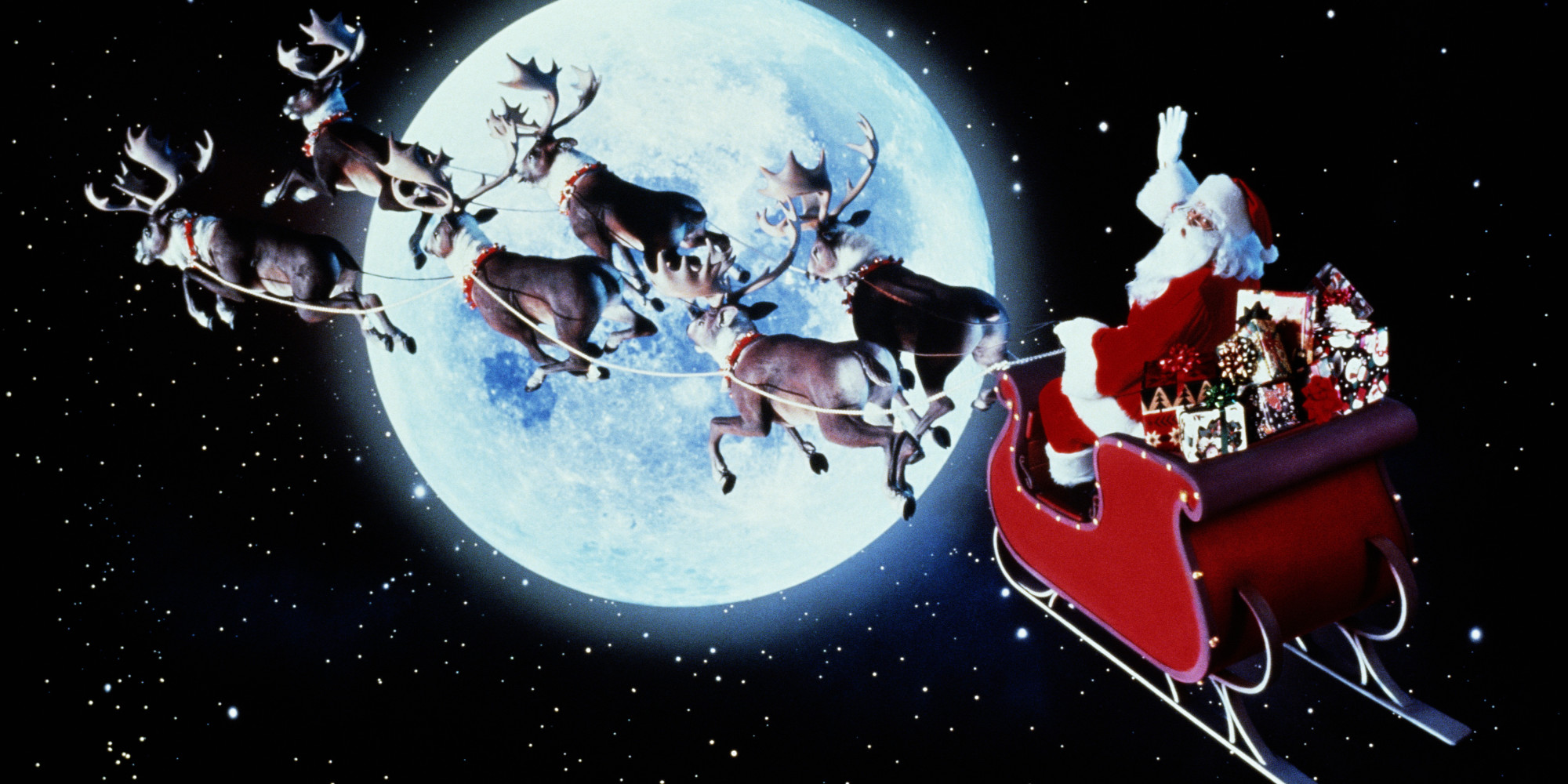
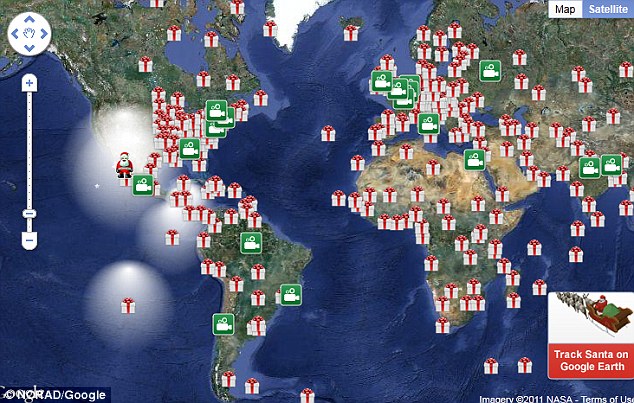
The NORAD Santa tracker, plus the story of why NORAD started tracking Santa


On December 24, 1955, a local newspaper in Colorado ran a Sears Roebuck ad inviting kids to contact Santa. 

“Hey Kiddies!” the ad read. “Call me on my private phone and I will talk to you personally any time day or night.” The ad listed Santa’s direct line, but the number in the copy was off by a digit. Instead of connecting to the special line Sears set up with a Santa impersonator, kids wound up calling a secret air defense emergency number.

On December 24, 1955, the red telephone at the Continental Air Defense Command (CONAD) Operations Center in Colorado Springs, Colorado began ringing.
The red phone meant it was either the Pentagon or CONAD commander in chief General Earle Partridge on the other end, and their reason for calling would probably not be pleasant.
U.S. Air Force Col. Harry Shoup, director of operations at the center, rushed over to the phone and grabbed it.
“Yes, Sir, this is Colonel Shoup,” he barked.
Nothing but silence in response.
“Sir? This is Colonel Shoup,” he said.
Silence again.
“Sir? Can you read me alright?”
Finally, a soft voice on the other end.
“Are you really Santa Claus?” a little girl asked.
After a few more Santa-related calls, Shoup pulled a few airmen aside and gave them a special assignment. They would answer the phone and give callers—barring the Pentagon, we assume—Santa’s current location as they “tracked” him on their radar.

From that night on, tracking Santa became a yearly tradition, carried on by the North American Aerospace Defense Command (NORAD) when it replaced CONAD in 1958. A new phone number, separate from the red phone, was established and publicized, and people were invited to call in and find out how close Santa was to their home. Every Christmas Eve, military service members staff phones and email accounts and the Santa Tracker Twitter account to keep kids up to date on Santa’s whereabouts.

Thursday links

December 21 is the winter solstice, the shortest day of the year

Christmas Gift Ideas from the 19th Century.

A collection of downloadable templates for Star Wars snowflakes.

Classic Christmas drunken fruitcake recipe: Check the whiskey. Pour 1 level cup and drink. Repeat.

The Long Lost World of the Luxury Flying Boat.

Loud orgies of Mexican fish could deafen dolphins, say scientists.

ICYMI, Monday's links are here, and include the Scientific American guide to cheating in the Olympics, the anniversary of the Wright brothers' first flight, how to have a British Christmas, and it's not just humans - 'High-Ranking Male Primates Keep Wafting Their Sex Stink at Females, Who Hate It".