Amazon Deals

New at Amazon

Showing posts with label economics. Show all posts

Friday, July 27, 2018

Friday links

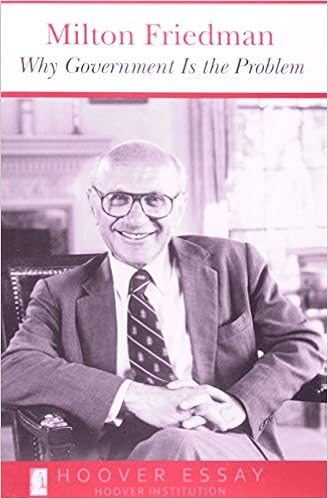
July 27 is free-market economist Milton Friedman's birthday: here are some favorite quotes and short videos. And Beatrix Potter's birthday is this weekend: in addition to Peter Rabbit et al, she produced some gorgeous botanical drawings.

How to build a mountain range.

Stealing Passwords by Reading Thermal Residue on Keyboards.

Advice from 1380: How to Tell if Someone Is or Is Not Dead (the onion test), plus bonus Monty Python.


How the tiniest plot of land in Manhattan came to be.

ICYMI, Thursday's links are here, and include cutting hair with fire, the instant pot of the 1600s known as the Digester of Bones, the 2018 UK snail racing championship, and for Aldous Huxley's birthday, an audio of him narrating Brave New World.

Thursday, July 26, 2018

MIlton Friedman's birthday

There are so many excellent quotations from Milton Friedman that it's impossible to choose - I've included a few below, but feel free to add more in the comments.

Government has three primary functions. It should provide for military defense of the nation. It should enforce contracts between individuals. It should protect citizens from crimes against themselves or their property. When government-- in pursuit of good intentions tries to rearrange the economy, legislate morality, or help special interests, the cost come in inefficiency, lack of motivation, and loss of freedom. Government should be a referee, not an active player.

Only government can take perfectly good paper, cover it with perfectly good ink, and make the combination worthless. 

The great virtue of a free market system is that it does not care what color people are; it does not care what their religion is; it only cares whether they can produce something you want to buy. 

Inflation is the one form of taxation that can be imposed without legislation. 

Most of the energy of political work is devoted to correcting the effects of mismanagement of government

I would cut the real taxes borne by the American people by cutting all government spending ten percent across the board. 

I am favor of cutting taxes under any circumstances and for any excuse, for any reason, whenever it's possible.

If you put the federal government in charge of the Sahara Desert, in five years there’d be a shortage of sand.

One of the great mistakes is to judge policies and programs by their intentions rather than their results.

~ Milton Friedman (wiki) (variously attributed) 

The long-term solution to [to high unemployment] is to increase the incentive for ordinary people to save, invest, work, and employ others. We make it costly for employers to employ people, and we subsidize people not to go to work. We have a system that taxes work and subsidizes nonwork.*

~ Friedman (in U.S. News and World Report, 7 March 1977) 

July 27 is the anniversary of the birth of Nobel prize-winning American economist Milton Friedman (wiki) (1912-2006) in Brooklyn, New York. Friedman studied at Rutgers, Chicago, and Columbia and earned his Ph.D. in 1946. He was widely regarded as the leader of the "Chicago School" of monetary economics, which stressed the quantity of money as the cause of business cycles and inflation and thus the importance of government monetary policy. 

With his wife, Rose D. Friedman, he wrote many books and a series of columns for Newsweek between 1966 and 1983, also serving as an advisor to President Reagan from 1981 to 1989. Friedman received his Nobel prize in 1977 for his contributions to quantitative economic science. He is also credited with the well-known observation, "There's no such thing as a free lunch," but in fact it probably appeared in common parlance after the "free lunch" became customary fare in saloons around 1840 - when you had to buy a beer to obtain it. The Chicago-school economists began using this phrase regularly in articles and speeches in the 1970s. 

Be that as it may, Friedman did note in his book, Capitalism and Freedom,

"History suggests that capitalism is a necessary condition for political freedom. Clearly it is not a sufficient condition."

* N.B. But I would add that "nonwork" includes the fiscal chicanery and crony capitalism that merely moves money around without producing any tangible product - to the enormous financial advantage of the movers and disadvantage of taxpayers.

There are a lot of videos of Friedman discussing various topics - below are a few short ones that give you a feel for him and his policies:

On greed:


Why drugs should be legalized:


On the minimum wage:


Socialism is force:


Responsibility to the poor:


Friday, May 25, 2018

Friday links


If there were a kind of a fireman's pole from the moon down to the earth, how long would it take to slide all the way from the moon to the earth?

Why you wouldn't want to drink 19th century milk unless you knew it came straight from the cow.

ICYMI, Tuesday's links are here, and include Arthur Conan Doyle's (creator of Sherlock Holmes) birthday, what to do if you find yourself choking when no one's around, a 1927 documentary on how to dial a telephone, and a gallery of photos from the Halifax explosion - the naval accident that erased an entire city in Canada.

Tuesday, March 6, 2018

Tuesday links

It's Michelangelo's birthday - here's a brief bio, some art, and his illustrated grocery list.

Guy Makes Functional 2 X 2 Rubik's Cube Out Of Cheddar (Plus Plastic Core).

New Comprehensive Map of How Butterflies Are Related to Each Other.

If you're of a certain age, you'll appreciate this roundup of funny colonoscopy videos.


ICYMI, Monday's links are here, and include the anniversary of Winston Churchill's Iron Curtain speech. Victorian beauty tips, waterbed history, a dish-washing monkey, and Stalin’s meteorologist who was imprisoned for “false weather forecasts".

Monday, December 4, 2017

'Twas the Overnight Before Christmas: The Merry Tale of How Air Cargo Deregulation Led To Amazon

Related, and this is practically a public service announcement - if you sign up for a 30 day free trial of Amazon Prime now, you can get unlimited free shipping through the holidays.

Try Amazon Prime 30-Day Free Trial

Professor of Public Policy at George Mason University Kenneth Button shares the story of how air cargo deregulation in the 1970s paved the way for low-cost, reliable overnight shipping, which in turn allowed for groundbreaking new e-commerce businesses like Amazon and eBay. These innovations enable everyone to get their presents on time for the holidays – almost as fast as delivery by Santa himself! 


‘Twas two nights before Christmas, and all through their houses
Every creature was busy, double-clicking their mouses.
Christmas was coming, but there were still presents to buy--
Thank heavens overnight shipping allows boxes to fly.
“But how can this be?” the people asked in their haze
“With so many miles to cover, why aren’t there delays?”

What allowed this to happen is a very old rule,
That deregulated air cargo - isn't that cool!
You see, express planes were smaller, unlike today.
Bigger is better, but the law said “No way!”

And if Fisherman Fred shipped lively lobsters from Maine
He hoped for some room in the belly of a passenger plane
But if Aunt Edna had checked in fifteen pieces of luggage
Fred’s lobsters would arrive days later, looking quite sluggish.

Freed from restrictions, more packages could flow
And arrive soon as promised, even in snow.
This allowed private carriers to grow and expand,
Unleashing innovations no one could’ve planned
With better shipping options, online shopping exploded,
And business inventories grew leaner: before they were bloated!

Thanks to rolling back rules that were surely passé,
Delivery is almost as fast as on Santa’s great sleigh.

Wednesday, May 10, 2017

Wednesday links

It's Fred Astaire's birthday - here are clips of some of his best dancing.


Ten-Year-Old Girl Survives Alligator Attack by Punching It, Shoving Fingers into Its Nostrils.


ICYMI, Friday's links are here, and include Nazi board games, colorized x-ray photos of plants and animals, Cinco de Mayo, and the story of the song Take Me Out to the Ball Game.

Sunday, April 30, 2017

Thomas Sowell - The Greed Fallacy

Common sense from economist Thomas Sowell (wiki):


Here's Milton Friedman (wiki) on the same subject:


Related posts and links:

Milton Friedman's birthday - bio, quotes and brief videos on various economic subjects.

Thomas Sowell's website has links to much (maybe all?) of his writing.

Wednesday, October 12, 2016

Wednesday links


Circa 1890, it was pretty easy to end up in an insane asylum.

Will A Chicken That's Fed Lemons Taste Like Lemons?


ICYMI, Monday's links are here, and include senior moment science, UFO detectors, why people with bigger brains yawn longer, and, from 1930, a set of Information Tests To Try On Your Children.

Monday, June 20, 2016

Monday links

The summer solstice occurs this evening at 6:34 PM EDT: some science, history, poetry and music.

The Numbers Add Up: Peeing in the Shower Makes Sense.

The Ad Campaign that Convinced Americans to Pay for Water.

How to Have a Healthy Summer: Advice from 1656.

What Happens If GPS Fails?

The Weird and Very Long History of State Liquor Laws.

ICYMI, Friday's links are here, and include parenting advice from Homer Simpson, a photo gallery of awkwardly sitting dogs, the anniversary of the 1815 Battle of Waterloo, and a 1942 guide to spaghetti-eating etiquette.

Friday, March 11, 2016

Friday links


Watch Out For Exploding Killer Lakes.

All You Need to Dupe a Fingerprint Sensor Is Paper, Conductive Ink, and an Inkjet Printer.

Physiognomy of eyebrows: lots of eyebrow interpretation advice from the 16th century.

The (Court-Ordered) Unmasking of the Lone Ranger


ICYMI, Thursday's links are here and include a gallery of construction photos from the 1881-1895 building of London's Tower Bridge, the global Scotch shortage, the science of why dogs smell each other's butts, the history of perfume, and, for Chuck Norris' birthday, a supercut of his best kicks, clips of his most badass movies, and a set of Norrisms. 

Wednesday, February 17, 2016

Wednesday links

Geronimo died on this day in 1909 - history, quotes, and why we yell his name when we jump out of planes.


Great Fire: the grid system for London that never happened.

The c. 1275 miraculous transplantation of a leg.

The Economics of Pawn Shops

U.S. Army Develops Pizza That Can Last For Three Years.

ICYMI, Tuesday's links are here, and include a set of extremely awkward glamour photos, what to do if both your pilots die on a 737, an almost vertical bridge in Japan, anatomical diagrams made from candy, and advice from 1849: start a fight with your wife using these 3 simple tricks.

Tuesday, August 26, 2014

Tuesday links

Video: If Guy Best Friends Acted Like Girl Best Friends.

The True Story Of How France Became McDonald's Most Profitable Country.

The Woodpecker's Guide to Avoiding Head Injuries.

True Facts About Marsupials (PG-13 language) plus bonus Sad Dog Diary.

200-Year-Old Alcohol Found in Shipwreck Is Still Drinkable.

99-Year-Old Lady Sews A Dress A Day For Children In Need.

Getting to Know Whale Vaginas in 7 Steps. Key quote: “You can easily fit your whole arm up in there.”

ICYMI, Friday's links are here, including perfectly timed dog pictures, Orwell reviewing Mein Kampf, the science behind Captain America & the Hulk's superpowers, and stuff you (probably) didn't know about Back To The Future.

Wednesday, August 20, 2014

Map of state purchasing power: you can buy 40% more in Mississippi than in DC with same $$

Tax Institute:
Regional price differences are strikingly large, and have serious policy implications. The same amount of dollars are worth almost 40 percent more in Mississippi than in DC, and the differences become even larger if metro area prices are considered instead of statewide averages.
This tax map shows the real value of $100 in each state. Because average prices for similar goods are much higher in California or New York than in Mississippi or South Dakota, the same amount of dollars will buy you comparatively less in the high-price states, or comparatively more in low-price states. Using data from the Bureau of Economic Analysis, here's the adjusted value of $100, reflecting how prices are different in each state.


For example, Tennessee is a low-price state, where $100 will buy what would cost $110.25 in another state that is closer to the national average. You can think of this as meaning that Tennesseans are about ten percent richer than their nominal incomes suggest.

Adjusting for prices reveals average real incomes in Kansas to be higher than in New York, despite New York having much higher incomes as measured in dollars.


Thursday, May 8, 2014

Thursday links

Since they have to come to the surface regularly for oxygen, how do dolphins sleep without drowning?

It's V.E. Day: 69 years ago today, World War 2 ended in Europe.

You Had Me At Hello: The Science Behind First Impressions

Actual Reviews from Amazon Reenacted by Rhett & Link.

China Commands an Army of Trained Monkeys.

The Invention of the Chilean Sea Bass.

ICYMI, Monday's links are here, and include the implications for Godzilla's ever-increasing size on sexual selection and urine production, a VW Beetle made from wood, and the health benefits of transfusions of young blood.

Thursday, February 13, 2014

Kevin Williamson has an outstanding article on the negative effects of pervasive corruption/incompetence in government: A Deeper Naginism

Go to NRO and read the whole thing.  I had trouble excerpting this article because there's so much of substance, but a few excerpts are below (emphasis mine):

The damages of Ray Nagin’s crimes may not amount to very much, but the damages inflicted by Naginism are staggering.

Combined federal, state, and local spending in the United States is about the same as it is in Canada, so it is not as if we were starving our public sector to death. The problem is that our institutions are not full of Canadian budgeters, Finnish school administrators, and Swiss train conductors. They are full of Ray Nagins. 

Many of the most important factors driving economic growth are beyond direct political control.

But there is a critical variable that is at least partly within the direct control of government: the quality of government. The quality of government — its honesty, competence, reliability, and predictability — has an effect on most of the important economic variables. And not just government itself, but other institutions with the power to shape public life, such as unions and large firms. Quality is something outside of and different from policy specifics, which is why similar policies often produce wildly different outcomes in different polities: Single-payer health care in Bahrain turns out to be very different from single-payer health care in Canada. A high level of government-enforced union involvement has been catastrophic for the U.S. automotive industry but not for the German automotive industry, which is a lot less of a mystery than it seems when you account for the fact that the UAW is not IG Metall, GM is not Audi, and the U.S. government is not the German government.

There is no way to put a happy face on this fact: Critical American institutions are of shockingly low quality. Corruption is a part of that: At No. 19 on the Transparency International rankings, the United States is tied with Uruguay. Its transparency score of 73 is far behind where you want to be, among such category leaders as Denmark, New Zealand, Sweden, and Finland (91, 91, 89, and 89, respectively). We lag well behind our Canadian neighbors and such important international competitors as Germany. Our overall standing is not terrible, but it does not place us among global leaders, either. Moderation in the pursuit of honesty is no virtue.