Amazon Deals

New at Amazon

Showing posts with label patents. Show all posts

Monday, June 4, 2018

June 4 is the anniversary of the 1872 issue of U.S. patent for Vaseline

Anoint, v.: To grease a king or other great functionary, already sufficiently slippery.

Ambrose Bierce, The Devil's Dictionary

Be it known that I, ROBERT A. CHESEBROUGH, of the city, county, and State of New York, have invented a new and useful Product from Petroleum, which I have named "Vaseline;" and I do hereby declare that the following is a full, clear, and exact description thereof, which will enable those skilled in the art to make and use the same.

~ Robert A. Chesebrough (wiki) (1837-1933) (U.S. patent # 127,568, 4 June 1872)

Handiest thing in the house.

~ early Vaseline advertising slogan

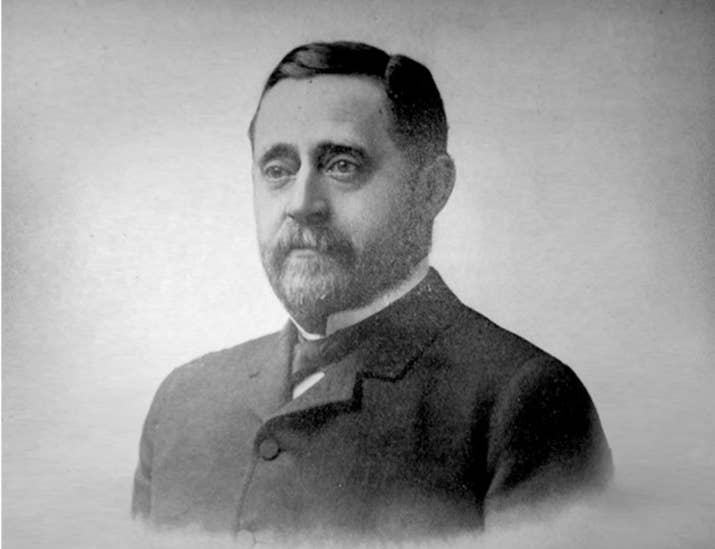
June 4 is the anniversary of the 1872 issue of U.S. patent # 127,568 for the process of making petroleum jelly - trademarked Vaseline* - to English-born inventor Robert A. Chesebrough (wiki). Born in London, Chesebrough was a chemist who originally worked on refining kerosene from whale oil. 

When the growing acceptance of petroleum drove whale oil off the market, he traveled to Pennsylvania to see what new products might be made from this new resource and found that a waste substance known as "rod wax" had to be removed regularly from pumps and drill rods. The oil workers had found, however, that this annoying by-product was useful for healing cuts and burns, which led Chesebrough to develop his process for producing the substance industrially and marketing it as a medicinal product. Excited about the many uses of his new product, Chesebrough demonstrated it by burning himself with fire and pouring acid on his skin. He would then cover himself in Vaseline to promote the healing properties of his petroleum jelly. 

Chesebrough lived to be 96 years old and was such a believer in Vaseline that he claimed to have eaten a spoonful of it daily. It made him a wealthy man, and in 1883 he was knighted by Queen Victoria, who claimed that she "used Vaseline every day." 

* N.B. The name is believed to come from the German Wasser (water) and the Greek elaion (oil). 

Bonus fact: In 1913, chemist T. L. Williams mixed coal dust with Vaseline petroleum jelly, inventing mascara.

Parts of the text above are based on Ed's Quotation of the Day, only available via email - leave your email address in the comments if you'd like to be added to his list. Ed is the author of Hunters and Killers: Volume 1: Anti-Submarine Warfare from 1776 to 1943 and Hunters and Killers: Volume 2: Anti-Submarine Warfare from 1943.

Friday, September 11, 2015

Friday links


33 Unusual Old Remedies That Are Mostly Obsolete, plus related dubious medical advice.


ICYMI, last Friday's links are here, and include gravy wrestling championships, Batman's film evolution, Star Trek politics (and the math of tribble reproduction), and a gallery of photos from the Diaper Derbies (mid-20th century baby races).

Wednesday, October 1, 2014

Wednesday links


John Lennon’s nearly-forgotten 1974 Broadway flop Sgt. Pepper’s Lonely Hearts Club Band on the Road.

A Requiem for Saturday Morning Cartoons - they've been dying off for a long time but now have ceased to exist.


Advances in Miscreant Trapping: patents from the struggle between good and evil.

12 mesmerizingly informative GIFs. Have you ever seen how an ant walks before?

ICYMI, Monday's links are here, including why coffee makes you poop, people who managed to screw up their one job, and Lego versions of Peter Quill, Mal Reynolds, and Han Solo (from Guardians of the Galaxy, Firefly and Star Wars, respectively) debating "Who shoots first?".

Friday, July 18, 2014

Attempts to patent the wheel: Australia has quietly revoked the patent it granted in 2001

Marc Abrahams of the always interesting Improbable Research (home of the IgNoble Prizes) links to this article in Beta Boston:
Despite the warning “Don’t re-invent the wheel”, people continue to reinvent the wheel. Some of those people file patent applications. Patent offices even approve some of those applications.
I discovered today that the Australian patent office has — quietly — revoked the patent it granted, in the year 2001, for the wheel. The patent office had awarded Innovation Patent #2001100012 to John Keogh of Hawthorn, Victoria, Australia. Keogh’s application called his invention a “circular transportation facilitation device.” I became aquainted with Mr. Keogh when we awarded him — and the Australian Patent Office — an Ig Nobel Prize, in 2001. Here’s a technical drawing from his patent:

Keogh, unlike most of the other inventors of the wheel, was doing it solely to make a point. He felt that the Australian patent office had loosened its regulations in a way that made patents too easy to obtain. For the Australian government, this was an unexpected side effect of reforming the patent system. 

You can see Keogh in the video below (at 1 hour, 30 minutes), accepting the Ig Nobel Prize and briefly telling his story.


Here are four of the many other 21st century re-inventions of the wheel.

German patent application DE20122871, filed July 3, 2001 by Manfred Wanner and Harald Bartol of Eberdingen, Germany for a “wheel for vehicles, especially two-wheeled vehicles of the high performance type, comprising a provided with a rotational axis of hub, spokes and a rim, which is designed to receive a tire, the wheel having an apparatus for aerodynamic optimization…”. This is what it looks like:

World patent application WO 2014012648, filed June 12, 2013 by Roberto Pisacane of Salerno, Italy. Mr. Pisacante invented “a vehicle wheel that has at least one airfoil mounted thereon, the airfoil being arranged on the wheel body between the wheel rim and the central portion of the wheel…. When airfoil is oriented at a suitable angle, the downforce exerts a torque about the central rotation axis of the wheel can be converted directly into driving force.”

US patent 7980335, granted July 19, 2011 to Stephen D. Potter of Bedford, Massachusetts and assigned to Foster-Miller, Inc., a company that subsequently re-invented its name and now calls itself QinetiQ North America. Mr. Potter invented an “omni-directional wheel includes a hub rotatable about a wheel axis and a first row of angled rollers about the hub each rotatably supported by the hub.” Voila:

These omni-wheels, the patent suggests, can be used to make forklifts and other vehicles more versatile, as this drawing demonstrates:


US patent D690249, granted on September 24, 2013 to Mark Finnie of La Palma, California, for a “Motorcycle wheel with seven bifurcated spokes”.

There are many other newly invented wheels, in many countries.

BONUS (only somewhat related): The beetle that, also, invented the wheel.

BONUS (only somewhat related): “Method for transferring chocolates from conveyor to wheel fitted with grippers comprises second wheel with parallel axle which picks up sweets from belt and presents them top end outwards to grippers”, German patent application DE10155599, filed November 13, 2001.

Previous posts based on Improbable Research articles: