Amazon Deals

New at Amazon

Sunday, March 4, 2018

Check out this video of a monkey washing dishes

She's not very good at the drying part.

Lulu, a nine-year-old Golden Capuchin monkey (wiki), has been living with her owner Arthur Flemix in Benoni since she was only two weeks old.

Arthur says Lulu has been imitating his behavior - whether that is cooking, bathing or washing the dishes - for a very long time. 

If only all our pets could be this good.
Owner Arthur shared this adorable video of his monkey after catching the cute pet washing the dishes. The observant animal would watch her owner do the dishes but this time she decided to lend a helping hand as her owner cooked.


via jacarandafm

Friday, March 2, 2018

Friday links

For Dr. Seuss's birthday, his little-known book of nudes: The Seven Lady Godivas (SFW), plus Private Snafu: The World War II Propaganda Cartoons Created by Dr. Seuss, Frank Capra, and Mel Blanc, and This is Ann... she drinks blood! Dr Seuss Does Malaria.

A Restaurant in Madrid That’s the Oldest in the World Has Had the Same Fire Burning for 293 Years.

Mystery of 500-year-old secret code used by Spanish king finally solved.

From 1799, a list of risk factors for spontaneous combustion, plus more recent science.


Pedaling pictures: The art and science of GPS doodling.

ICYMI, Wednesday's links are here, and include that time Columbus tricked the Jamaicans out of supplies using knowledge of an upcoming lunar eclipse, why cats meow, and Abraham Lincoln's terrible blind date.

Thursday, March 1, 2018

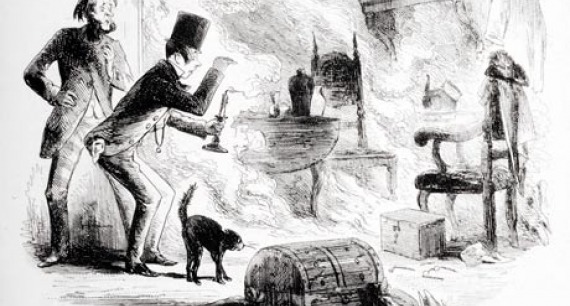
From 1799, a list of risk factors for spontaneous combustion, plus more recent science

The list (see below) is part of this rather fascinating Lapham's Quarterly article on alcohol-induced spontaneous Human Combustion (wiki) ("SHC"). The article includes accounts of some of the 18th century reports of SHC as well as more details on the relationship between these reports and the Temperance movement. 

By 1799, there were enough cases on record for one physician, Pierre Lair, to identify some patterns and recurring characteristics of victims of spontaneous human combustion:

1. Victims were older, usually over 60.

2. Victims were overweight.

3. Victims led inactive lives.

4. Victims were alcoholics (the temperance movement latched onto this one).

5. Women were more prone to spontaneously combust than men.

6. At the scene there was often an external flame, such as a candle or fireplace.

7. Combustion was extremely rapid.

8. The flames were difficult to extinguish.

9. The flames produced a strong empyreumatic odor.

10. The surrounding room was coated with a thick, yellow, greasy film.

11. The first usually consumed the trunk of the body, but left the head and extremities intact.

12. Accidents occurred during fair weather, and more often in winter than in summer.

Lair also ranked various spirits in terms of their likely contribution to Spontaneous Combustion: gin, followed by brandy, whiskey, and finally, rum.

It's interesting to compare this list to more recent attempts to determine whether the phenomenon is real or possible: A Cambridge professor has tackled the issue of spontaneous combustion – using belly pork.
Prof Brian J Ford is a research biologist and author of more than 30 books, most about cell biology and microscopy but he has turned his attention to the mechanisms behind why people ‘explode’.
He said in an article in New Scientist (behind subscription firewall): “One minute they may be relaxing in a chair, the next they erupt into a fireball. 
“Jets of blue fire shoot from their bodies like flames from a blowtorch, and within half an hour they are reduced to a pile of ash.
“Typically, the legs remain unscathed sticking out grotesquely from the smoking cinders. Nearby objects – a pile of newspapers on the armrest, for example – are untouched.”
Prof Ford wanted to disprove the alcoholism theory and also something called the ‘wick effect’ suggested by London coroner Gavin Thurston in 1961.

Thurston had described how human fat burns at about 250c, but if melted it will combust on a wick – such as clothes or other material – at room temperatures:
“I felt it was time to test the realities, so we marinated pork abdominal tissue in ethanol for a week.
“Even when cloaked in gauze moistened with alcohol, it would not burn.
“Alcohol is not normally present in our tissues, but there is one flammable constituent in the body that can greatly increase in concentration.” 
The body creates acetone, which is highly flammable. He added: 
“A range of conditions can produce ketosis, in which acetone is formed, including alcoholism, fat-free dieting, diabetes and even teething.
“So we marinated pork tissue in acetone, rather than ethanol.
“This was used to make scale models of humans, which we clothed and set alight.
“They burned to ash within half an hour.
“For the first time a feasible cause of human combustion has been experimentally demonstrated.”
More:

Further reading on the wick effect and on SHC.

io9 has an article from 2011: 10 Cases of Spontaneous Human Combustion

Wednesday, February 28, 2018

Wednesday links


Historical European Martial Art: a crossroad between academic research, martial heritage re-creation and martial sport practices.


100 years ago - Harvard's 1917-1918 midterm and final exams from Principles of Economics.

Lost Art Of Bending Over: How Other Cultures Spare Their Spines.

ICYMI, most recent links are here, and include the anniversary of the 1945 assault on Iwo Jima, the Nazi-era world's longest kayak journey, the romantic benefits of snail slime, and a supercut of movie characters cursing without cursing. 

Monday, February 19, 2018

Monday links

The 1945 assault on Iwo Jima started Feb 19 and the famous flag raising was on Feb 23: some quotes, history, and a brief documentary.

Half the DNA on the NYC Subway Matches No Known Organism.

From Nazi Germany to Australia: The Incredible True Story of History’s Longest Kayak Journey


Guy Spends A Year Gluing Together 42,000 Matches To Make A Giant Sphere, Sets It On Fire.

The romantic benefits of snail slime.

ICYMI, Friday's links are here, and include how bird feeders are changing bird evolution, a strange tale of triplets separated at birth, why we yell Geronimo when we jump out of planes, extreme breath-holding, and advice from 1761 on surviving cold and flu season.