Amazon Deals

New at Amazon

Thursday, January 17, 2019

Thursday links

January 17 is Ben Franklin's birthday - bio, quotes, videos, his 200+ synonyms for drunk, the bodies found in his basement, and more.


Why dreams like flying, falling, being chased are so common, and how your brain creates them.

For Al Capone's birthday, here's the story of that time he bought large blocks of stock in miniature golf construction companies.


ICYMI, Wednesday's links are here, and include lots of snow-related stuff, animals that hunted our ancestors, the anniversary of prohibition, sneeze guard history, and igloo-building instructions.

Wednesday, January 16, 2019

Early 20th century cure for constipation, headaches, bad breath and insanity - Dr. Young's Ideal Rectal Dilators

Who knew that butt plugs could be so useful?

Dr. Young's Ideal Rectal Dilators (wiki) were a medical device sold in the United States from the late nineteenth century (they were patented in 1892) until at least the 1940s.

Dr. Young praised rectal dilation as a cure for insanity, claiming that at least “three-fourths of all the howling maniacs of the world” were curable “in a few weeks’ time by the application of orificial methods”.

The product claimed it corrected constipation, promoted more refreshing sleep, and could relieve foul breath, bad taste in the mouth, sallow skin, acne, anemia, lassitude, mental hebetude, insomnia, anorexia, headaches, diarrhea, hemorrhoids, flatulence, indigestion, nervousness, irritability, cold extremities, and numerous other ailments.

To take advantage of the benefits, here’s what you had to do:
First warm dilator in warm water; then lubricate outside of dilator with Dr Young’s Piloment (or if it is not available, with vaseline) and while in a squatting position—or while lying on the side with knees drawn up—gently insert in the rectum as far as the flange or rim. Hold in place a minute and the anal muscles will hold and retain it. Sit or lie down and allow it to remain for half an hour or an hour to get the best results. Ten minutes will accomplish much. When ready to go on to the next larger size, it is best first to use for a few minutes the same size you have been using, inserting and withdrawing it a few times.

A 1905 advertisement by F. E. Young and Co. of Chicago promised that “The best results may be obtained by the use of Young’s self-retaining rectal dilators”, the use of which “accomplishes for the invalid just what nature does daily for the healthy individual”. Doctors were advised that “If you will prescribe a set of these dilators in some of your obstinate cases of Chronic Constipation you will find them necessary in every case of this kind”. The price of a set “to the profession” was $2.50 (equivalent to $70 in 2018).

It wasn’t until 1938 that the new US Federal Food, Drugs and Cosmetics Act encompassed the sale of medical devices, and once that was in force it didn’t take long for the dilators to attract the courts’ attention. In 1940, a shipment of dilators and their lubricant, Piloment, was seized at New York and the US Attorney for the Southern District of NY filed libels against them, alleging that they were misbranded.

More at vintage everyday and the quack doctor.

Ben Franklin's 200+ synonyms for “drunk”

Here are 200+ Synonyms for “Drunk”, alphabetically arranged, first published by Franklin in the Pennsylvania Gazette on January 6, 1737 (and later in The Drinker's Dictionary) with this intro:
"The Phrases in this Dictionary are not (like most of our Terms of Art) borrow'd from Foreign Languages, neither are they collected from the Writings of the Learned in our own, but gather'd wholly from the modern Tavern-Conversation of Tiplers. I do not doubt but that there are many more in use; and I was even tempted to add a new one my self under the Letter B, to wit, Brutify'd: But upon Consideration, I fear'd being guilty of Injustice to the Brute Creation, if I represented Drunkenness as a beastly Vice, since, 'tis well-known, that the Brutes are in general a very sober sort of People."
A
He is Addled,
He's casting up his Accounts,
He's Afflicted,
He's in his Airs.
B
He's Biggy,
Bewitch'd,
Block and Block,
Boozy,
Bowz'd,
Been at Barbadoes,
Piss'd in the Brook,
Drunk as a Wheel-Barrow,
Burdock'd,
Buskey,
Buzzey,
Has Stole a Manchet out of the Brewer's Basket,
His Head is full of Bees,
Has been in the Bibbing Plot,
Has drank more than he has bled,
He's Bungey,
As Drunk as a Beggar,
He sees the Bears,
He's kiss'd black Betty,
He's had a Thump over the Head with Sampson's Jawbone,
He's Bridgey.

Wednesday links

Roundup of links about snow: art, science, snowmen, historical storms, the history and physics of snow removal, and more.

10 Animals That Hunted Our Ancestors.

How to Build an Igloo.

Prohibition in the United States began on January 16, 1920: here's some history, contemporaneous newsreels, the women who tried to telepathically influence the vote, Abraham Lincoln and Milton Friedman. Related, The Kiss of Prohibition: “Lips That Touch Liquor…”

18th Century Cudgelling Matches.

The history of the sneeze guard.

ICYMI, Tuesday's links are here, and include the 100th anniversary of Boston's 2.3 million gallon molasses flood, how trees survive winter, ancient Egyptian homework, a bonsai forest, and the history of showering.

Tuesday, January 15, 2019

January 17 is Ben Franklin's birthday - bio, quotes, videos, his 200 synonyms for drunk, the bodies found in his basement, and more

If you would not be forgotten,
When you are dead and rotten,
Either write things worth the reading,
Or do things worth the writing.


Experience keeps a dear school, but fools will learn in no other.

~ Ibid., December 1743

It would be a hard government that should tax its people one-tenth part of their income.

~ Ibid.

Our Constitution is in actual operation; everything appears to promise that it will last; but in this world, nothing is certain but death and taxes.

~ Franklin (letter to M. Leroy, 1789) 

Those who would give up essential liberty to purchase a little temporary safety, deserve neither liberty nor safety.

~ Franklin

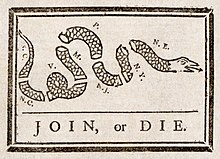
Political cartoon by Franklin urged
 the colonies to join together
during the 
French and Indian War
Human felicity is produced not so much by great pieces of good fortune that seldom happen, as by little advantages that occur every day.

~ Franklin (Autobiography, Ch. 9) 

I should have no objection to go over the same life from the beginning to the end: requesting only the advantage authors have, of correcting in a second edition the faults of the first.

~ Ibid., Ch. 1 

Benjamin Franklin Drawing Electricity from
 the Sky
 c. 1816 at the Philadelphia Museum of Art, by Benjamin West
January 17th is the anniversary of the birth of American statesman, philosopher, and scientist Benjamin Franklin (wiki) (1706-1790) in Boston. After apprenticing with his brother as a printer, Franklin settled in Philadelphia, published The Pennsylvania Gazette, and gained a wide circle of readers with his Poor Richard's Almanack (1732-1757). Entering civic affairs, he was eventually appointed Postmaster General for the colonies (1753-1774) while also dabbling in a variety of scientific pursuits, including his famous experiment with a kite in a thunderstorm. 

Before the Revolution, Franklin spent a total of 14 years representing the Pennsylvania Assembly in England, attempting to achieve reconciliation with the home country. Failing that, he was elected to the Continental Congress in 1775 and signed the Declaration of Independence the next year. Appointed to represent the American colonies in France, he spent the next nine years in Paris and helped negotiate the peace with Britain in 1781. After his return to the United States, Franklin served as a member of the Constitutional Convention and died three years later. On the separation of church and state, he wrote in 1790,
"When a religion is good, I conceive it will support itself, and when it does not support itself, and God does not take care to support it so that its professors are obliged to call for help of the civil power, 'tis a sign, I apprehend, of its being a bad one."
My favorite bit of Franklin lore remains his 200+ synonyms for “drunk”, alphabetically arranged, first published in the Pennsylvania Gazette on January 6, 1737 (and later in The Drinker's Dictionary) with this introduction:
"The Phrases in this Dictionary are not (like most of our Terms of Art) borrow'd from Foreign Languages, neither are they collected from the Writings of the Learned in our own, but gather'd wholly from the modern Tavern-Conversation of Tiplers. I do not doubt but that there are many more in use; and I was even tempted to add a new one my self under the Letter B, to wit, Brutify'd: But upon Consideration, I fear'd being guilty of Injustice to the Brute Creation, if I represented Drunkenness as a beastly Vice, since, 'tis well-known, that the Brutes are in general a very sober sort of People."
Here's some guy dressed as Franklin reciting the list.

And then there's... That Time They Found Those Bodies in Ben Franklin's Basement:
From 1757 to 1775, Ben Franklin lived in an elegant four-story Georgian house at No. 36 Craven Street in London during his time as an ambassador for the American colonies. In late 1998, a group calling itself Friends of Benjamin Franklin House began to convert the dilapidated building into a museum to honor Franklin, whose other home in Philadelphia had been razed in 1812 to make way for new construction (a "ghost house" frame now sits on the site).
One month into the renovations, a construction worker named Jim Field was working in the basement when he found something odd: a small pit was in a windowless basement room. Inside, sticking out of the dirt floor, was a human thigh bone.
The police were called and supervised excavation continued. More human bones were pulled up. And more. And more, until some 1,200 pieces of bone were recovered. Initial examinations revealed that the bones were the remains of 10 bodies, six of them children, and were a little more than 200 years old. Their age discouraged any interest from Scotland Yard, but piqued the curiosity of historians and the Institute of Archaeology. The bones' age meant they may have been buried in the basement around the same time that Franklin was living in the house.
Read the whole thing here. More on the bodies in his basement here.

Franklin is known to have played the violin, the harp, and the guitar. He also developed the glass harmonica seen in this video:


Here's a brief (two minute) animated bio:


Wikipedia has more on his inventions and scientific studies, including (without limitation), work on electricity, ocean currents, population, the wave theory of light, and meteorology.