Most early movie theaters had only one projector so “etiquette slides” were used to divert the audience while reels were being changed. These glass slides often featured lighthearted instructions for proper behavior while viewing a film.
The premier of Infinity War brings to mind another Captain America movie - the 1973 Turkish version in which he teams up with a Mexican wrestler and fights evil Spiderman.
ICYMI, Friday's links are here, and include Duke Ellington's birthday, all about hummingbird love charm trafficking, a clickable map of every street tree in New York City, and some advice from the 16th century on avoiding brain scorpions: Take heede therefore ye smellers of Basil.
Via the Guardian (over a year ago, but I'd never seen it), which has more information:
In 1926, London Underground published a poster painted by Montague B Black, a publicity artist who also created images for Liverpool’s White Star Line, which imagines London in 2026. A golden sky enfolds a cityscape of skyscrapers over which various types of flying machine hover.
ICYMI, Monday's links are here, and include Oregon Trail for Adults, a declassified CIA assassination manual from 1953, what it's like to live in the town where The Walking Dead is filmed, and cities in Russia what no one is allowed to go.
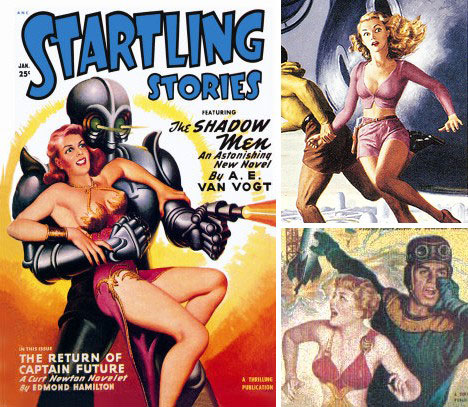
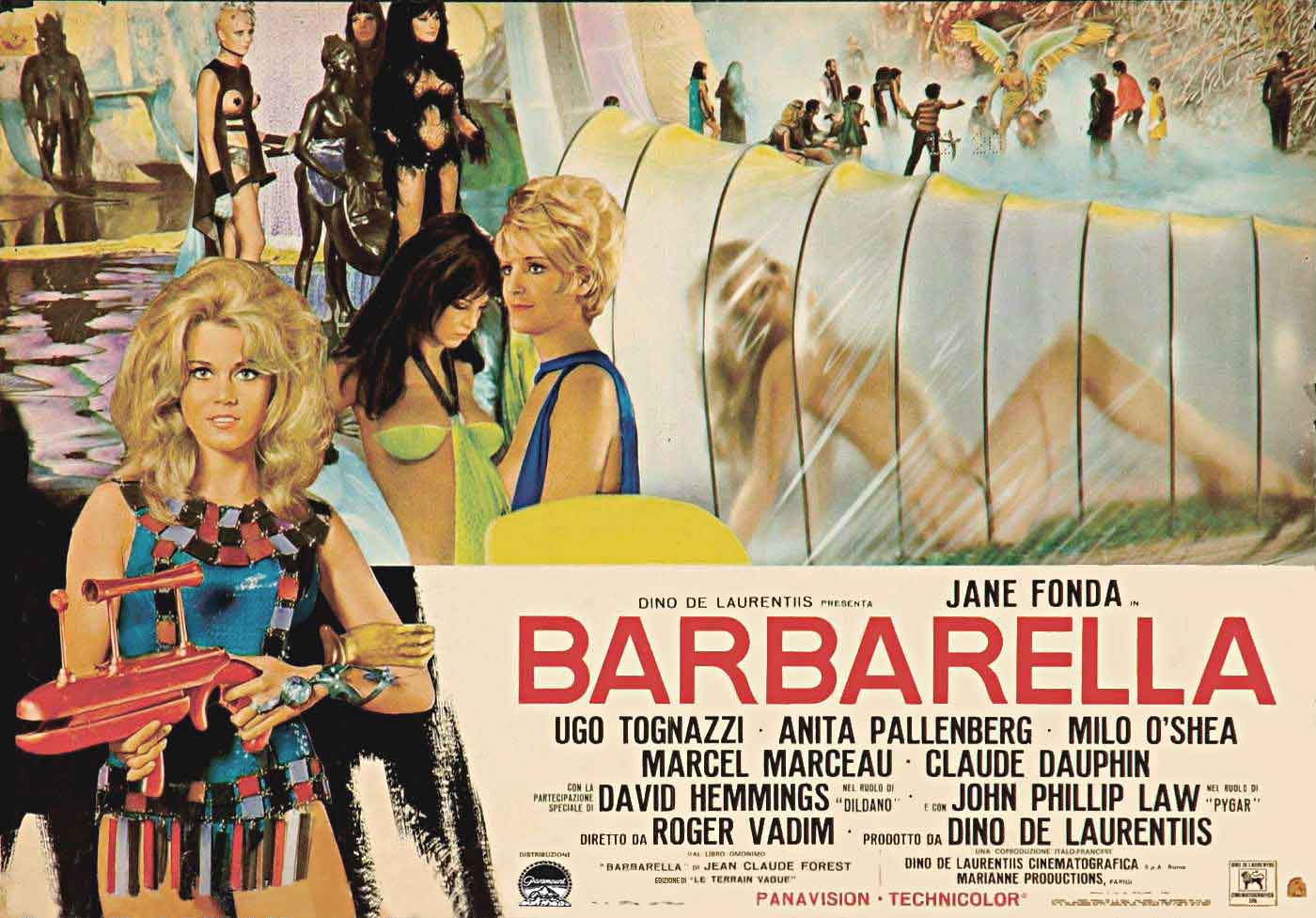
SPACE: the final, full-frontal frontier… the last hurrah… to go where no man has ever gone before, the forbidden and yet insidiously alluring planet of NYMPHON in the second quadrant of PHI DELTA PUBIS, hard by the tumescent moons of GLUTEON MAXIMUS:
Want to know what people thought of “colderizing,” "air chilling," “mechanical weather,” and being “cooled by refrigeration” in its early days*. One of my favorite comments, on a system installed in the Capitol in 1928:
Though the air undoubtedly increased comfort in the chambers, some still complained that it was too cold. According to Cool Comfort, John E. Rankin, a Democrat from Mississippi lodged the first complaint on May 28, 1929, saying "the atmosphere is too cool in this room. On yesterday it was 75 by thermometer ... and 91 degrees on the outside. Fifteen or twenty degrees difference is too much ... This is regular Republican atmosphere, and it is enough to kill anybody if it continues." His declaration was met with applause.
Here's Ben Stein paying respect to the invention of the air conditioner:
People on West 110th Street, where I lived, were a little too bourgeois to sit out on their fire escapes, but around the corner on 111th and farther uptown mattresses were put out as night fell, and whole families lay on those iron balconies in their underwear.
Even through the nights, the pall of heat never broke. With a couple of other kids, I would go across 110th to the Park and walk among the hundreds of people, singles and families, who slept on the grass, next to their big alarm clocks, which set up a mild cacophony of the seconds passing, one clock’s ticks syncopating with another’s. Babies cried in the darkness, men’s deep voices murmured, and a woman let out an occasional high laugh beside the lake.
No surprises here for us older folks, and it's worth remembering that even if the technology existed in the 1930s it was certainly not widespread - I'm 76 years old, was raised in upstate New York, and I don't think I ever saw air conditioning in a private home until the 70's, after I moved to the Washington, D.C. area. I'd also never heard of the concept of an air-conditioned car.
Here's Miller again:
My first direct contact with an air-conditioner came only in the sixties, when I was living in the Chelsea Hotel. The so-called management sent up a machine on casters which rather aimlessly cooled and sometimes heated the air, relying, as it did, on pitchers of water that one had to pour into it. On the initial filling, it would spray water all over the room, so one had to face it toward the bathroom rather than the bed.
The origin of air conditioning is disputed, (the first cooling of buildings was engineered by the Romans, who ran aqueducts through the houses of the upper class to cool them), but here's a Wired article on Willis Haviland Carrier's invention that forms the basis of the modern air conditioner - it was originally designed as a humidity controller for a printing company.
ICYMI, Friday's links are here, and include movie scenes that happened in real life, a close-up video of lava pouring into water, a huge mouse trap and ping pong ball chain reaction, and celebrities who look like mattresses.
ICYMI, Friday's links are here, including attempts to patent the wheel, the aerodynamics of hummingbirds, contact lens version of Google Glasses, and an answer to the age-old question: Why is your brain in your head instead tucked away safe and warm down with all your other organs?
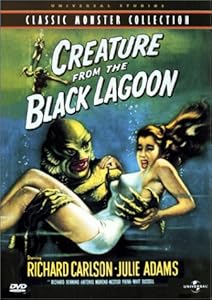
Creature from the Black Lagoon (wiki) is a 1954 black-and-white monster film in 3-D; the audience wore viewers with gray polarizing filters, similar to the viewers most commonly used today (although by that time the brief 1950's 3-D movie fad had peaked so many audiences actually saw the film "flat", in 2-D). There were two sequels: Revenge of the Creature (1955), which was also filmed and released in 3-D in hopes of reviving the format, and The Creature Walks Among Us (1956), filmed in 2-D.
IMDB synopsis: A strange prehistoric beast lurks in the depths of the Amazonian jungle. A group of scientists try to capture the animal and bring it back to civilization for study.
Background music from this "making of" video is Sloop John B by the Beach Boys, and is totally stuck in my head. The trailer is below.