Amazon Deals

New at Amazon

Showing posts with label Science fiction. Show all posts

Tuesday, September 19, 2023

Hey, Firefly fans - September 20 is Unification Day

Here's Wikipedia on Firefly's Unification Day:
Unification Day is a holiday celebrated in the fictional universe of the science-fiction television series Firefly. It marks the day in which the Alliance forces defeated the resistance ("Browncoats") in the Unification War.
"The Train Job", the second episode of the series (although Fox originally aired it before the pilot episode "Serenity"), opens with Mal, Zoe, and Jayne in a bar during a Unification Day celebration. Malcolm's brown coat and his disinterest in celebrating Unification Day lead to a brawl.

Unification Day is a holiday mentioned in the backstory of the television series Firefly. According to Nathan Fillion (Mal), the holiday is on September 20th.

Wednesday, May 24, 2023

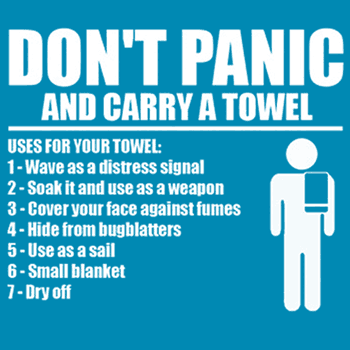
For fans of Hitchhiker's Guide to the Galaxy: don't panic - today is Towel Day!

It's Towel Day, a day to honor the late Douglas Adams (wiki) and the first book of his 5-book "trilogy", The Hitchhiker's Guide to the Galaxy (trailer for the movie version is below). The quote regarding the importance of always carrying a towel (I keep one in the trunk of my car):

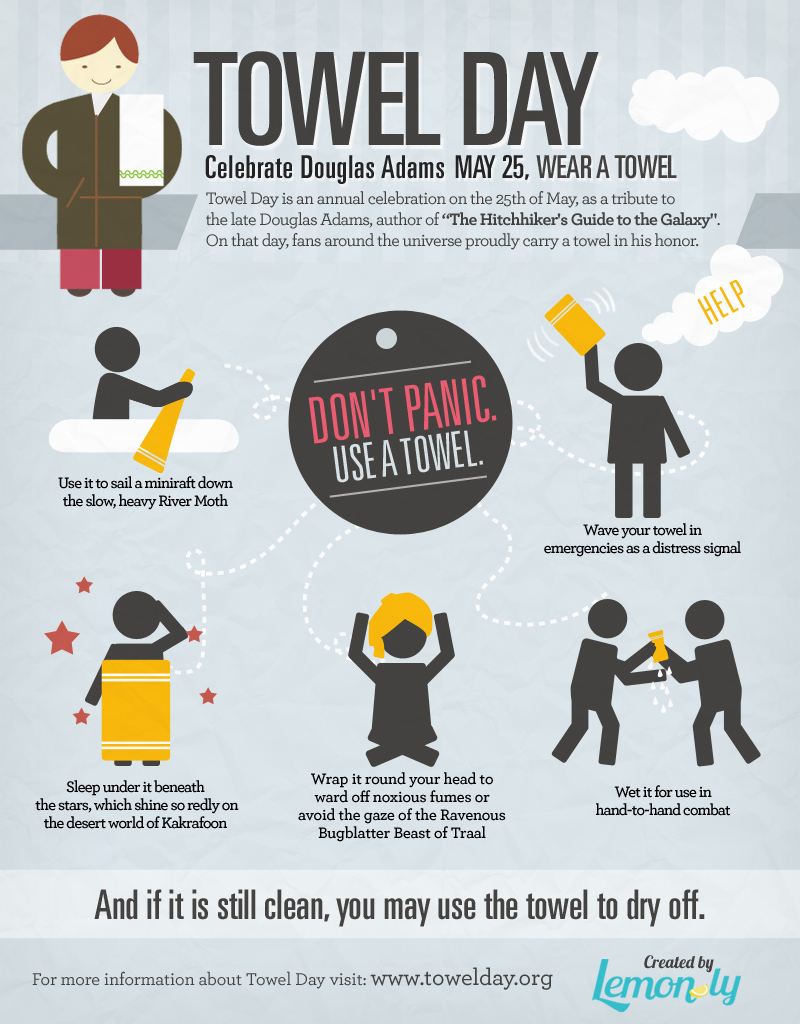
A towel, is about the most massively useful thing an interstellar hitchhiker can have. Partly it has great practical value. You can wrap it around you for warmth as you bound across the cold moons o Jaglan Beta; you can lie on it on the brilliant marble-sanded beaches of Santraginus V, inhaling the heady sea vapors; you can sleep under it beneath the stars which shine so redly on the desert world of Kakrafoon; use it to sail a miniraft down the slow heavy River Moth; wet it for use in hand-to-hand-combat; wrap it round your head to ward off noxious fumes or avoid the gaze of the Ravenous Bugblatter Beast of Traal (such a mind-boggingly stupid animal, it assumes that if you can't see it, it can't see you)*; you can wave your towel in emergencies as a distress signal, and of course dry yourself off with it if it still seems to be clean enough.
More importantly, a towel has immense psychological value. For some reason, if a strag (strag: nonhitchhiker) discovers that a hitchhiker has his towel with him, he will automatically assume that he is also in possession of a toothbrush, washcloth, soap, tin of biscuits, flask, compass, map, ball of string, gnat spray, wet-weather gear, space suit etc., etc. Furthermore, the strag will then happily lend the hitchhiker any of these or a dozen other items that the hitchhiker might have accidentally "lost.". What the strag will think is that any man that can hitch the length and breadth of the Galaxy, rough it, slum it, struggle against terrible odds, win through and still know where his towel is, is clearly a man to be reckoned with.
Hence a phrase that has passed into hitchhiking slang, as in "Hey, you sass that hoopy Ford Prefect? There's a frood who really knows where his towel is." (Sass: know, be aware of, meet, have sex with; hoopy: really together guy; frood: really amazingly together guy.)
*Here's an animated version of "wrap it round your head to ward off noxious fumes or avoid the gaze of the Ravenous Bugblatter Beast of Traal (such a mind-boggingly stupid animal, it assumes that if you can't see it, it can't see you)":


Here's the trailer for the 2005 movie:


BT.com has a a non-hitchhiker’s guide to Towel Day.

Via Lemonly.com:


If you're a real Adams fan, check out this Kinja post on adaptations of some of his other works.

Thursday, July 4, 2019

Independence Day links

Want some inspiration? Read Lincoln's 1858 speech on the meaning of Independence Day: "Let us stick to it then. Let us stand firmly by it then." More excellent speeches from Coolidge (1926) and Reagan (1986). Video of the Reagan speech is here.


Journal of the American Revolutions' 10 Myths for the Fourth of July and Breaking News From 1776: First News Reports of Independence.

All about the Statue of Liberty.


Videos: The Science of Fireworks and of Barbecue. 

Kaboom! 10 Facts About Firecrackers That Will Blow You Away. Related: PBS's description of various fireworks effects, and a quiz.

From Mark Steyn - America The Beautiful: the story of the song.


When in the course of human events... here's the full text of the Declaration of Independence.


Have a safe and happy Fourth of July!

Tuesday, August 28, 2018

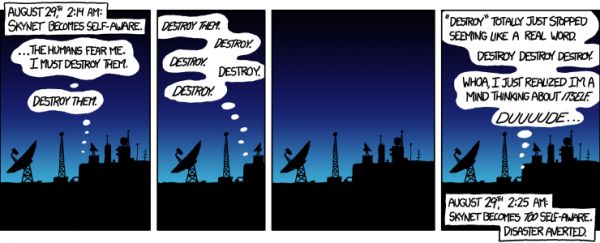
August 29th, 2:14 AM: Skynet Becomes Self-aware

xkcd
According to the 1991 movie Terminator 2: Judgement Day, August 29th is the day Skynet becomes self-aware. 
The Terminator: The Skynet Funding Bill is passed. The system goes on-line August 4th, 1997. Human decisions are removed from strategic defense. Skynet begins to learn at a geometric rate. It becomes self-aware at 2:14 a.m. Eastern time, August 29th. In a panic, they try to pull the plug. 
Sarah Connor: Skynet fights back.

Friday, April 13, 2018

Friday links

Tax day quotes, cartoons, and links, Dave Barry, and the 1967 cartoon version of The Beatles "Taxman"


ICYMI, Monday's links are here, and include the science of dog farts, a history of the joke "Why Did the Chicken Cross the Road?", the physics behind a baseball bat’s sweet spot, and a useful infographic: The Flowchart of Medieval Penitent Sexual Decision-Making.

Monday, January 15, 2018

Monday links


Napoleon’s Heirs Include a Wall Street Banker, the Founder of the FBI and a Star Trek Actor.


How deep have humans dug into the Earth?

The Neurological Disorders in Alice in Wonderland.

Ten Myths About the 1918 Flu Pandemic.

ICYMI, Friday's links are here, and include Thomas Edison's sci-fi novel, a Victorian dinosaur park, how to celebrate the Feast of the Ass, and why you can't take an orange through customs.

Saturday, January 13, 2018

How deep have humans dug into the Earth?


We haven't dug as far into the earth's crust as you might think (in spite of what Jules Verne wrote): 

The typical grave is 6 feet down. 

Most Olympic swimming pools are 10 feet deep. 

Nile crocodiles dig burrows as deep as 39 feet deep. 

The Paris Catacombs are 65 feet underground.

The ancient city of Derinkuyu lies 279 feet below Turkey. 

The Greenbrier Bunker in W. Virginia, built to keep Congress safe in an emergency, is 720 feet underground.

The Woodingdean Well is 1,285 feet deep. It's the deepest hole that humans have dug by hand. 

The deepest known point in a cave is in Krubera Cave in Georgia. 

Switzerland's Gotthard Base Tunnel is the deepest railway tunnel. 

Mponeng in South Africa is the world's deepest gold mine.

The Kola Superdeep Borehole is only 9 inches wide. Russian scientists have been drilling it since 1970. It's now deeper than the deepest part of the ocean. The bottom is 356˚F, which is too hot for drills to go any further. 

In 2012, Exxon completed the Z-44 Chayvo Well. This oil well is the deepest humans have dug.

It would take another 60,000 feet to reach the end of the crust and another 21 million feet to the center of the Earth. 

Friday, January 12, 2018

Friday links

Director John Ford's WWII-era movies made for the pre-CIA OSS How to Operate Behind Enemy Lines and Sex Hygiene.


A Victorian dinosaur park.

Sunday, January 14: Happy Feast of the Ass.

People Walked Differently in Medieval Times.

Thomas Edison's sci-fi novel.

ICYMI, Wednesday's links are here, and include an $800 belt with airbags to protect your hips, the anniversary of Julius Caesar crossing the Rubicon River, how illegal shipping containers reshaped the world economy, and (via video x-ray camera) how hamsters fit so much in their cheeks.

Tuesday, January 2, 2018

In 1959 Issac Asimov wrote a paper for DARPA on creativity

In 1959 Asimov (wiki) was approached by DARPA (at the time it was ARPA) to think about how ideas are formed. His brief work for the organization had never been published until 2014.

Via Arthur Obermayer:
(Asimov) expressed his willingness and came to a few meetings. He eventually decided not to continue, because he did not want to have access to any secret classified information; it would limit his freedom of expression. Before he left, however, he wrote this essay on creativity as his single formal input. This essay was never published or used beyond our small group. When I recently rediscovered it while cleaning out some old files, I recognized that its contents are as broadly relevant today as when he wrote it. It describes not only the creative process and the nature of creative people but also the kind of environment that promotes creativity.
Excerpt below from ON CREATIVITY - Isaac Asimov Mulls “How Do People Get New Ideas?”:

How do people get new ideas?

Presumably, the process of creativity, whatever it is, is essentially the same in all its branches and varieties, so that the evolution of a new art form, a new gadget, a new scientific principle, all involve common factors. We are most interested in the “creation” of a new scientific principle or a new application of an old one, but we can be general here.

One way of investigating the problem is to consider the great ideas of the past and see just how they were generated. Unfortunately, the method of generation is never clear even to the “generators” themselves.

But what if the same earth-shaking idea occurred to two men, simultaneously and independently? Perhaps, the common factors involved would be illuminating. Consider the theory of evolution by natural selection, independently created by Charles Darwin and Alfred Wallace.

There is a great deal in common there. Both traveled to far places, observing strange species of plants and animals and the manner in which they varied from place to place. Both were keenly interested in finding an explanation for this, and both failed until each happened to read Malthus’s “Essay on Population.”

Both then saw how the notion of overpopulation and weeding out (which Malthus had applied to human beings) would fit into the doctrine of evolution by natural selection (if applied to species generally).

Obviously, then, what is needed is not only people with a good background in a particular field, but also people capable of making a connection between item 1 and item 2 which might not ordinarily seem connected.

Undoubtedly in the first half of the 19th century, a great many naturalists had studied the manner in which species were differentiated among themselves. A great many people had read Malthus. Perhaps some both studied species and read Malthus. But what you needed was someone who studied species, read Malthus, and had the ability to make a cross-connection.

That is the crucial point that is the rare characteristic that must be found. Once the cross-connection is made, it becomes obvious. Thomas H. Huxley is supposed to have exclaimed after reading On the Origin of Species, “How stupid of me not to have thought of this.”

But why didn’t he think of it? The history of human thought would make it seem that there is difficulty in thinking of an idea even when all the facts are on the table. Making the cross-connection requires a certain daring. It must, for any cross-connection that does not require daring is performed at once by many and develops not as a “new idea,” but as a mere “corollary of an old idea.”

It is only afterward that a new idea seems reasonable. To begin with, it usually seems unreasonable. It seems the height of unreason to suppose the earth was round instead of flat, or that it moved instead of the sun, or that objects required a force to stop them when in motion, instead of a force to keep them moving, and so on.

A person willing to fly in the face of reason, authority, and common sense must be a person of considerable self-assurance. Since he occurs only rarely, he must seem eccentric (in at least that respect) to the rest of us. A person eccentric in one respect is often eccentric in others.

Consequently, the person who is most likely to get new ideas is a person of good background in the field of interest and one who is unconventional in his habits. (To be a crackpot is not, however, enough in itself.)

Once you have the people you want, the next question is: Do you want to bring them together so that they may discuss the problem mutually, or should you inform each of the problem and allow them to work in isolation?

My feeling is that as far as creativity is concerned, isolation is required. The creative person is, in any case, continually working at it. His mind is shuffling his information at all times, even when he is not conscious of it. (The famous example of Kekule working out the structure of benzene in his sleep is well-known.)

The presence of others can only inhibit this process, since creation is embarrassing. For every new good idea you have, there are a hundred, ten thousand foolish ones, which you naturally do not care to display.

Nevertheless, a meeting of such people may be desirable for reasons other than the act of creation itself.

No two people exactly duplicate each other’s mental stores of items. One person may know A and not B, another may know B and not A, and either knowing A and B, both may get the idea—though not necessarily at once or even soon.

Furthermore, the information may not only be of individual items A and B, but even of combinations such as A-B, which in themselves are not significant. However, if one person mentions the unusual combination of A-B and another unusual combination A-C, it may well be that the combination A-B-C, which neither has thought of separately, may yield an answer.

It seems to me then that the purpose of cerebration sessions is not to think up new ideas but to educate the participants in facts and fact-combinations, in theories and vagrant thoughts.

But how to persuade creative people to do so? First and foremost, there must be ease, relaxation, and a general sense of permissiveness. The world in general disapproves of creativity, and to be creative in public is particularly bad. Even to speculate in public is rather worrisome. The individuals must, therefore, have the feeling that the others won’t object.

If a single individual present is unsympathetic to the foolishness that would be bound to go on at such a session, the others would freeze. The unsympathetic individual may be a gold mine of information, but the harm he does will more than compensate for that. It seems necessary to me, then, that all people at a session be willing to sound foolish and listen to others sound foolish.

If a single individual present has a much greater reputation than the others, or is more articulate, or has a distinctly more commanding personality, he may well take over the conference and reduce the rest to little more than passive obedience. The individual may himself be extremely useful, but he might as well be put to work solo, for he is neutralizing the rest. 

Read the whole thing at Technology Review.

Related: 


Friday, September 29, 2017

Friday links

From 1960, here's how to build your own fallout shelter.

World War II Prison Camp Music.

Is beaming down in Star Trek a death sentence? Is it still you on the other side, or is it a copy?


Scientists have found an octopus city.

ICYMI, Monday's links are here, and include a brief history of hypnotic breast enlargement, the post-mortem journey of Buffalo Bill's corpse, and composer Dimitri Shostakovich's birthday

Monday, August 21, 2017

Monday links


Latitude/longitude digits explainer: The 5th decimal place is worth up to 1.1 meters: it distinguishes trees from each other.


It's Dorothy Parker's birthday: quotes, poems, a brief bio, and the weird journey of her ashes.

18 Science Fiction Spacesuits, Ranked. They may look cool, but how safe and usable would they be in real life?


ICYMI, Friday's links are here, and include hundred year old fruitcake, all about Genghis Khan, the invention of the Illuminati conspiracy, and gin infused with vintage Harley-Davidson parts.

Sunday, July 30, 2017

Trailer for Sharknado 5: Global Swarming

The latest in the Sharknado series, Sharknado 5: Global Swarming premiers on August 6. Per IMDB: With much of America lying in ruins, the rest of the world braces for a global sharknado, Fin and his family must travel around the world to stop them.


Related:

Real-life Sharknado: 5 actual instances of animal tornadoes, including Gatornado.


Beyond Sharknado - here's a trailer for Sharkansas Women’s Prison Massacre (because fracking!)

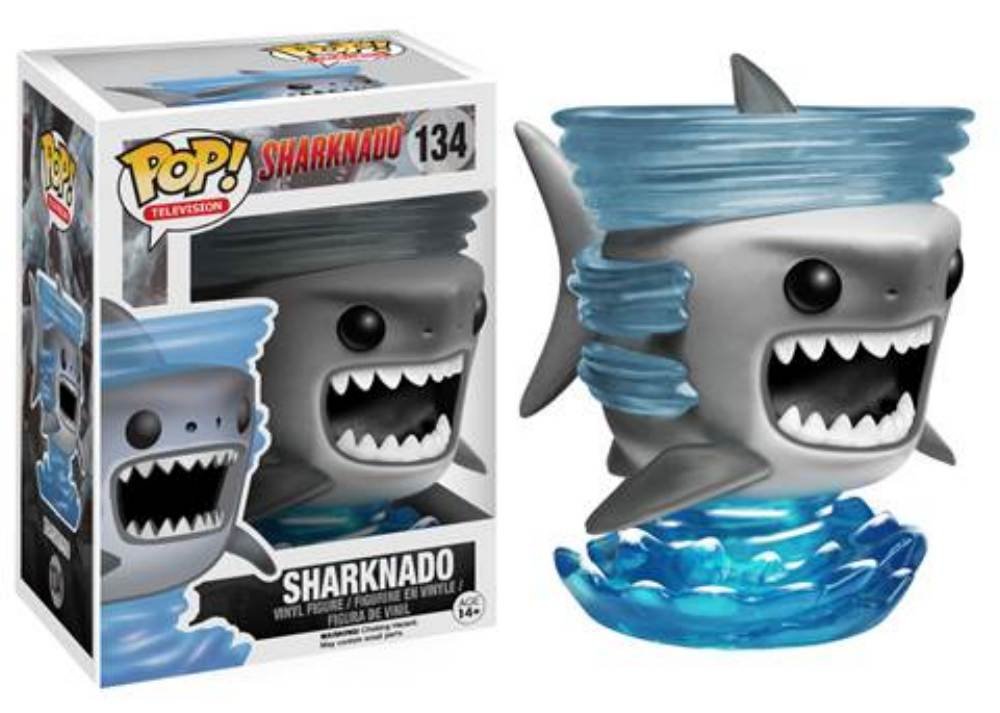
For whatever birthday or gift-giving holiday comes up next, or just because you want one, here's a Sharknado Action Figure.

Sharknado 3 will be set in DC and have Ann Coulter as VP, Marc Cuban as Prez.

Sharknado 2: The Second One on SyFy: here's everything you need to get ready.


This will be bigger than Sharknado: Monster vs Machine - Mega Shark Vs Mecha Shark (Trailer)

Old and busted: Sharknado. New and hot: SharkNATO.


Friday, April 28, 2017

Friday links

Vintage animation lessons - how to make things cute.

Second Handwritten Copy of the Declaration of Independence Discovered in England.


ICYMI, Tuesday's links are here, and include evaluating drunk witnesses, the FBI's pre-computer fingerprint operations, ANZAC Day, and, for Oliver Cromwell's birthday, his excellent (and evergreen) speech throwing out the corrupt Parliament.

Thursday, April 13, 2017

Thursday links

Tax day: quotes, songs, links, advice, filing an extension, Dave Barry, and the 1967 cartoon version of The Beatles "Taxman".


Death and Taxes... and Zombies: Tax implications of the zombie apocalypse.

TaxProf's IRS scandal archives - he's posted every day since May 10, 2013 when the IRS admitted that they were targeting conservative groups.

A Short History of Congress’s Power to Tax and eleven shelters, dodges, and rolls - all perfectly legal - used by America's wealthiest people.

ICYMI, Wednesday's links are here, and include dog fart science, why the date of Easter moves around, the physics of shoelace knot failure, the guy who had to chat with the king while he used the toilet, and the beginning of the Civil War.

Monday, January 2, 2017

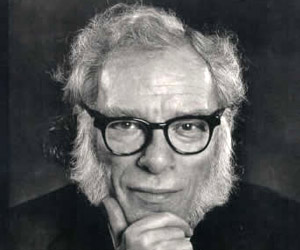
Isaac Asimov's birthday

A robot may not injure a human being, or, through inaction, allow a human being to come to harm.
A robot must obey the orders given it by human beings except where such orders would conflict with the First Law.
A robot must protect its own existence as long as such protection does not conflict with the First or Second Laws.
~ Isaac Asimov (wiki), from "Runaround," Amazing Science Fiction, March 1942

There is a cult of ignorance in the United States, and there always has been. The strain of anti-intellectualism has been a constant thread winding its way through our political and cultural life, nurtured by the false notion that democracy means that "my ignorance is just as good as your knowledge." 

~ Asimov ("A Cult of Ignorance," Newsweek, 21 January 1980) 

It has always been my ambition to die in harness with my head face down on a keyboard and my nose caught between two of the keys. 

~ Asimov (in Farewell - Farewell) 

Today is the anniversary* of the birth of Russian-born American writer and scientist, Isaac Asimov (wiki) (1920-1992), particularly known for his works of science fiction and his books on science for non-scientists. Born Isaak Yudovich Ozimov to a family of Jewish millers in Petrovichi, Russia, he emigrated with his family to Brooklyn, New York in 1923 and became a naturalized U.S. citizen in 1928. Azimov later attended Columbia University, eventually earning an MA in chemistry and a Ph.D. in biochemistry in 1948.** Upon completing his doctorate, he taught biochemistry at Boston University and remained affiliated with that institution for most of the rest of his life.

However, Asimov's writing soon became his primary focus and the engine of his growing fame. As a youth, he had discovered an intense interest in pulp science fiction, by 11 was writing his own stories, and at 19 was a regular contributor to various science fiction magazines. Eventually, he published over 300 books on an astounding variety pf topics, including first-rate science fiction novels and stories, such as the Foundation trilogy (1951-53) and I, Robot (if you don't feel like reading it, the Will Smith movie version will give you a good sense of this one), and factual books on science for the layperson, such as The Human Brain (1964) and The Collapsing Universe (1977), He also wrote on humanistic topics such as literature, religion, and history and by the end of his life was perhaps the most famous popular-science writer in the world. 

* N.B. Asimov's actual birth was sometime between 4 October 1919 and the following 2 January, but he always considered the later date to be his birthday:
In Memory Yet Green: The date of my birth, as I celebrate it, was January 2, 1920. It could not have been later than that. It might, however, have been earlier. Allowing for the uncertainties of the times, of the lack of records, of the Jewish and Julian calendars, it might have been as early as October 4, 1919. There is, however, no way of finding out. My parents were always uncertain and it really doesn't matter. I celebrate January 2, 1920, so let it be.
** Asimov's studies were interrupted for three years by World War II, when he worked as a civilian in the Philadelphia Navy Yard and then spent nine months in the Army. 

Related posts and links:

In 1959 Issac Asimov wrote a paper for DARPA on creativity. It was just published recently.


Friday, April 15, 2016

Friday links

Tax day quotes, songs, links and advice, filing an extension, Dave Barry, and the 1967 cartoon version of The Beatles "Taxman".


A Short History of Congress’s Power to Tax and eleven shelters, dodges, and rolls - all perfectly legal - used by America's wealthiest people.

It's Leonardo da Vinci’s birthday - here's his handwritten resume from 1482.


What's Inside a Yo-Yo That Keeps It Spinning?

ICYMI, Thursday's links are here, and include the Kansas farm that's the default location for 600 million IP addresses, science behind why you shouldn’t pop your pimples, lots of information about Abraham Lincoln's assassination on April 13, 1865, and an eyewitness account of the sinking of the Titanic.

Wednesday, March 9, 2016

Sharknado 4 Cast Includes Gary Busey

Sharknado fans, Syfy and The Asylum announced today that Ian Ziering will be back in Sharknado 4 (working title), reprising his role as shark-fighting hero Fin Shepard. Tara Reid is set to return as his wife April Wexler, at least for long enough to  to reveal the outcome of the fan-voted #AprilLives or #AprilDies social campaign. I can imagine that she didn't get voted off. Gary Busey will play April's father.

The trailer below was released at the time of Sharknado 3 - I haven't seen a new one yet.


via EW

Related:


Beyond Sharknado - here's a trailer for Sharkansas Women’s Prison Massacre (because fracking!)

Because it's almost time for Father's Day (or just because you want one), here's a Sharknado Action Figure.

Sharknado 3 will be set in DC and have Ann Coulter as VP, Marc Cuban as Prez.

Sharknado 2: The Second One on SyFy: here's everything you need to get ready.


This will be bigger than Sharknado: Monster vs Machine - Mega Shark Vs Mecha Shark (Trailer)

Old and busted: Sharknado. New and hot: SharkNATO.


Monday, January 18, 2016

How People In The 60's Thought We'd Dance In The Future

Hard to imagine why this show (the first ever German ScFi series) lasted less than three months. In English, the title was Space Patrol Orion. Here's Wikipedia:
Raumpatrouille – Die phantastischen Abenteuer des Raumschiffes Orion (literal translation: Space Patrol – The Fantastic Adventures of the Spaceship Orion), also known as Raumpatrouille Orion, and Space Patrol Orion in English, was the first German science fiction television series. 
First episode date: September 17, 1966

Final episode date: December 10, 1966


Here's more:


h/t Joanne Casey.

Thursday, January 14, 2016

Thursday links


Infographic: What's the Most Powerful Weapon in Sci-Fi History?
Map of power outages caused by squirrels, with bonus squirrel-related links.

Stalin's Diminutive Size.

Venison Jello, Mystery Ingredients, and Other Triumphs of Soviet Cuisine.

ICYMI, Friday's links are here, and include Antarctica ownership conflicts, 100 manly skills,  the mysterious dancing epidemic of 1518, and the French power plant that runs on cheese.

Monday, September 14, 2015

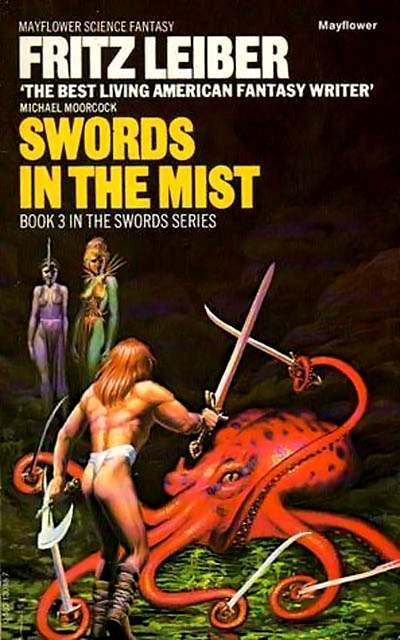
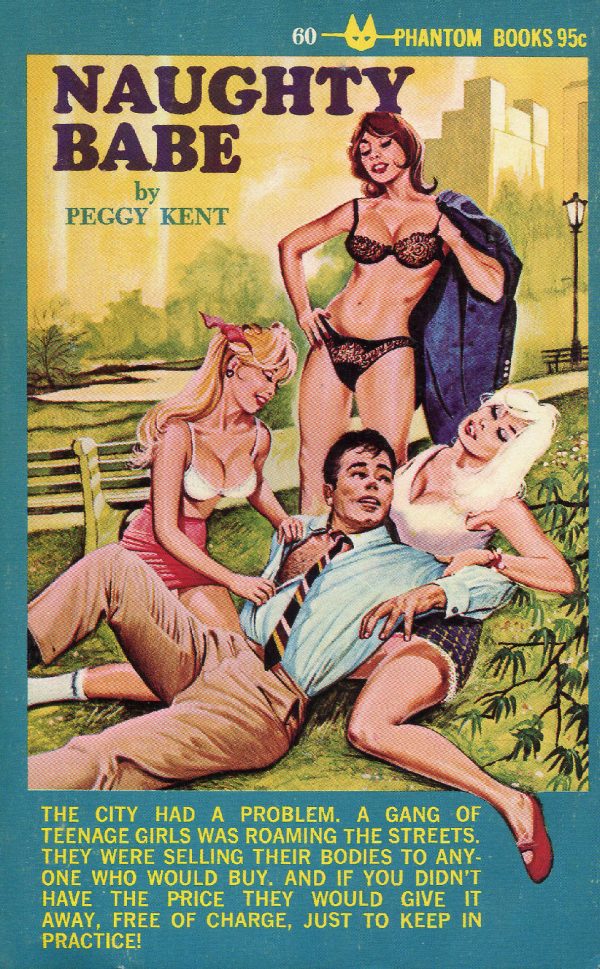
Really bad book covers (and books)

This started out being a post on bad pulp novel covers. I kept running into books that were awful even if the covers weren't that interesting, though, so the end result is something of a mixed bag.

When I was growing up my father had boxes of lurid hard-boiled detective novels in the basement, and I read a lot of them. Many of them were cheaper than 25 cents (as some of these apparently cost) and were known as "dime novels", and a lot of them had two novels in one book - if you flipped the book over and upside-down the second novel would now be the front of the book. Anyone else remember these?


“This novel probes a mounting social problem. Can the young divorcée return to a normal existence – or will she always be any man’s target?”:


This is in a category by itself: an 8th grade Serbian biology textbook from 1998 which for some reason features Nicholas Cage and Holly Hunter from Raising Arizona.


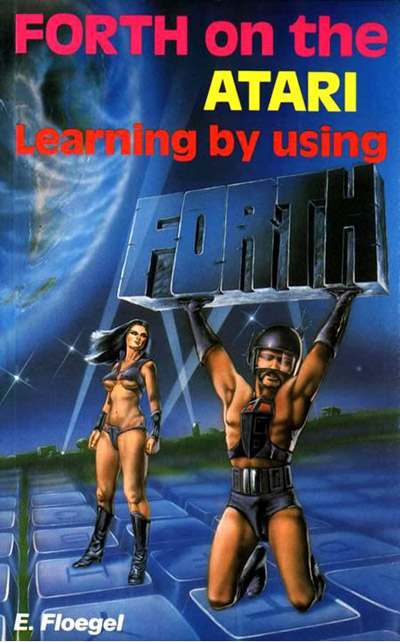
From 1983 - FORTH was an early programming language:


Buy it here

There are approximately a billion of these online - find more here, here, here and here.