Amazon Deals

New at Amazon

Sunday, May 26, 2024

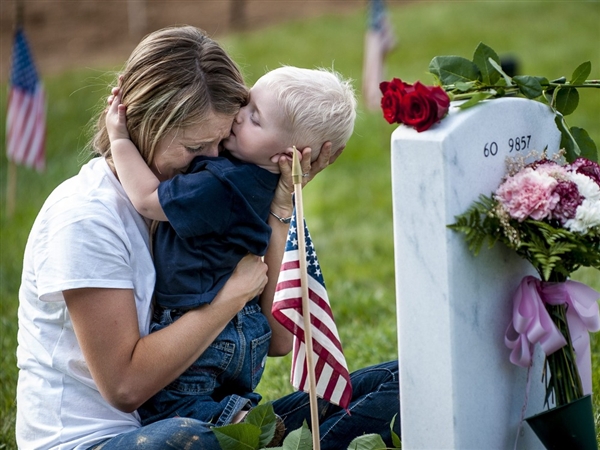
Memorial Day

Sleep, comrades, sleep and rest
On this Field of the Grounded Arms,
Where foes no more molest,
Nor sentry's shot alarms!

Ye have slept on the ground before,
And started to your feet
At the cannon's sudden roar,
Or the drum's redoubling beat.

But in this camp of Death
No sound your slumber breaks;
Here is no fevered breath,
No wound that bleeds and aches.
All is repose and peace,
Untrampled lies the sod;
The shouts of battle cease,
It is the Truce of God!

Rest, comrades, rest and sleep!
The thoughts of men shall be
As sentinels to keep
Your rest from danger free.

Your silent tents of green
We deck with fragrant flowers;
Yours has the suffering been,
The memory shall be ours. 

~ Henry Wadsworth LongfellowDecoration Day

They went with songs to the battle, they were young,
Straight of limb, true of eye, steady and aglow.
They were staunch to the end against odds uncounted;
They fell with their faces to the foe.

They shall grow not old, as we that are left grow old:
Age shall not weary them, nor the years condemn.
At the going down of the sun and in the morning
We will remember them.**

- Laurence Binyon, For the Fallen 


Until 1967 known as "Decoration Day" and formerly celebrated on 30 May before "long-weekend" national holidays were introduced the next year, various Memorial Days were first observed after the Civil War in both the North and South, when the graves of the fallen were decorated with flowers and bunting. The first widespread use of the 30 May date took place in 1868 as an observance organized by the Union Army veterans' organization, the Grand Army of the Republic, and this custom gradually spread to the rest of the country and was later expanded to honor the dead of all the nation's wars. 

In a speech just six months before his own death, General George S. Patton, Jr. (1885-1945) noted,
"It is foolish and wrong to mourn the men who died. Rather, we should thank God that such men lived." )
* N.B. Longfellow's "Decoration Day" is from his collection, In the Harbor (1882). 

** The fourth verse of (Robert) Laurence Binyon's "For the Fallen" (1914) - generally followed by the phrase, "Lest we forget" - is now part of virtually every war memorial service in Britain and her former colonies. 

Dulce et decorum est pro patria mori,
mors et fugacem persequitur virum.
nec parcit imbellis iuventae
poplitibus timidove tergo.

~ Quintus Horatius Flaccus (Horace), Carmina, III, ii, 13
(To die for the fatherland is a sweet and admirable thing.*
Death is at the heels even of the runaway, nor spares
the haunches and back of the coward and malingerer.)
A brief history of Memorial Day:


Related posts and links:
Here's How To Make An American Flag Out Of Bacon

Monday, May 20, 2024

What phrases commonly used today are derived from obsolete technologies?

I've always found phrase origins fascinating - they can give us a glimpse into an entirely different reality, and, perhaps more importantly, they remind us of how many things we accept without question. We should definitely be questioning more.

Some examples of origins you may not know: 

"Hang up the phone."
 This comes from one specific kind of land-line phone that had a kind of hook you'd hang the handset from when you were done. Doing so would pull down the hook that was connected to a switch inside the phone that would disconnect the line.
Originating from printing houses in the days of moveable type:

Upper Case and Lower Case: 
The individual type blocks used in hand typesetting are stored in shallow wooden or metal drawers known as "type cases". Each is subdivided into a number of compartments ("boxes") for the storage of different individual letters.
The terms upper and lower case originate from this division. By convention, when the two cases were taken out of the storage rack, and placed on a rack on the compositor's desk, the case containing the capitals and small capitals stood at a steeper angle at the back of the desk, with the case for the small letters, punctuation and spaces being more easily reached at a shallower angle below it to the front of the desk, hence upper and lower case.


"Mind your Ps and Qs":
A warning to printers’ apprentices to take care when selecting the little blocks with letters on, to ensure that they didn’t confuse the P block with the Q block, and vice versa.


Cut (or copy) and paste: 
The term "cut and paste" comes from the traditional practice in manuscript-editings whereby people would cut paragraphs from a page with scissors and paste them onto another page. This practice remained standard into the 1980s.


To run through the wringer (or put through the wringer) referred to this laundry device that predated the spin cycle.


There's lots of ship-related stuff (more here):

Above Board - Anything on or above the open deck. If something is open and in plain view, it is above board.

As the Crow Flies - When lost or unsure of their position in coastal waters, ships would release a caged crow. The crow would fly straight towards the nearest land thus giving the vessel some sort of a navigational fix. The tallest lookout platform on a ship came to be know as the crow's nest.

Between the Devil and the Deep Blue Sea - The devil seam was the curved seam in the deck planking closest to the side of the ship and next to the scupper gutters. If a sailor slipped on the deck, he could find himself between the devil and the deep blue sea.

Deck hatch
Booby Hatch - Aboard ship, a booby hatch is a sliding cover or hatch that must be pushed away to allow access or passage.

Buoyed Up - Using a buoy to raise the bight of an anchor cable to prevent it from chafing on a rough bottom.

By and Large - Currently means in all cases or in any case. From the nautical: by meaning into the wind and large meaning with the wind: as in, "By and Large the ship handled very well."

Groggy - In 1740, British Admiral Vernon (whose nickname was "Old Grogram" for the cloak of grogram which he wore) ordered that the sailors' daily ration of rum be diluted with water. The men called the mixture "grog". A sailor who drank too much grog was "groggy".

Leeway - The weather side of a ship is the side from which the wind is blowing. The Lee side is the side of the ship sheltered from the wind. A lee shore is a shore that is downwind of a ship. If a ship does not have enough "leeway" it is in danger of being driven onto the shore.

Pipe Down - Means stop talking and be quiet. The Pipe Down was the last signal from the Bosun's pipe each day which meant "lights out" and "silence".

Pooped - The poop is the stern section of a ship. To be pooped is to be swamped by a high, following sea.

Rummage Sale - From the French "arrimage" meaning ship's cargo. Damaged cargo was sold at a rummage sale.

Scuttlebutt - A butt was a barrel. Scuttle meant to chop a hole in something. The scuttlebutt was a water barrel with a hole cut into it so that sailors could reach in and dip out drinking water. The scuttlebutt was the place where the ship's gossip was exchanged.

Skyscraper - A small triangular sail set above the skysail in order to maximize effect in a light wind.

Bitter end
Slush Fund - A slushy slurry of fat was obtained by boiling or scraping the empty salted meat storage barrels. This stuff called "slush" was often sold ashore by the ship's cook for the benefit of himself or the crew. The money so derived became known as a slush fund.

The Bitter End - The end of an anchor cable is fastened to the bitts at the ship's bow. If all of the anchor cable has been payed out you have come to the bitter end.

The Devil to Pay - To pay the deck seams meant to seal them with tar. The devil seam was the most difficult to pay because it was curved and intersected with the straight deck planking. Some sources define the "devil" as the below-the-waterline-seam between the keel and the the adjoining planking. Paying the Devil was considered to be a most difficult and unpleasant task.

Sails "in the wind"
Three Sheets to the Wind - A sheet is a rope line which controls the tension on the downwind side of a square sail. If, on a three masted fully rigged ship, the sheets of the three lower course sails are loose, the sails will flap and flutter and are said to be "in the wind". A ship in this condition would stagger and wander aimlessly downwind.

To Know the Ropes - There was miles and miles of cordage in the rigging of a square rigged ship. The only way of keeping track of and knowing the function of all of these lines was to know where they were located. It took an experienced seaman to know the ropes.

And, moving beyond the nautical:

Post in the sense of "a blog post": from the act of nailing a sign to a wooden post, or from sending a message via a system of posted riders and horses (i.e., they are assigned to their stations, a.k.a. their posts).

Run of the Mill: Mills have very large and heavy grinding stones, it takes some time to get to normal speed for grinding grains. At the operational speed, they produce a nice, fine and uniform powder or grounded grains (flour etc.), this "steady state" output was called run of the mill. Which has come to mean "ordinary".

Software bugs and debugging: In the context of computers it uses was popularized by Grace Murray Hopper, involving an electromechanical fault in the Mark II computer, due to a moth stuck in one of the relays. 


Know of any others? Leave them in the comments!

Wednesday, April 24, 2024

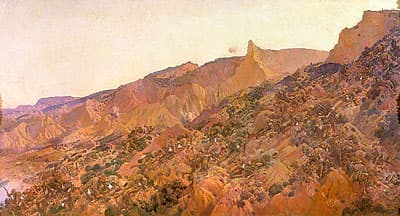
April 25th is ANZAC Day, the anniversary of the Battle of Gallipoli

Ship after ship, crammed with soldiers, moved slowly out of the harbour, in the lovely day, and felt again the heave of the sea. No such gathering of fine ships has ever been seen upon the earth, and the beauty and the exaltation of the youth upon them made them like sacred things as they moved away... 

The Making of a Legend, The Landing at Anzac Cove by Lambert
These men had come from all parts of the British world... They had said good-bye to home that they might offer their lives in the cause we stand for. In a few hours at most, as they well knew, perhaps a tenth of them would have looked their last upon the sun, and be a part of the foreign earth or the dumb things that tides push. Many of them would have disappeared forever from the knowledge of man, blotted from the book of life none would ever know how, by a fall, a chance shot in the darkness, or alone, like a hurt beast, in some scrub or gulley, far from comrades and the English speech and the English singing.

John Masefield (wiki) (Gallipoli)*

Damn the Dardanelles. They will be our grave.

~ Admiral Sir John Fisher (to the Dardanelles Committee, 1915)

Those heroes that shed their blood and lost their lives... You are now lying in the soil of a friendly country. Therefore rest in peace. There is no difference between the Johnnies and the Mehmets to us where they lie side by side now here in this country of ours... you, the mothers, who sent their sons from faraway countries, wipe away your tears; your sons are now lying in our bosom and are in peace. After having lost their lives on this land, they have become our sons as well.

~Mustafa Kemal - Atatürk (wiki) (tribute to the ANZAC dead, 1934)

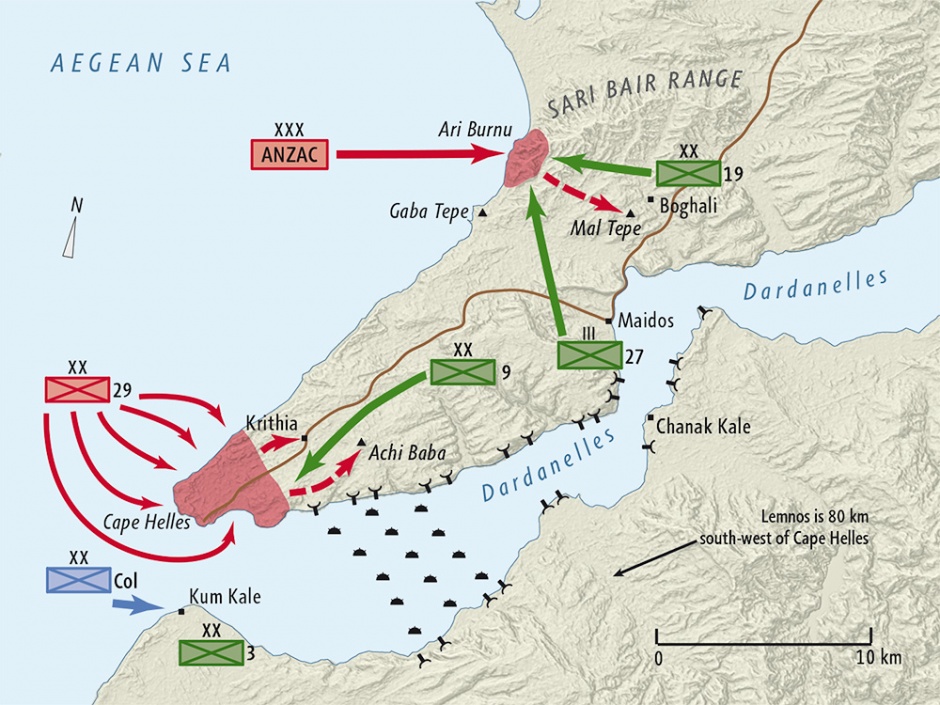
Map of the battle - larger version here
April 25th is celebrated in Australia and New Zealand as ANZAC Day, commemorating the key participation of the Australia-New Zealand Army Corps (ANZAC) in the ill-fated Allied assault on the Turkish-held Gallipoli Peninsula in 1915 during World War I. This was one of the first large-scale amphibious invasion of modern times and the first major military operation in which Australia and New Zealand participated on behalf of the British Empire. As a result, the Gallipoli campaign was perhaps the key  defining event for Australia's nationhood, as it was in a sense for Turkey's also. Turkish Lieutenant-Colonel Mustafa Kemal, the hero of Gallipoli's successful defense, later became the founder of modern Turkey, adopting the name "Atatürk" - father of the Turks.

source
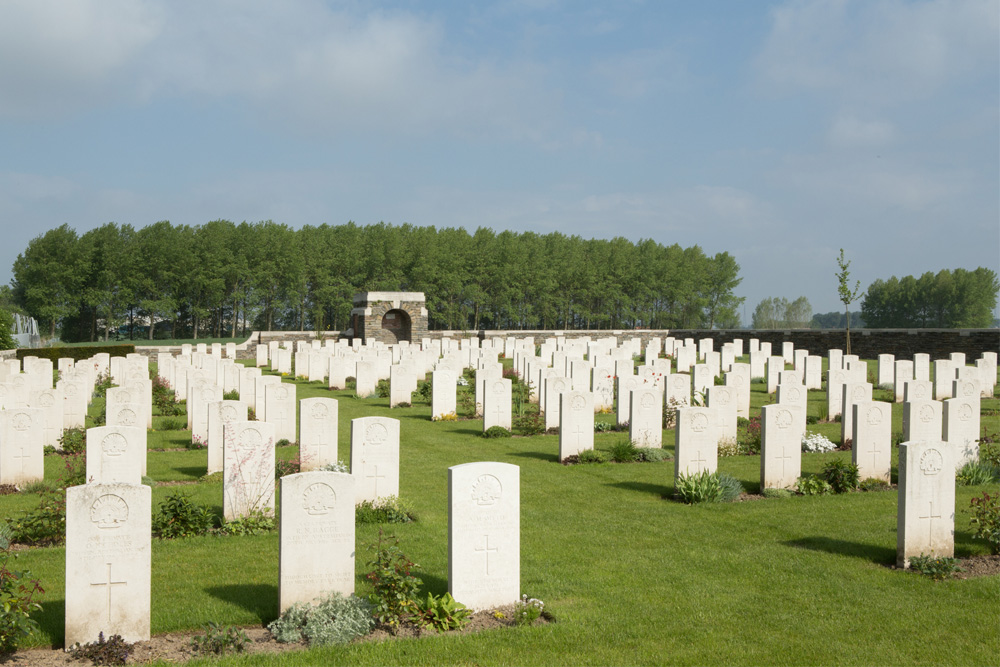
Today much of the Gallipoli Peninsula is a Turkish national park with over 20 cemeteries lovingly tended by the Commonwealth War Graves Commission. We visited there several years ago on ANZAC Day, taking a bus with a dozen or so others, mostly Aussies, from the nearby town of Canakkale to tour the cemeteries and battlefields. The tour guide read the Ataturk quotation above, along with, as is typical, the fourth stanza of Lawrence Binyon's For The Fallen:
They shall grow not old, as we that are left grow old:
Age shall not weary them, nor the years condemn.
At the going down of the sun and in the morning
We will remember them.
Followed, as is also typical, by "Lest we forget..."

The visitor can not help but be struck by the stark, natural beauty of its steep, scrubby, deeply-gullied terrain and sadly moved by the remembrance of the tens of thousands of men on both sides who lost their lives there in a futile clash of empires - only a few miles across the "wine-dark sea" from the ruins of ancient Troy. Of that earlier struggle, Homer wrote in book XIII of the Iliad,

"It is not possible to fight beyond your strength, even if you strive."

* N.B. John Masefield was the Poet Laureate of England from 1930 until his death in 1967. He served as a medical orderly on the Western Front in World War I and later wrote Gallipoli to counter German propaganda seeking to exploit the British defeat there.

The most readable account of the Gallipoli campaign remains Alan Moorehead's venerable history, Gallipoli, from the late 1950s. Also, the 1981 Australian movie of that same name, starring the young Mel Gibson, is an excellent evocation of both the horror and exhilaration of those times. There's a more recent movie, apparently, but I'm not familiar with it, and... Mel Gibson.

Several years ago, Peter Jackson restored and aggregated quite a bit of contemporaneous Gallipoli film:

Here's a 9 minute documentary:


And, as seems inevitable these days, there's a Lego reenactment of the events:


There's a good article on the 2015 centennial at The Guardian, and much more at the Australian government's site.

Parts of the text above are based on the late, great Ed Whitman's Quotation of the Day. Ed was my significant other for decades, and is the author of Hunters and Killers: Volume 1: Anti-Submarine Warfare from 1776 to 1943 and Hunters and Killers: Volume 2: Anti-Submarine Warfare from 1943. I miss him every day.

It's Oliver Cromwell's birthday - here's his speech throwing out the corrupt Parliament, with bonus Monty Python

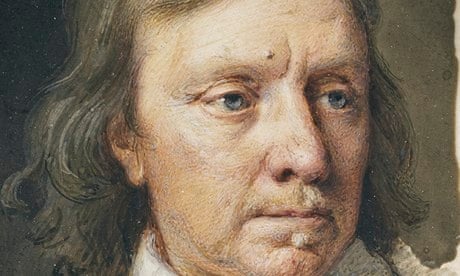
Today is the anniversary of the birth of Oliver Cromwell (wiki) (1599-1658), Lord Protector of England during the era of the Commonwealth that followed the overthrow and execution of King Charles I in 1649. Cromwell attended Cambridge but never finished his degree. A fervent Puritan, he entered Parliament in 1628 and strongly opposed the king. 


When the English Civil War (wiki) broke out in 1642, Cromwell's evident military genius propelled him into leadership positions with the Parliamentary army, and he defeated the royalist forces at Marston Moor (1644) and Naseby (1645). After the king's capture, Cromwell was a leading advocate for his condemnation, and upon Charles's death and the ensuing dismissal of Parliament, he ruled England until his own death in 1658. 

His son, Richard Cromwell (1626-1712), succeeded him, but within a few years, the Commonwealth lost popular support, and the monarchy was restored in Charles II in 1660. 

His address dismissing the Rump Parliament is one of the best speeches ever. Here's the online version of Chambers' Book of Days setting the scene:
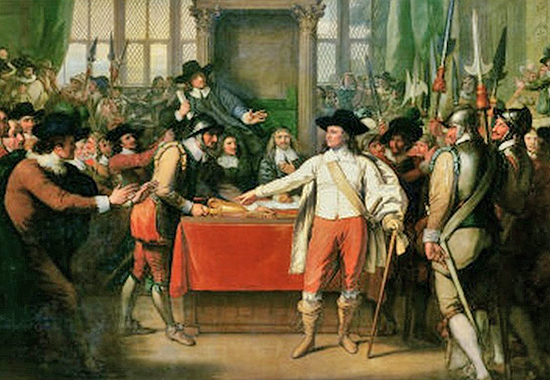
Cromwell, having ordered a company of musketeers to follow him, entered the House 'in plain black clothes and grey worsted stockings,' and, sitting down, listened for a while to their proceedings. Hearing at length the question put, that the bill do pass, he rose, put off his hat, and began to speak. In the course of his address, he told them of their self-seeking and delays of justice, till at length Sir Peter Wentworth interrupted him with a remonstrance against such language. Then blazing up, he said, 'We have had enough of this—I will put an end to your prating.' Stepping into the floor of the House, and clapping on his hat, he commenced a violent harangue, which he occasionally emphasized by stamping with his feet, and which came mainly to this,
And the text of the speech itself:
It is high time for me to put an end to your sitting in this place, which you have dishonored by your contempt of all virtue, and defiled by your practice of every vice; ye are a factious crew, and enemies to all good government; ye are a pack of mercenary wretches, and would like Esau sell your country for a mess of pottage, and like Judas betray your God for a few pieces of money.
Is there a single virtue now remaining amongst you? Is there one vice you do not possess? Ye have no more religion than my horse; gold is your God; which of you have not barter'd your conscience for bribes? Is there a man amongst you that has the least care for the good of the Commonwealth?
Ye sordid prostitutes have you not defil'd this sacred place, and turn'd the Lord's temple into a den of thieves, by your immoral principles and wicked practices? Ye are grown intolerably odious to the whole nation; you were deputed here by the people to get grievances redress'd, are yourselves gone! So! Take away that shining bauble there, and lock up the doors. 
In the name of God, go!
Here's Monty Python's brief history of Cromwell (lyrics below video):


Lyrics - for an explanation of the allusions, see this Wikipedia article:

The most interesting thing about King Charles, the first
Is that he was 5 foot 6 inches tall at the start of his reign
But only 4 foot 8 inches tall at the end of it because of
Oliver Cromwell, Lord Protector of England Puritan
Born in 1599 and died in 1658 September

Was at first only MP for Hunting Don, but then he led the Ironside Cavalry

At Marston Moor in 1644 and won then he founded the New Model Army
And praise be, beat the Cavaliers at Naisby and the King fled up North
Like a bat to the Scots

But under the terms of John Pimm's Solemn League and Covenant
The Scots handed King Charles the first, over to
Oliver Cromwell, Lord Protector of England and his warts
Born in 1599 and died in 1658 September

But alas, oy vay! The disagreement then broke out between
The Presbyterian Parliament and the Military who meant
To have an independent bent and so the 2nd Civil War broke out
And the Roundhead ranks faced the Cavaliers at Preston Banks
And the King lost again, silly thing, stupid Git

And Cromwell sent Colonel Pride to purge the House of Commons
Of the Presbyterian Royalists leaving behind only the rump Parliament
Which appointed a High Court at Westminster Hall to indict
Charles, the first for tyranny, ooh! Charles was sentenced to death
Even though he refused to accept that the court had jurisdiction
Say goodbye to his head


Poor King Charles laid his head on the block
January 1649, down came the axe and in the silence that followed
The only sound that could be heard was a solitary giggle from
Oliver Cromwell, Lord Protector of England, ole
Born in 1599 and died in 1658 September

Then he smashed Ireland, set up the Commonwealth and more
He crushed the Scots at Worcester and beat the Dutch at sea in 1653
And then he dissolved the rump Parliament
And with Lambert's consent wrote the instrument of Government
Under which Oliver was Protector at last

The end

When Cromwell died, the confusions that followed produced the restoration of monarchy, and some time was employed in repairing the ruins of our constitution, and restoring the nation to a state of peace. In every change there will be many that suffer real or imaginary grievances, and therefore many will be disillusioned.

This was, perhaps, the reason why several colonies had their beginning in the reign of Charles the Second. The Quakers willingly sought refuge in Pennsylvania; and it is not unlikely that Carolina owed its inhabitants to the remains of that restless disposition, which had given so much disturbance to our country, and had now no opportunity of acting at home.

~Samuel Johnson (wiki), (An Introduction To The Political State Of Great Britain, 1756) 

My favorite Cromwell quotation:

I beseech you, in the bowels of Christ, think it possible that you may be mistaken. 

~Cromwell (letter to the General Assembly of the Kirk of Scotland, August 1650)

After the Restoration, a vengeful Parliament ordered the exhumation and posthumous execution of Cromwell's corpse, along with those of the prominent regicides, Ireton and Bradshaw. Their bodies were removed from their tombs and dragged to Tyburn gallows, where they were publicly hanged and beheaded on 30 January 1661, the twelfth anniversary of the execution of Charles I.

The headless corpses were thrown into an unmarked pit, but the heads were displayed on spiked poles above Westminster Hall, where they remained for several decades.

During the 18th and 19th centuries, Cromwell's head became a collector's curiosity and was sometimes put on public exhibition. After scientific analysis confirmed that the head was probably genuine, it was finally interred in 1960 in the chapel of Cromwell's old college Sidney Sussex, Cambridge, its precise location undisclosed.

Read more: The incredible journey of Oliver Cromwell's head.

Here's a brief (8 minutes) history by the BBC:


*To the famous English portrait painter, Sir Peter Lely (1618-1680), Cromwell supposedly remarked,
"Mr. Lely, I desire you would use all your skill to paint my picture truly like me, and not flatter me at all; but remark all these roughnesses, pimples, warts, and everything as you see me, otherwise I will not pay a farthing for it." 
Parts of the text above are based on the late, great Ed Whitman's Quotation of the Day. Ed was my significant other for decades, and is the author of Hunters and Killers: Volume 1: Anti-Submarine Warfare from 1776 to 1943 and Hunters and Killers: Volume 2: Anti-Submarine Warfare from 1943. I miss him every day.

Sunday, April 14, 2024

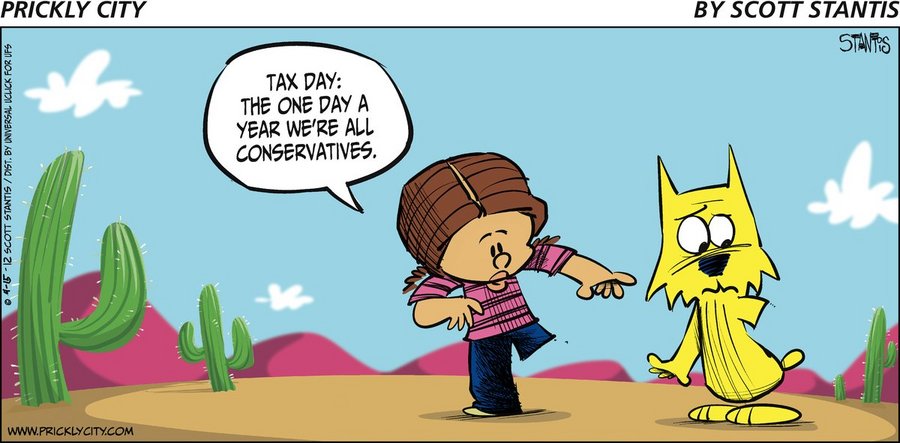
Tax day quotes, cartoons, and links, and the 1967 cartoon version of The Beatles "Taxman"

The first modern income tax was levied in Britain between 1799 and 1816 to fund the Napoleonic wars, but it did not become permanent until 1874. Similarly the United States adopted a like measure during the Civil War, but it was not institutionalized until the ratification of the 16th amendment to the Constitution in 1913. Related: tax protester Sixteenth Amendment arguments.

When plunder becomes a way of life for a group of men in a society, over the course of time they create for themselves a legal system that authorizes it and a moral code that glorifies it.

~ Frédéric Bastiat (wiki)

A government that robs Peter to pay Paul can always depend on the support of Paul.


There is no worse tyranny than to force a man to pay for what he does not want merely because you think it would be good for him.


I cannot undertake to lay my finger on that article of the Constitution which granted a right to Congress of expending, on objects of benevolence, the money of their constituents.

~ James Madison

The point to remember is that what the government gives it must first take away.

~ John S. Coleman

Here's the 1967 cartoon version of The Beatles "Taxman": lyrics below the video. George Harrison (who wrote the song) explains why (more here):
“I had discovered I was paying a huge amount of money to the taxman,” he once explained in interview.  “You are so happy that you’ve finally started earning money – and then you find out about tax.  In those days we paid nineteen shillings and sixpence out of every pound (there were twenty shillings in the pound), and with supertax and surtax and tax-tax it was ridiculous – a heavy penalty to pay for making money…It was, and still is, typical.  Why should this be so?  Are we being punished for something we have forgotten to do?...That was the big turn-off for Britain.  Anybody who ever made any money moved to America or somewhere else.”

Let me tell you how it will be:
There's one for you, nineteen for me,
'Cause I'm the taxman, yeah, I'm the taxman.

Should five percent appear too small,
Be thankful I don't take it all
'Cause I'm the taxman, yeah, I'm the taxman.

If you drive a car, I'll tax the street,
If you try to sit, I'll tax your seat.
If you get too cold, I'll tax the heat,
If you take a walk, I'll tax your feet.

Don't ask me what I want it for,
If you don't want to pay some more,
'Cause I'm the taxman, yeah, I'm the taxman.

Now my advice for you who die:
Declare the pennies on your eyes,
'Cause I'm the taxman, yeah, I'm the taxman,
And you're working for no one but me.

The Beatles (George Harrison) ("The Taxman")

And from 1943, here's Donald Duck telling you to pay your taxes:


Congress can raise taxes because it can persuade a sizable fraction of the populace that somebody else will pay.


To force a man to pay for the violation of his own liberty is indeed an addition of insult to injury.

~ Benjamin Tucker

The difference between death and taxes is death doesn't get worse every time Congress meets.

We contend that for a nation to try to tax itself into prosperity is like a man standing in a bucket and trying to lift himself up by the handle.

~ Winston Churchill

Collecting more taxes than is absolutely necessary is legalized robbery.

~ Calvin Coolidge

It would be a hard government that should tax its people one-tenth part of their income.

~ Benjamin Franklin, Poor Richard's Almanac

What at first was plunder assumed the softer name of revenue.

~ Thomas Paine

What is the difference between a taxidermist and a tax collector? The taxidermist takes only your skin. 

To tax and to please, no more than to love and to be wise, is not given to men. 

~ Edmund Burke 

Civil servants and priests, soldiers and ballet dancers, schoolmasters and police constables, Greek museums and Gothic steeples, civil list and services list - the common seed within which all these fabulous beings slumber in embryo is taxation.