Amazon Deals

New at Amazon

Showing posts with label churchill. Show all posts

Sunday, April 14, 2024

Tax day quotes, cartoons, and links, and the 1967 cartoon version of The Beatles "Taxman"

The first modern income tax was levied in Britain between 1799 and 1816 to fund the Napoleonic wars, but it did not become permanent until 1874. Similarly the United States adopted a like measure during the Civil War, but it was not institutionalized until the ratification of the 16th amendment to the Constitution in 1913. Related: tax protester Sixteenth Amendment arguments.

When plunder becomes a way of life for a group of men in a society, over the course of time they create for themselves a legal system that authorizes it and a moral code that glorifies it.

~ Frédéric Bastiat (wiki)
A government that robs Peter to pay Paul can always depend on the support of Paul.


There is no worse tyranny than to force a man to pay for what he does not want merely because you think it would be good for him.


I cannot undertake to lay my finger on that article of the Constitution which granted a right to Congress of expending, on objects of benevolence, the money of their constituents.

~ James Madison

The point to remember is that what the government gives it must first take away.

~ John S. Coleman

Here's the 1967 cartoon version of The Beatles "Taxman": lyrics below the video. George Harrison (who wrote the song) explains why (more here):
“I had discovered I was paying a huge amount of money to the taxman,” he once explained in interview.  “You are so happy that you’ve finally started earning money – and then you find out about tax.  In those days we paid nineteen shillings and sixpence out of every pound (there were twenty shillings in the pound), and with supertax and surtax and tax-tax it was ridiculous – a heavy penalty to pay for making money…It was, and still is, typical.  Why should this be so?  Are we being punished for something we have forgotten to do?...That was the big turn-off for Britain.  Anybody who ever made any money moved to America or somewhere else.”

Let me tell you how it will be:
There's one for you, nineteen for me,
'Cause I'm the taxman, yeah, I'm the taxman.

Should five percent appear too small,
Be thankful I don't take it all
'Cause I'm the taxman, yeah, I'm the taxman.

If you drive a car, I'll tax the street,
If you try to sit, I'll tax your seat.
If you get too cold, I'll tax the heat,
If you take a walk, I'll tax your feet.

Don't ask me what I want it for,
If you don't want to pay some more,
'Cause I'm the taxman, yeah, I'm the taxman.

Now my advice for you who die:
Declare the pennies on your eyes,
'Cause I'm the taxman, yeah, I'm the taxman,
And you're working for no one but me.

The Beatles (George Harrison) ("The Taxman")

And from 1943, here's Donald Duck telling you to pay your taxes:


Congress can raise taxes because it can persuade a sizable fraction of the populace that somebody else will pay.


To force a man to pay for the violation of his own liberty is indeed an addition of insult to injury.

~ Benjamin Tucker

The difference between death and taxes is death doesn't get worse every time Congress meets.

We contend that for a nation to try to tax itself into prosperity is like a man standing in a bucket and trying to lift himself up by the handle.

~ Winston Churchill

Collecting more taxes than is absolutely necessary is legalized robbery.

~ Calvin Coolidge

It would be a hard government that should tax its people one-tenth part of their income.

~ Benjamin Franklin, Poor Richard's Almanac

What at first was plunder assumed the softer name of revenue.

~ Thomas Paine

What is the difference between a taxidermist and a tax collector? The taxidermist takes only your skin. 

To tax and to please, no more than to love and to be wise, is not given to men. 

~ Edmund Burke 

Civil servants and priests, soldiers and ballet dancers, schoolmasters and police constables, Greek museums and Gothic steeples, civil list and services list - the common seed within which all these fabulous beings slumber in embryo is taxation. 

Friday, January 17, 2020

Friday links

100 years ago - Prohibition in the United States began in January 1920 and ended in December 1933. Related: here's Winston Churchill's doctor's note allowing him to drink "unlimited" alcohol in prohibition-era America.

For Al Capone's birthday, here's the story of that time he bought large blocks of stock in miniature golf construction companies.


January 17 is Ben Franklin's birthday - bio, quotes, videos, his 200+ synonyms for drunk, the bodies found in his basement, and more.

What could go wrong? Living ‘Franken-concrete’ which can heal its own cracks and even ‘give birth’ to new bricks, has been developed by scientists.

The Ten Most Important Weapons of the Middle Ages.

ICYMI, most recent links are here, and celebrating the Feast of the Ass, the science behind why dark winter days bum people out, learning any subject with Richard Feynman's notebook technique, the folklore of gin, and a 1918 publication on remedial politics for newly-enfranchised women in the UK.

Monday, March 4, 2019

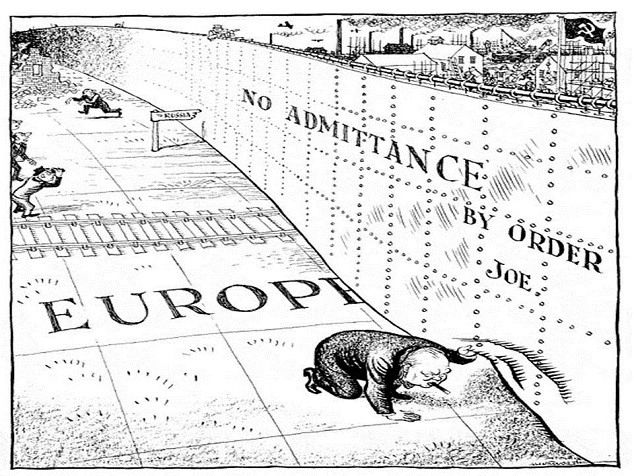
March 5 is the anniversary of Winston Churchill's "Iron Curtain" speech


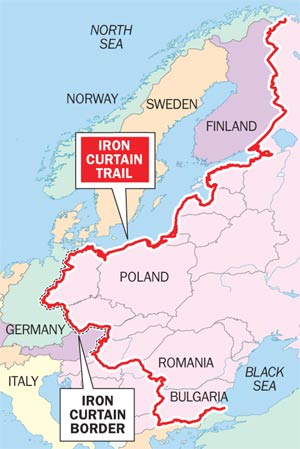
From Stettin in the Baltic to Trieste in the Adriatic, an iron curtain has descended across the Continent. 

Behind that line lie all the capitals of the ancient states of Central and Eastern Europe. Warsaw, Berlin, Prague, Vienna, Budapest, Belgrade, Bucharest and Sofia, all these famous cities and the populations around them lie in what I must call the Soviet sphere, and all are subject in one form or another, not only to Soviet influence but to a very high and, in many cases, increasing measure of control from Moscow. 

~ Winston S. Churchill (wiki) (1874-1965) (speech, Fulton Missouri, 5 March 1946) 

Communism has never come to power in a country that was not disrupted by war or corruption, or both. 

~ John F. Kennedy (wiki) (1917-1963) (speech to NATO, 3 July 1963)

Larger version and related maps here.
An uncharacteristically optimistic quote from Dr. Johnson:

No government power can be abused long. Mankind will not bear it ... There is a remedy in human nature against tyranny, that will keep us safe under any form of government. 

~ Dr. Samuel Johnson (wiki) (1709-1884) (quoted in Boswell's Life of Johnson, 31 March, 1772) 

March 5th is the anniversary of Winston Churchill's epoch-making "iron curtain" speech in 1946, at Westminster College in Fulton, Missouri - the most famous acknowledgement of the existence of a "Cold War" (wiki) between Russia and the West, which put an end to the alliance that defeated the Nazis in World War II. The Cold War, which would often became quite hot in places like Korea and Vietnam - and damn near led to a nuclear exchange during the Cuban missile crisis of 1962 - continued for 45 years until the dissolution of the Soviet Union in 1991. 

Sadly, however, the freedoms regained by the nations of eastern Europe seem now to be threatened by growing authoritarianism, and under Vladimir Putin, a new Cold War may already upon us.

Churchill's "iron curtain" phrase had many antecedents, described fully in a relevant Wikipedia article.

Churchill himself used the phrase a year before in a telegram to U.S. President Harry S. Truman, but perhaps most startling was its earliest appearance in the present context in an article by Nazi propaganda minister Joseph Goebbels (wiki) (1897-1945) in the Nazi newspaper Das Reich on 23 February 1945: 
"Should the German people lay down their arms, the Soviets ... would occupy all eastern and southeastern Europe, together with the greater part of the Reich. Over all this territory, which with the Soviet Union included, would be of enormous extent, an iron curtain [ein eiserner Vorhang] would at once descend."

Related posts:


Before there was Laffer: Churchill on the fiscal cliff..


Parts of the text above is adapted from Ed's Quotation of the Day, only available via email - leave your email address in the comments if you'd like to be added to his list. Ed is the author of Hunters and Killers: Volume 1: Anti-Submarine Warfare from 1776 to 1943 and Hunters and Killers: Volume 2: Anti-Submarine Warfare from 1943.

Wednesday, December 5, 2018

Wednesday links

The precursor to the war on drugs - Prohibition in the United States began on January 16, 1920 and ended on December 5, 1933. Related: here's Winston Churchill's doctor's note allowing him to drink "unlimited" alcohol in prohibition-era America.

Scientists Solve Mystery of How Wombats Produce Cubed Poo.


A selection of weird nativity sets.


Field of dreams: heartbreak and heroics at the World Plowing Championships.

Friday, June 1, 2018

Friday Links

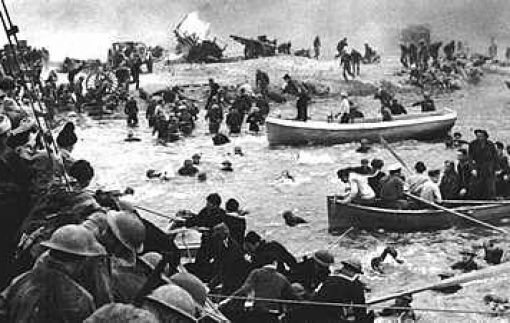
Churchill's "We shall fight on the beaches...we shall never surrender" speech: it's the anniversary of the evacuation of Dunkirk by a flotilla of small boats.

June 1 is National Doughnut Day. Here's where to find free doughnuts and how doughnuts are made

Artificial Intelligence Is Cracking Open the Vatican's Secret Archives.


A Brief History of the Stoplight.

Europe’s Oldest Tree Lives in Italy.

ICYMI, Wednesday's links are here, and include 18th century tips on managing servants., Kurt Vonnegut's letter home after imprisonment in an underground slaughterhouse (Slaughterhouse Five) during the Dresden bombing, teaching a spider to jump on demand, and the anniversary of the 1453: fall of Constantinople to the Ottomans.

Monday, March 5, 2018

Monday links

March 5th is the anniversary of Winston Churchill's Iron Curtain speech.

Stalin’s Doomed Meteorologist - imprisoned for “false weather forecasts,” he sent sketches to the family he’d never see again.


Victorian beauty tips.

The Weird True Story of the Rise and Fall of the Waterbed

ICYMI, Friday's links are here, and include why ballet dancers turn clockwise, a 1799 list of risk factors for spontaneous combustion, plus more recent science, GPS doodling via bicycle, and, for Dr. Seuss's birthday, his little-known book of nudes: The Seven Lady Godivas (SFW).

Thursday, November 30, 2017

Winston Churchill's was born on November 30, 1874: here he is on Islam

How dreadful are the curses which Mohammedanism lays on its votaries!

Besides the fanatical frenzy, which is as dangerous in a man as hydrophobia in a dog, there is this fearful fatalistic apathy. The effects are apparent in many countries. Improvident habits, slovenly systems of agriculture, sluggish methods of commerce, and insecurity of property exist wherever the followers of the Prophet rule or live. A degraded sensualism deprives this life of its grace and refinement; the next of its dignity and sanctity. The fact that in Mohammedan law every woman must belong to some man as his absolute property—either as a child, a wife, or a concubine—must delay the final extinction of slavery until the faith of Islam has ceased to be a great power among men. Individual Moslems may show splendid qualities. Thousands become the brave and loyal soldiers of the Queen: all know how to die. But the influence of the religion paralyzes the social development of those who follow it. No stronger retrograde force exists in the world. Far from being moribund, Mohammedanism is a militant and proseltyzing faith. It has already spread throughout Central Africa, raising fearless warriors at every step; and were it not that Christianity is sheltered in the strong arms of science—the science against which it had vainly struggled—the civilization of modern Europe might fall, as fell the civilization of ancient Rome.

Churchill (wiki), from The River War, via Powerline.

I have never accepted what many people have kindly said - namely, that I inspired the nation... It was the nation and the race dwelling all round the globe that had the lion's heart. I had the luck to be called upon to give the roar. I also hope that I sometimes suggested to the lion the right place to use his claws. 

~ Churchill (speech in Westminster Hall, 30 November 1954) 

The ability to foretell what is going to happen tomorrow, next week, and next year. And to have the ability afterwards to explain why it didn't happen. 

~ Churchill (describing the qualifications of a prospective politician, quoted in Adler, Churchill Wit

Naval tradition? Monstrous. Nothing but rum, sodomy, prayers, and the lash. 

~ Churchill (quoted in Harold Nicholson, diary, 17 August 1950) 

He mobilized the English language and sent it into battle to steady his fellow countrymen and hearten those Europeans upon whom the long dark night of tyranny had descended.* 

~ Edward R. Murrow (wiki) (1908-1965) (broadcast, 30 November 1954) 

November 30 is the anniversary of the birth in 1874 of the greatest British statesman of recent times, Winston Spencer Churchill (1874-1965). Born into an aristocratic family, Churchill was educated at Harrow and Sandhurst and served in the British Army in India, the Sudan, and South Africa. Elected to Parliament in 1900, he became the First Lord of the Admiralty in 1911 but was discredited and forced to resign by the failure of World War I's Gallipoli campaign in 1915. 

Subsequently, Churchill held several cabinet-level offices under both Liberal and Conservative governments, but he left politics between 1929 and 1939 and restricted himself largely to warning of the rise of Nazi Germany. In 1940, seven months after the outbreak of World War II - Britain's darkest hour - he supplanted Neville Chamberlain as Prime Minister and led his nation to victory in 1945. Turned out of office in the next election, he nonetheless returned as Prime Minister between 1951 and 1955. Also a prolific author, Churchill received the 1953 Nobel prize in literature for such books as The World Crisis (1923-29), a biography of his ancestor, the Duke of Marlborough, his multi-volume memoir of World War II, and The History of the English-Speaking Peoples

The video below is of the "We shall fight on the beaches speech" (on the occasion of the evacuation of Dunkirk), perhaps Churchill's greatest wartime utterance, in the House of Commons, 4 June 1940. I'm struck by his note of weary resignation, almost totally lacking in rhetorical enthusiasm. Text of the most famous paragraph is below - full text and more information in this post

Even though large tracts of Europe and many old and famous States have fallen or may fall into the grip of the Gestapo and all the odious apparatus of Nazi rule, we shall not flag or fail. We shall go on to the end. We shall fight in France, we shall fight on the seas and oceans, we shall fight with growing confidence and growing strength in the air, we shall defend our island, whatever the cost may be. We shall fight on the beaches, we shall fight on the landing grounds, we shall fight in the fields and in the streets, we shall fight in the hills; we shall never surrender, and if, which I do not for a moment believe, this island or a large part of it were subjugated and starving, then our Empire beyond the seas, armed and guarded by the British Fleet, would carry on the struggle, until, in God's good time, the New World, with all its power and might, steps forth to the rescue and the liberation of the old.
Related:


March 5 is the anniversary of Winston Churchill's Iron Curtain speech.

Before there was Laffer: Churchill on the fiscal cliff.

Churchill on women in combat.

Churchill's Doctor's Note Allowing Him to Drink "Unlimited" Alcohol in Prohibition America.

Thursday links

Winston Churchill was born on November 30, 1874: here he is on Islam, here's the story of his "Iron Curtain" speech and of his "We shall fight on the beaches...we shall never surrender" speech (on the occasion of the evacuation of Dunkirk), and here's Churchill's Doctor's Note allowing him to drink "unlimited" alcohol in prohibition-era America. Vintage Churchill:
"You may, by the arbitrary and sterile act of Government—for remember, Governments create nothing and have nothing to give but what they have first taken away—you may put money in the pocket of one set of Englishmen, but it will be money taken from the pockets of another set of Englishmen, and the greater part will be spilled on the way."
Congressmen Behaving Badly, the 1856 version.

Three people in the United States still rely on "iron lungs" to breathe.


New Germany in Texas: how thousands of German families ended up in the Republic of Texas in the 19th century.

ICYMI, Friday's links are here, and include cat and dog research (including two studies on how dogs affect their owner's urine), "Evacuation Day, when the British ran 'way" from New York City at the end of the Revolutionary War, the history of Jingle Bells, and a supercut of people in movies getting angry and flipping over tables.

Wednesday, November 29, 2017

Churchill on women in combat

Excerpt from a Strand magazine article in 1938:

We take the immunity of women from violence so much for granted that we do not perceive what inroads are being made upon it. These inroads come from opposite quarters. The first is the feminist movement, which claims equal rights for women, and in its course prides itself in stripping them of their privileges. Secondly, the mud-rush of barbarism which is breaking out in so many parts of the world owns no principle but that of lethal force. Thus we see both progressive and reactionary forces luring women nearer to danger, and exposing them to the retaliation of the enemy...

The part which our women played in winning the War was enshrined in the grant of them to vote which for so many years they had vainly sought to wrest from successive Governments by methods too often suggesting that they had not the civic sense to use the privilege rightly. It was the War which solved that problem, as it solved so many others in our internal affairs. . .

On the other hand, even in the last war there were many things that women could do apart from killing which added to the fighting power of the army. There were innumerable duties of all kinds behind the front which brought them ever nearer to the line and into danger. We must expect that this will continue to develop in a war for the future.

Friday, June 2, 2017

Friday links

17th century advice on how to encrypt and send secret messages.


7 TV Characters Killed Off Out of Spite

The evacuation of Dunkirk by a flotilla of small boats, the inspiration for Churchill's "We shall fight on the beaches...we shall never surrender" speech, took place between May 26 and June 4, 1940. 

How the Self-Esteem Craze Took Over America.

Becoming Bond: How a Car Salesman Landed the Role of James Bond 007.

ICYMI, Thursday's links are here, and include Japan's ninja shortage, who started the first fire, finding owners of Nazi-looted art, the 50th anniversary of the release of The Beatles’ Sgt. Pepper’s Lonely Hearts Club Band, and lots of goat-related links for Goat Trauma Awareness Month.

Wednesday, May 31, 2017

Churchill's "We shall fight on the beaches...we shall never surrender" speech: the evacuation of Dunkirk by a flotilla of small boats

He who fights and runs away will live to fight another day. 

~ 16th-century proverb, but also attributed to Menander (ca.340-ca.290 B.C.) 


The sea from Dunkirk to Dover during those days of the evacuation looked like any coastal road in England on a bank holiday. It was solid with shipping. 

~ Sir Douglas Bader (1910-1982)* (attributed)

Dunkirk has fallen ... With it has ended the greatest battle in world history. Soldiers! My confidence in you knew no bounds. You have not disappointed me. 

~ Adolf Hitler (1889-1945) (on 5 June 1940)

We shall not flag or fail. We shall go on to the end. We shall fight in France, we shall fight on the seas and oceans, we shall fight with growing confidence and growing in the air, we shall defend our island, whatever the cost may be, we shall fight on the beaches, we shall fight on the landing grounds, we shall fight in the fields and in the streets, we shall fight in the hills; we shall never surrender.


When it was known how many men had been rescued from Dunkirk, a sense of deliverance spread in the island and throughout the Empire. There was a feeling of intense relief, melting almost into triumph. The safe homecoming of a quarter of a million men, the flower of our Army, was a milestone in our pilgrimage through years of defeat. 

~Churchill (Their Finest Hour, Ch. 7)

[Hitler's] action preserved the British forces when nothing else could have saved them. By making it possible for them to escape, he enabled them to rally in England, continue the war, and man the coasts to defy the threat of invasion. Thereby, he produced his own ultimate downfall, and Germany's five years later. Acutely aware of the narrowness of the escape, but ignorant of its cause, the British people spoke of "the miracle of Dunkirk." 

~Sir B. H. Liddell Hart (wiki) (1895-1970) (History of the Second World War, Ch. 7)

Between May 26 and June 4, 1940, the evacuation of large elements of the British and French armies from Dunkirk (wiki) on the French coast following their defeat by the German blitzkrieg that overwhelmed France during the early months of World War II took place. The sudden German attack through Belgium on 10 May quickly rolled up the French and British left wing and surrounded it in a small enclave on the English Channel opposite Dover. 

In a largely improvised but brilliantly executed maritime operation that mustered both the Royal Navy and civilian small craft of every kind, nearly 340,000 British and French troops - nearly 90 percent of those invested - were ultimately withdrawn, despite incessant German armored and air attacks. (Even now, there is a continuing controversy about whether Hitler - for unknown reasons - ordered the Wehrmacht to hold back from a final attack that would have prevented the withdrawal. See Liddell Hart's quote above.) 

Although virtually all of the Allies' weaponry and equipment were abandoned, the men survived to fight again, and just four years later they returned to France on D-day, 6 June 1944, achieving final victory in May 1945. On this same day, in reaction to the success of the Dunkirk evacuation, Winston Churchill delivered his famous "we-shall-fight-on-the-beaches" speech to the House of Commons,but also noted ominously,

"Wars are not won by evacuations." 

* N.B. Douglas Bader was an RAF fighter ace in World War II who had lost both his legs in a flying accident but still continued to fly in combat. 

If you'd like a quick and basic understanding of this subject (or want to provide one to someone else), this 4 minute wartime British Pathé newsreel about Dunkirk will do the trick:


A movie entitled Dunkirk is due out this summer (July 2017) - here's an extended trailer:


Much more at the BBC's Dunkirk archive.

The text above is adapted from Ed's Quotation of the Day, only available via email - leave your email address in the comments if you'd like to be added to his list. Ed is the author of Hunters and Killers: Volume 1: Anti-Submarine Warfare from 1776 to 1943 and Hunters and Killers: Volume 2: Anti-Submarine Warfare from 1943.

Friday, March 3, 2017

Friday links


Weird and Fascinating Ways Animals Use Poop.


Beefcake alert from 1970's Spain.

Just How Much Pee Is In That Pool?


ICYMI, Thursday's links are here, and include the history of washing machines, a roundup of recommendations for beer, wine and whiskey pairings to drink with Girl Scout cookies, why some animals kill each other after sex, and Dr. Seuss's little-known book of nudes.

Thursday, December 15, 2016

A movie is being made about Dunkirk - here's the trailer

The evacuation of large elements of the British and French armies from Dunkirk (wiki) on the French coast, which took place during the period from May 26 through June 4, 1940, followed their defeat by the German blitzkrieg that overwhelmed France during the early months of World War II. The sudden German attack through Belgium on May 10 had quickly rolled up the French and British left wing and surrounded it in a small enclave on the English Channel opposite Dover. 

In a largely improvised but brilliantly executed maritime operation that mustered both the Royal Navy and civilian small craft of every kind, nearly 340,000 British and French troops - nearly 90 percent of those invested - were ultimately withdrawn, despite incessant German armored and air attacks.

Dunkirk was, of course, the inspiration for Winston Churchill's "We shall fight on the beaches...we shall never surrender" speech:
We shall not flag or fail. We shall go on to the end. We shall fight in France, we shall fight on the seas and oceans, we shall fight with growing confidence and growing in the air, we shall defend our island, whatever the cost may be, we shall fight on the beaches, we shall fight on the landing grounds, we shall fight in the fields and in the streets, we shall fight in the hills; we shall never surrender.

More on Dunkirk here, including a contemporaneous newsreel.

Wednesday, November 30, 2016

Wednesday links

This is (almost) a public service announcement: if you get a free 30 day trial of Amazon Prime, you can use the unlimited 2 day shipping (plus streaming of TV shows, movies, and music) all though the holidays, and cancel afterward if you don't want to continue!

Winston Churchill was born on November 30, 1874: here he is on Islam, and here's the story of his "Iron Curtain" speech.

How Alchemy Has Been Depicted in Art Through the Ages.


A video tour of the (excellent) Museum of Bad Art.

How An Obscure British Comedy Sketch Became The World’s Most Repeated TV Program.

Do Polygraph Tests Actually Work?

ICYMI, Monday's links are here, and include World War 1 man-lifting kites (for aerial reconnaissance), nickname origins, how to modify your baseball bat into a zombie-killing weapon, and an airplane crash supercut.

Monday, July 4, 2016

4th of July links

Large set of Independence Day links: the full text of the Declaration of Independence, Lincoln's 1858 speech on the meaning of Independence Day ("Let us stick to it then. Let us stand firmly by it then.") and more inspirational speeches from Coolidge (1926) and Reagan (1986), the most bad-ass founding fathers, Dave Barry's 1998 column for the 4th of July. the science of fireworks and of barbecue, SciFi Independence Days, more.


ICYMI, Friday's links are here, and include the Night of the Long Knives (Hitler's purge of those standing in his way), a gallery of beautiful combs made for lice removal, why monkey butts are so colorful, and a video compilation: 100 years of Holmes and Watson (1916 - 2016).

Friday, June 3, 2016

Friday links

Churchill's "We shall fight on the beaches...we shall never surrender" speech: it's the anniversary of the evacuation of Dunkirk by a flotilla of small boats.


Dagger in King Tut's tomb was made with iron from a meteorite.


ICYMI, Monday's links are here, and include Vonnegut's letter home after imprisonment in an underground slaughterhouse (Slaughterhouse Five, specifically) during the Dresden bombing, what happens when you swallow gum, laser helicopters, and Beatrix Potter's pet pothead bunny (on which she based Peter Rabbit).

Wednesday, May 18, 2016

Wednesday links


ICYMI, Monday's links are here, and include inventions predicted by The Simpsons, weird epidemics that are still a mystery, the 100 year anniversary of Sykes-Picot, father builds robotic pancreas for his son, and what happens when you build a cube out of one way mirrors.

Tuesday, May 17, 2016

Winston Churchill's Doctor's Note Allowing Him to Drink "Unlimited" Alcohol in Prohibition America

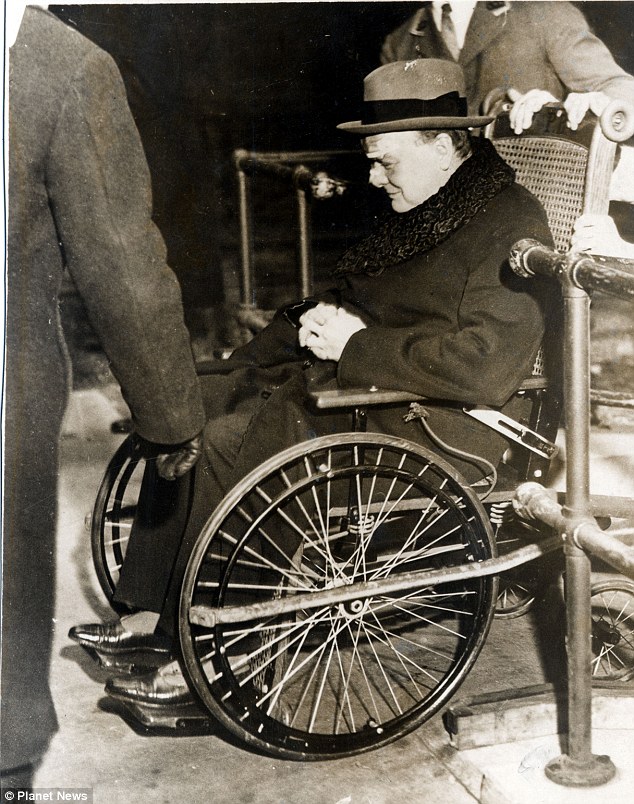
Winston Churchill (wiki)  arrived in the United States for a long (40 stop) lecture tour in December of 1931, and shortly after his arrival was struck by a car while crossing the street. You can read the story here.

A cab carried him off to Lenox Hill Hospital where he was treated for a deep gash to the head, a fractured nose, fractured ribs, and severe shock. Churchill described how the accident came about:
In England we frequently cross roads along which fast traffic is moving in both directions. I did not think the task I set myself now either difficult or rash. But at this moment habit played me a deadly trick.
I no sooner got out of the cab somewhere about the middle of the road and told the driver to wait than I instinctively turned my eyes to the left. About 200 yards away were the yellow headlights of an approaching car. I thought I had just time to cross the road before it arrived; and I started to do so in the prepossession—wholly unwarranted— that my only dangers were from the left.
After two weeks in the hospital, where he managed to develop pleurisy in addition to his injuries, Churchill and his family headed to the Bahamas for some R&R. Six weeks after the accident, he resumed an reduced 14-stop version of the tour, despite his fears that he would prove unfit.

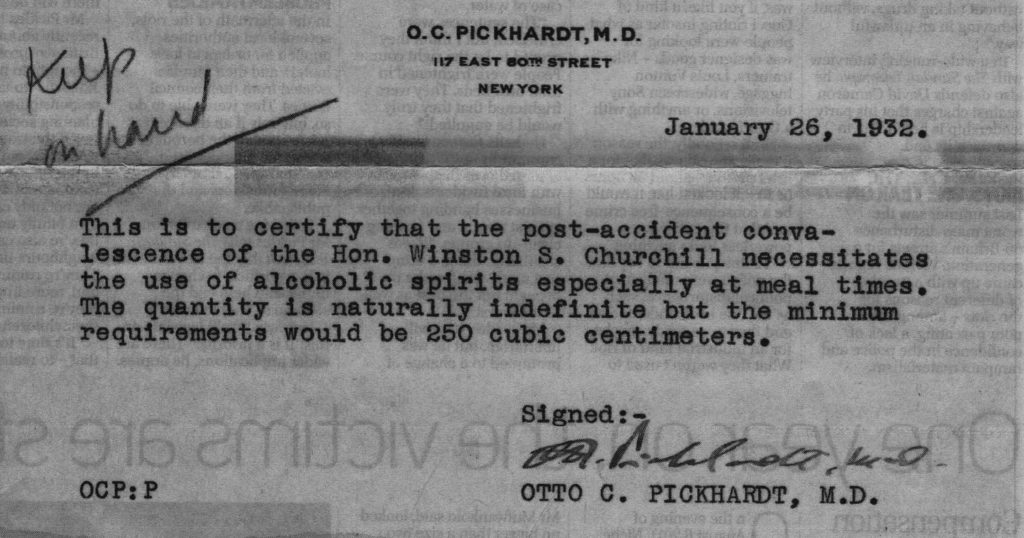
Dr. Otto Pickhardt, Lenox Hill’s admitting physician, came to the rescue by issuing Churchill the Get Out of Prohibition Free Pass, as pictured below. The text:
…the post-accident convalescence of the Hon. Winston S. Churchill necessitates the use of alcoholic spirits especially at meal times. The quantity is naturally indefinite but the minimum requirements would be 250 cubic centimeters.


Read Churchill’s “My New York Misadventure” in its entirety here.

Previous related posts and links:

Prohibition in the United States began on January 16, 1920 and ended on December 3, 1933.

March 5 is the anniversary of Winston Churchill's Iron Curtain speech.

Churchill on Islam, and his "We shall fight on the beaches" speech.

Churchill on governmental redistribution.

Before there was Laffer: Churchill on the fiscal cliff..