"The regiment for the time of Summer, June, July, and August. The shepheards in summer been clothed with light gowns and single, their shirts and sheets that they ly in be linnen, for of all cloath it is the coldest... and they eat light meats, as Chickens with veriuyce, young Hares, Rabbets, Lettise, Purselain, Melons, Gowrds, Cucumbers, Peares, Plumbs... They drink oft fresh water when they be thirsty, save only at dinner and supper time, and then they do drink feebl green Wine, single Beer, or small Ale. Also they keep them from over great travell, or over forcing themselves, for in this time is nothing grievouser than chafing. In this season they eschue the company of women, and they bathe them oft in cold water to asswage the heat of their bodies enforced by labours. Alway they have with them sugarcandy or other Sugar whereof they take little and often."
How to Have a Healthy Summer: Advice from 1656: you'll need to drink feebl green Wine and eschue the company of women.
Operation Acoustic Kitty: (Unsuccessful) Cold War attempt to eavesdrop via transmitters implanted into cats.
"CIA staffers drove Acoustic Kitty to the park and tasked it with capturing the conversation of two men sitting on a bench. Instead, the cat wandered into the street, where it was promptly squashed by a taxi."
ICYMI, Monday's links are here, and include the anniversary of the 1815 Battle of Waterloo (including, of course, a Lego re-enactment), the sport of motor-ball (AKA soccer on motorcycles), prayers to stop a dog from barking, and where to hit someone to do the most damage.
ICYMI, Friday's links are here, and include the science of whiskey flavors, the anniversary of Waterloo (with a Lego re-enactment), the art of Soviet children's literature, and, for Father's Day, a selection of parenting advice from Homer Simpson.
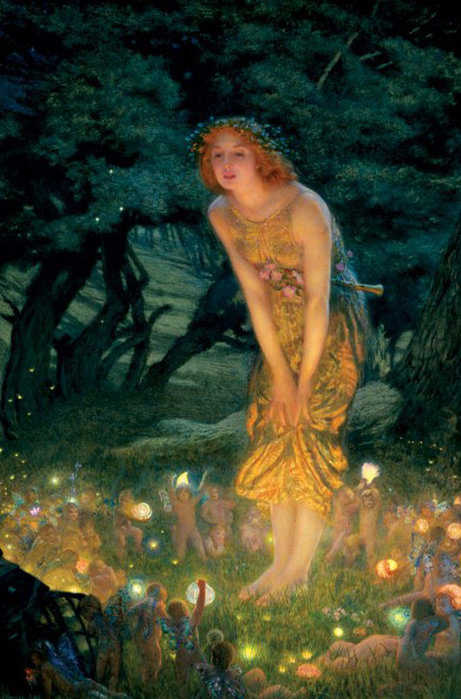
Whatever is dreamed on this night, will come to pass...
Walking around the grocery store on a hot day always reminds me of this Shakespeare quote:
For men, like butterflies, show not their mealy wings but to the summer.
~ Shakespeare, Troilus and Cressida Act III, Scene 3
Therefore the moon, the governess of floods,
Pale in her anger, washes all the air,
That rheumatic diseases do abound;
And through this distemperature we see
The seasons alter: hoary-headed frosts
Fall in the fresh lap of the crimson rose.
~ Shakespeare, A Midsummer Night's Dream, Act II, Sc. 2
And so with the sunshine and the great bursts of leaves growing on the trees, just as things grow in fast movies, I had that familiar conviction that life was beginning over again with the summer.
Today is the summer solstice (wiki): at the solstice (from the Latin solstitium, from sol (sun) and stitium (to stop)), the Earth reaches the point in its orbit where the northern hemisphere is most tilted toward the sun, which puts the latter higher in the sky at noon than at any other time of the year.* This is also the day of the year with the longest daylight period and the shortest night. In prehistoric times, the summer solstice was of great importance to aboriginal peoples. The snow had disappeared, food was easier to find, and crops already planted would soon be harvested in months to come. From then on, however, the days would begin to shorten, indicating the inevitable return of the cold season.
Here's a brief explanation on the mechanics of solstices and equinoxes:
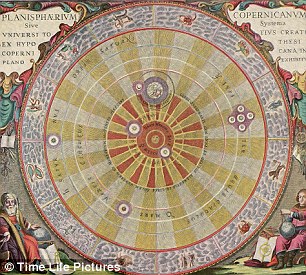
The two revolutions, I mean the annual revolutions of the declination and of the centre of the Earth, are not completely equal; that is the return of the declination to its original value is slightly ahead of the period of the centre. Hence it necessarily follows that the equinoxes and solstices seem to anticipate their timing, not because the sphere of the fixed stars moves to the east, but rather the equatorial circle moves to the west, being at an angle to the plane of the ecliptic in proportion to the declination of the axis of the terrestrial globe.