Amazon Deals

New at Amazon

Showing posts with label music. Show all posts

Friday, September 25, 2026

Composer Dimitri Shostakovich was born September 25, 1906: some quotes, history, and music

I always try to make myself as widely understood as possible; and if I don't succeed, I consider it my own fault.

~ Dmitri Shostakovich (quoted in Machlis, Introduction to Contemporary Music)

The composer apparently does not set himself the task of listening to the desires and expectations of the Soviet public. He scrambles sounds to make them interesting to formalist elements who have lost all taste... The power of good music to affect the masses has been sacrificed to a petty-bourgeois, "formalist" attempt to create originality through cheap clowning. It is a game of clever ingenuity that may end very badly.*

~ Pravda (on the Shostakovich opera Lady MacBeth of Mtsensk, "Muddle Instead of Music," January 1936)

Shostakovich told me: "I finished the Fifth Symphony in the major and fortissimo... It would be interesting to know what would have been said if I finished it pianissimo and in the minor." Only later did I understand the full significance of these words, when I heard the Fourth Symphony, which does finish in the minor and pianissimo. But in 1937, nobody knew the Fourth Symphony.**

~ Boris Khaikin (1904-1978) (Discourses on Conducting)
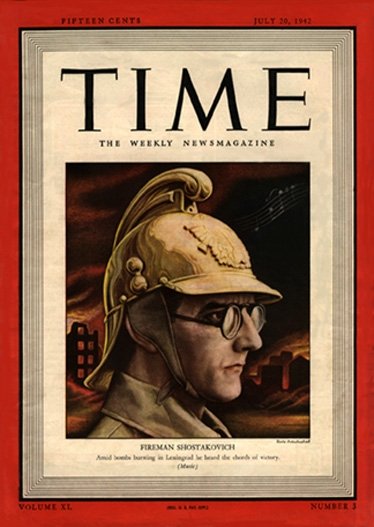
The cover of a 1942 issue of Time Magazine with the
caption "Fireman Shostakovich: 'Amid bombs burning
 in Leningrad, he heard the chords of victory.' Refers to
the Battle of Leningrad in which he served
 as a volunteer in the anti-fire brigades
There may be few notes, but there's lots of music.

~ Shostakovich (on his film music for King Lear; quoted in Wilson, Shostakovich, A Life Remembered)

Particularly during the Cold War, Shostakovich was anathema to many Western critics:

The Fifth Symphony of Shostakovich always has been singularly irritating to this chronicler... Whenever I hear one of his marches, my imagination fastens upon a picture of the parades in Red Square and the banners of Uncle Joe, and my irritation becomes powerful.

~ Cyrus Durgin (? - 1962) (Boston Globe, 25 October 1952)

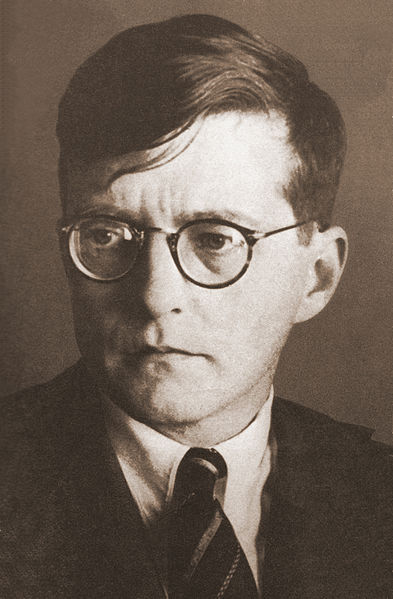
To anyone who knew his music, a first encounter with Dmitri Shostakovich could not fail to be startling. In contrast to the elemental force, bombast, grandeur of his works, he was a chétif*** figure, the perennial student, unassertive and shy, who looked as though all the music could be wrung out of him in a couple of song cycles.

~ Yehudi Menuhin (1916-1999) (Unfinished Journey)

September 25 is the anniversary of the birth of Soviet composer Dmitri Shostakovich (wiki) (1906-1975), considered by some as the greatest symphonist of the 20th century. Born in St. Petersburg, Shostakovich was an early piano prodigy and studied composition at the St. Petersburg Conservatory during the early Soviet era.
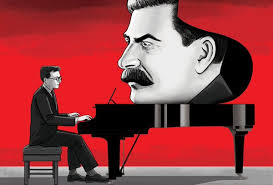
At first recognized internationally as an exemplar of the best of Soviet musicianship, he ran afoul of the regime with his modernistic opera, Lady MacBeth of Mtsensk, which so outraged Stalin that he is said to have had a personal hand in writing the infamous Pravda editorial, "Muddle Instead of Music" that literally put the composer's life in jeopardy during the "Great Purge" of the late 1930s. 

Shostakovich somehow survived, even though he was recurrently criticized by the regime for his “modernist” tendencies. During his subsequent tumultuous career, he produced an enormous oeuvre: 15 symphonies, concertos, a great quantity of chamber music, song cycles, piano music, and several operas. Generally considered a serious - almost tragic - composer, Shostakovich nonetheless wrote a large amount of “light” music, including even a stage work – Moscow Cheryomushki (1959) – that might be described as a Russian musical comedy.

For newcomers to the music of Shostakovich, I would recommend his 4th, 5th, and 10th symphonies, the two piano concertos, the "autobiographical" 8th strinq quartet, his several "jazz" and "ballet" suites compiled from light works of the 1930s, and his film score for The Gadfly, whose "Romance" was used to great effect as the principal theme of the TV series, "Riley, Ace of Spies."


During the last two decades, there has been a raging musicological debate about whether the music of Shostakovich reveals him as a loyal Soviet citizen or a closet dissident whose works portray a tormented man. No one really knows. He was clearly a quirky guy. In contradiction to the opening quotation above, he noted late in life,
"I've said what I said. Either you have it in you to understand, or if not, then it would be fruitless to try to explain anyway."
* N.B. In the first year of the Great Purge, this last sentence was a terrifying threat.

** After the uproar caused by Lady MacBeth of Mtsensk, Shostakovich "redeemed" himself with his Fifth Symphony (1937), designated "A Soviet Artist's Response to Just Criticism," still one of his most successful and popular works. However, his iconoclastic Fourth Symphony, which had been in rehearsal at the time of the debacle, was withdrawn and did not emerge again until 1961. It is now considered one of the master's most original works and a fascinating indicator of "the road not taken." By the way, Boris Khaikin was a Soviet-Jewish conductor.

*** Chétif - a French word meaning "puny."

Here is the romance from The Gadfly:


More typical of Shostakovich is the opening of his 4th symphony:


Parts of the text above are adapted from the late, great Ed Whitman's Quotation of the Day. In addition to being my partner, my best friend, and Grandpa to the many kids who call me Grandma, Ed is also the author of Hunters and Killers: Volume 1: Anti-Submarine Warfare from 1776 to 1943 and Hunters and Killers: Volume 2: Anti-Submarine Warfare from 1943. Fair winds and following seas, Sailor. I miss you.

George Gershwin was born on September 26, 1898 - some quotes, history, and an old video

Today, a great American composer:

The composer does not sit around and wait for an inspiration to walk up and introduce itself ... Making music is actually little else than a matter of invention aided and abetted by emotion. In composing we combine what we know of music with what we feel.
- George Gershwin (quoted in Goldberg, Tin Pan Alley)

Not many composers have ideas. Far more of them know how to use strange instruments which do not require ideas.
- Gershwin (The Composer in the Machine Age (1933))

My people are American, my time is today ... music must repeat the thought and aspirations of the times.
- Gershwin (quoted in Armitage, Accent on America)

Many musicians do not consider George Gershwin a serious composer. But they should understand that, serious or not, he is a composer - that is, a man who lives in music and expresses everything, serious or not, sound or superficial, by means of music, because it is his native language.
- Arnold Schoenberg (1874-1951) (quoted in Kimball and Simon, The Gershwins)

Today is the anniversary of the birth of American composer George Gershwin (wiki) (1898-1937), born Jacob Gershowitz in Brooklyn to Jewish parents of Russian/Ukrainian descent. Gershwin started piano lessons at an early age, left school at 15, first worked as a "song plugger" on Tin Pan Alley, and published his own first song in 1916. Later, while working as a piano-roll arranger, he began a series of Broadway collaborations, leading to his first show with brother Ira Gershwin (1896-1983), Lady Be Good (1924). This was followed by (among others) Oh, Kay! (1926), Funny Face (1927), Strike Up the Band (1927), Show Girl (1929), and Girl Crazy (1930). In 1924, Gershwin also wrote his quasi-classical Rhapsody in Blue for Paul Whiteman's band, and it has remained his most popular work in that vein. That same year, he traveled to Paris, hoping to study composition with Nadia Boulanger or Maurice Ravel - they demurred - but while there he did compose another of his well-known semi-classical works, An American in Paris. Following a brief Hollywood stint, Gershwin wrote his most ambitious work, the "folk opera" Porgy and Bess (1935), based on a novel by DuBose Heyward, and it has been an American classic ever since.* Gershwin's shows became the source of countless popular hits, including "I Got Rhythm," "Strike Up the Band," "Swanee," "Summertime," and "Someone," and his classical compositions raise intriguing questions about "what might have been" had he not been felled by a brain tumor in 1937. On his death, American novelist John O'Hara (1905-1970) wrote,

"George died on July 11, 1937, but I don't have to believe it if I don't want to."

Mark Steyn has an excellent post on Summertime here - very informative and highly recommended!

* N.B. Of Porgy and Bess, American composer Virgil Thomson 1896-1989) wrote,

"Porgy is ... an interesting example of what can be done by talent in spite of a bad set-up. With a libretto that should never have been accepted on a subject that should never have been chosen, a man who should never have attempted it has written a work that has a considerable power."

Rare old footage (I don 't know when this was recorded, but he died in 1937, so a while before that...) of Gershwin himself playing I Got Rhythm:


Wednesday, September 6, 2023

September 7 is the anniversary of the battle of Borodino, on which War and Peace and the 1812 Overture are based

French (blue) and Russian (red) troops
before start of battle. Source.

September 7  is the anniversary of the battle of Borodino (wiki) on 7 September 1812, at which Napoleon's (wiki) Grande Armée grappled bitterly with massed Russian forces defending Moscow under Marshal Mikhail Kutusov (1745-1813)* during Napoleon's invasion of Russia. 

Kutusov suffered significant losses, and the French occupied Moscow a week later, but in a month, Napoleon's disastrous retreat toward the west had begun. As Tolstoy noted in War and Peace,
"The cudgel of the people's war was lifted with all its menacing and majestic might, and caring nothing for good taste and procedure, with dull-witted simplicity but sound judgment, it rose and fell, making no distinctions."
Napoleon's own judgment has become more famous:

"Du sublime au ridicule il n'y a qu'un pas."

(From the sublime to the ridiculous is but a step.)

Here's the rousing cannon-punctuated finale of Tchaikovsky's 1812 Overture:


Tchaikovsky (1840-1893) was commissioned to write that staple of summer pops concerts, the 1812 Overture (actually Ouverture Solennelle 1812, Op. 49), for an exhibition of arts and industries at Moscow in 1881. It was intended to commemorate the battle of Borodino and Napoleon's ultimate defeat.**

* N.B. Earlier, at the battle of Smolensk, Kutusov had noted, "The battle has already been decided. It is like a river that runs downhill. I can only move it slightly to the right or left. But its outcome will not be changed by me."

** During the Soviet era, Russian performances of the 1812 Overture substituted an anonymous chorale-like tune for "God Preserve the Czar," the "Russian hymn" quoted by Tchaikovsky in the original.

A brief documentary:


Related post: the anniversary of the 1815 Battle of Waterloo: history, quotes and video (including a Lego re-enactment)

Parts of the text above are based on the late, great Ed Whitman's Quotation of the Day. Ed was my partner and love for 25 years, and the author of Hunters and Killers: Volume 1: Anti-Submarine Warfare from 1776 to 1943 and Hunters and Killers: Volume 2: Anti-Submarine Warfare from 1943.

Thursday, June 2, 2022

June Is Bustin' Out All Over and the frisky sheep problem


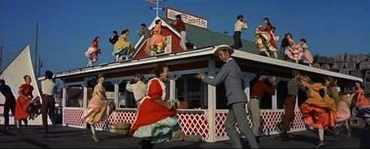
Rodgers and Hammerstein's June Is Bustin' Out All Over was Mark Steyn's song of the week several years ago in early June (and is now completely stuck in my head), and I loved this bit of background information:

Traditional Northern New England roof-dancing
 as captured in Rodgers & Hammerstein's 
Carousel
In Carousel, "June Is Bustin' Out All Over" is, in essence, a paean to the mating season, and so at one point Hammerstein opted for a Maine version of the old joke about singing Gershwin in Wales or the Falkland Islands: "Embrace me, my sweet embraceable ewe." As Hammerstein wrote:

June Is Bustin' Out All Over!

The sheep aren't sleepin' anymore
All the rams that chase the ewe sheep
Are determined there'll be new sheep
And the ewe sheep aren't even keepin' score!
Etc. Everybody working on the show liked it. Then they started holding backers' auditions. And among the potential investors who attended a run-through of the songs was Mr G M Loeb, who subsequently sent Oscar Hammerstein a letter:

I do not think rams mate with ewes in June as they do in your lyrics but I am not really certain. We have been told to keep our rams separate at all times except when the ewes are in heat but we did not follow this precaution and in several years all mating seemed confined to September-October - no mounting whatsoever in June, or if so no results.
To modify a later Hammerstein song, the ewes were more likely to decline every mountin' than to exhibit the enthusiasm shown in "June Is Bustin' Out All Over". With the show slated to open on Broadway in April 1945, the author replied to Mr Loeb:

I was delighted with the parts of your letter praising my work and thrown into consternation by the unwelcome news about the eccentricly frigid behavior of ewes in June. I have since checked your statement and found it to be true. It looks very much as if in the interests of scientific honesty I shall have to abandon the verse dealing with sheep.
Sometimes, as Hammerstein liked to say, research "poisons" your work. And it seems to have done so in this case. But, after giving more thought to the matter, he decided to keep the offending quatrain. Which was just as well. A decade later, when Rodgers & Hammerstein were making the film version of Carousel, the Production Code Administration objected to certain "suggestive" sections and the author found himself running short of lyrics. The censors were relaxed about the four-legged friskiness but drew the line at those lines quoted above about the boys in Augusty feelin' lusty. Strange to think that a mere half-century ago, such a couplet was deemed too sexual for a Hollywood movie. But Hammerstein dutifully rewrote:

June Is Bustin' Out All Over!

The moonlight is shinin' on the shore
And the girls who were contrary
With the boys in January
Aren't nearly so contrary any more
- which the Production Code Administration graciously agreed to permit. As for the embraceable ewes, Hammerstein found himself fending off the occasional sheep breeder over the years and took to justifying himself as follows:

What you say about sheep may all be true for most years, but not in 1873. 1873 is my year and that year, curiously enough, the sheep mated in the spring.

Tuesday, May 19, 2020

The Pig Got Up And Slowly Walked Away

Here's Rudy Vallee:

"You can tell a man who boozes
By the company he chooses"
And the pig got up and slowly walked away:


Lyrics (alternatives here):

PIG GOT UP AND SLOWLY WALKED AWAY

(Music: F W Bowers / Lyrics: Benjamin Hapgood Burt)

Frank Crumit - 1934
Johnny Bond - 1966
Jim Croce - 1975

Also recorded by: Sam Hinton; Rudy Vallee;
Harry Belafonte; Clinton Ford; Acker Bilk.

One evening in October
When I was about one-third sober
And was taking home a load with manly pride
My poor feet began to stutter
So I lay down in the gutter
And a pig came up and lay down by my side

Then we sang "It's All Fair Weather"
And "Good Fellows Get Together"
Till a lady passing by was heard to say
She says, "You can tell a man who boozes
By the company he chooses"
And the pig got up and slowly walked away

Yes, the pig got up and slowly walked away
Slowly walked away, slowly walked away
Yes, the pig got up and he turned and winked at me
As he slowly walked away

I also well remember
One evening in November
When I was creeping home at break of day
For in my exhilaration
I engaged in conversation
With a cab-horse, right on the corner of Broadway

I was filled up to the eyeballs
With a flock of gin and highballs
So I whispered to the cab-horse old and grey
I says, "It's these all-night homeward marches
That gave us both our fallen arches."
And the old horse laughed and slowly walked away

Yes, the old horse laughed and slowly walked away
Slowly walked away, he slowly walked away
And the old horse laughed and he turned and winked at me
As he slowly walked away

Friday, December 13, 2019

Friday links


One of my favorite Christmas stories - 'Twas the Overnight Before Christmas: The Merry Tale of How Air Cargo Deregulation Led To Amazon.

How robocalls became America's most prevalent crime.

Darwin Awards: a cumulative list.

ICYMI, most recent links are here, and include advice from c. 1200 on surviving the winter (spoiler -  lay off the purging and blood-letting, and keep your hands and feet covered in wolf grease), the anniversary of Australia's Great Emu War, the pre-Seinfeld origins of Festivus, and a pairing guide for pop-tarts and fine whiskies.

Friday, September 13, 2019

The Baltimore Symphony Orchestra is going on strike Update 9/13

As some of you know, Ed and I have a double subscription (12 concerts total) to the BSO at Strathmore.

Update 9/13/19:

BSO musicians reject contract offer, jeopardizing season opening; no further talks scheduled

~ Baltimore Sun

BSO Musicians Say They're Not Performing At Meyerhoff Saturday, Reject Both Contract Offers

~ CBS Baltimore

Even record attendance wouldn't turn around the BSO. Other cities' orchestras show what could.

~ Baltimore Sun

Is It Now A Strike And Not A Lockout? Baltimore Symphony Musicians Reject Both Contract Offers

~ ArtsJournal
_____________________________


Press Statement 9-9-2019

Baltimore Symphony Musicians

September 9, 2019

Baltimore Symphony Management intent on cutting season despite offer of $1 million from generous donors.
At 6:59 pm this evening, BSO management issued a “take it or leave it” offer to the BSO Musicians which will be presented to the orchestra for a vote tomorrow evening. The proposal contained wage and benefit cuts of 20%. The federal mediators proposed an extension of negotiations until close of business Thursday. Management rejected the federal mediators proposal. Musicians then suggested an extension until the close of voting by the membership on this final offer. Management rejected that proposal as well.
The Baltimore Symphony Musicians negotiated in good faith throughout the summer. We organized prominent donors to assist in this process. These generous donors brought $1 million designated specifically for musician compensation to help secure a contract. We want to express appreciation from the bottom of our hearts, to these donors for their unwavering commitment. It is incredibly disheartening that BSO leadership would fail to embrace this offer of help from some of Baltimore’s leading philanthropists.
Where do we go from here? The musicians will continue the fight to preserve our 103-year old institution, which serves the City of Baltimore, the surrounding counties and the State of Maryland. We stand ready and willing to get back to the negotiating table to achieve an agreement that will enable us to continue to attract and retain the highest quality musicians to perform for our audiences.
This is a dark day in the history of the Baltimore Symphony Orchestra. Over the past three months the musicians have each lost over $20,000 in salary, with more to come. This dispute isn’t just about money. It is also about respect, respect for the quality of the musicians on stage, respect for generations of Marylanders who have built this orchestra and for the thousands of people who have bought tickets and have donated to this venerable institution.
Contact: Co-Chairs Baltimore Symphony Musicians
Greg Mulligan (410) 979-0208 opus95gm@gmail.com
Brian Prechtl (410) 935-7322 bprechtl.1962@yahoo.com
Instagram: https://www.instagram.com/baltimoresymphonymusicians/                                    

Tuesday, July 30, 2019

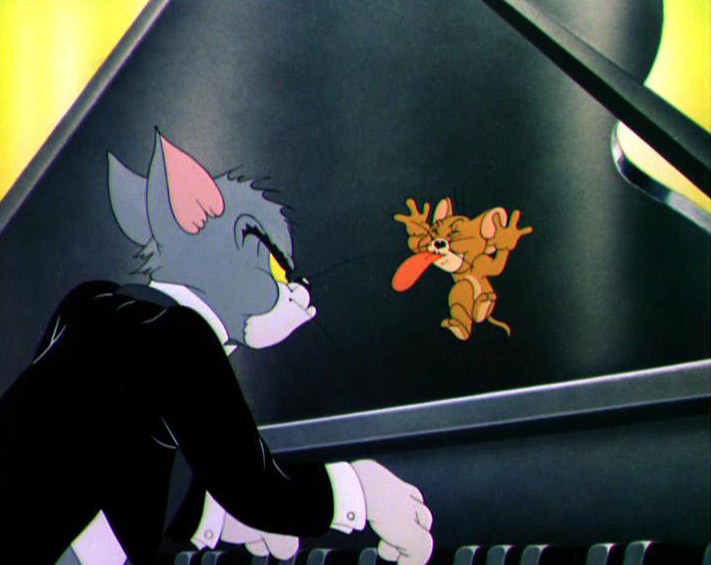
The Tom and Jerry Concerto

The Tom and Jerry cartoon The Cat Concerto (wiki) has Tom giving a concert performance of Franz Liszt's Hungarian Rhapsody No. 2, which Jerry keeps interrupting. 

The same year (1947) that MGM produced The Cat Concerto, Warner Bros. released a very similar Bugs Bunny cartoon (see below) called Rhapsody Rabbit (wiki), with Bugs against an unnamed mouse. Both shorts used near identical gags, the same piece by Franz Liszt, and had similar endings.

Here's 16 year old pianist Yannie Tan:


Rhapsody Rabbit - I can't find a better version - please share if you find one. 


Related: Yannie Tan plays Snowbody Loves Me - Tom and Jerry - A Chopin Medley:


Piano arranged version of the following pieces by Frederick Chopin:
- Grande Valse Brillante in E-flat major
- Étude Op. 25, No. 9 in G-flat major
- Fantaisie-Impromptu in C♯ minor Op. posth. 66
- Scherzo No. 2 In B-Flat Minor Op. 31

Friday, July 12, 2019

Friday links

July 14 is Bastille Day, the anniversary of the French revolution in 1789.


That Time When America Air-Dropped Pianos For Troops in Battlefields.


Julius Caesar came. He saw. He conquered. Here's how Rome celebrated.


ICYMI, most recent links are here, and include why monkey butts are so colorful, Nikola Tesla's birthday, how to buy your kid's way into college, and the 47 names Disney considered for the 7 dwarfs.

Sunday, July 7, 2019

July 9 is Nikola Tesla's birthday: bio, Tesla coil music, Tesla vs Edison rap battle

Want a quick explanation of everything Tesla? Check out this infographic at The Oatmeal.

Epic Rap Battles of History — Nikola Tesla vs Thomas Edison:


The video below is based on stories about Tesla's lost papers and documents, about how the government secreted them away somewhere: The Missing Secrets Of Nikola Tesla from The Phenomenon Archives (described as "A documentary series that takes an in-depth look at the topics found in recently de-classified government documents. It explores well-known issues with new information that has been sequestered from the public"):


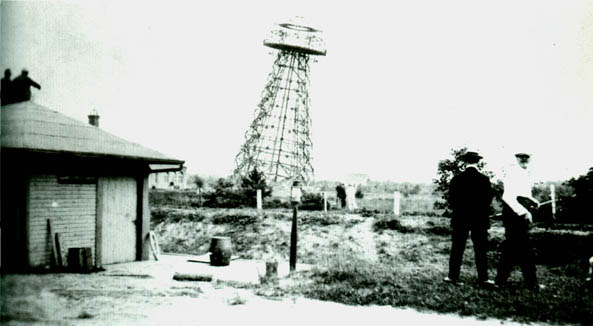
Wardenclyffe, Tesla's Long Island estate, was originally intended to be “a vector for trans-Atlantic wireless communications, broadcasting, and wireless power. The site consisted of an (incomplete) 18-story-high transmission tower that topped off a laboratory surrounded by 16 acres of land in Shoreham, Long Island in 1903. 

By 1917, Tesla had sold the site for $20,000 to pay bills at the Waldorf. That same year, the transmission tower was blown up by the buyers and sold for scrap. 

In 2013 it was purchased by a non-profit for the purpose of building a Tesla museum, with the help a fund-raining effort from The Oatmeal. Here's an NPR story on the purchase. More on Wardenclyffe and the likely methods employed in its operation here.

A brief bio:

July 9 is the anniversary of the birth of Serbian-American electrical-engineering genius and futurist Nikola Tesla (1856-1943) (wiki), to a Serbian-Orthodox priest in Croatia. Tesla displayed remarkable intuition for mechanical and electrical phenomena while still a youth, and although he studied physics sporadically in Graz and Prague, he was largely self-taught in scientific and engineering subjects. 

In 1881. he began working at the Budapest Telephone Exchange as a technician, but within a year he transferred to an Edison subsidiary in France, designing electrical equipment. Two years later, he relocated to New York City, where he worked directly for Thomas Edison but resigned several years later in a dispute over pay. 

Subsequently, Tesla moved out on his own, eventually forming a company to commercialize his own inventions for the improvement of electric motors and generators operating largely on alternating current (vice Edison's direct current). Most importantly, he invented the concept of polyphase alternating-current power systems and the AC induction motor, which used a rotating magnetic field to propel the rotor. 

In 1888, Tesla licensed his patents to George Westinghouse, who used them to devise alternating-current alternatives to Edison's DC systems for generating and distributing electrical power, and eventually alternating current prevailed as the national standard.* 

In 1891, Tesla became an American citizen and established his own laboratory in New York City to work on a wide variety of electrical developments, including X-ray technology, radio, and high-voltage/high-frequency apparatus. Among the latter was the "Tesla coil," a device for developing extremely high voltages and creating spectacular displays of artificial lightning. 

In 1899, he moved his operations to Colorado Springs and concentrated on devising a system for the wireless transmission of electrical power through the atmosphere (but never realized it at a practical level). He also developed concepts for vertical takeoff/landing aircraft, remote controlled vehicles, and an early directed energy weapon. He ultimately received nearly 300 patents for his discoveries. 

Since Tesla had sold his most lucrative patents to Westinghouse and plowed what money he earned later into further experimentation, he died in relative poverty in 1943. Although vastly overshadowed by Edison in the popular imagination, it was Tesla who was primarily responsible for the concepts underlying the electrical power grids used world-wide today.

Alternating Current (AC) vs. Direct Current (DC)
*The great advantage of alternating over direct current in power distribution is that the former can make use of transformers to step the voltage up and down, and high voltage is much more efficient for sending electrical power over long distances.

Friday, March 22, 2019

Friday links

March 22nd is William Shatner's birthday: here he is in 1978 'singing' Rocket Man, plus a Star Trek/Monty Python mashup. Related: a 1968 memo to Gene Roddenberry re Shatner's disappearing wigs from Star Trek set.


A meteor exploded over Earth with 10 times the energy of Hiroshima's atomic bomb. Nobody saw or was even aware of the fireball that exploded above the Bering Sea on December 18, 2018 -- until now.


Where Did the Phrase 'Red Herring' Come From?

ICYMI, Monday's links are here, and include making ice cream 2,000 years ago, how sound effects are made in movies (and in old-time radio), when women started wearing makeup, and the test NASA gave potential astronauts in 1958.

Thursday, January 24, 2019

Thursday links

This Bill of Mortality shows the death tally of all city parishes in London for the week of Aug 15 - 22, 1665. The Plague is the number 1 cause of death, followed by various fevers, consumption, and Griping in the Guts.

From 1822 - Kite-Drawn Carriages.

A short history of the master bathroom.

Scorpions are almost always milked by hand, which is why their venom is worth $39 million per gallon.


How Much Money Do You Save by Cooking at Home?

ICYMI, Monday's links are here, and include Stonewall Jackson's birthday (and his left arm's separate grave),  how duct tape is made, life in ancient Mongolia, Britain's worst ice skating accident,(which left 41 dead), and that time the doctors pumped 15 cans of beer into a patient's body.

Thursday, August 30, 2018

"In your satin tights, Fighting for your rights": the theme song from the old 70's era Wonder Woman series

From the Wonder Woman TV series, not the recent movie. They just don't write lyrics like that anymore, do they? The entire set is below.

Here's the intro (with the song):


And a "mix" video:


The lyrics:

Wonder Woman!
Wonder Woman!

All the world is waiting for you,
And the powers you possess,
In your satin tights,
Fighting for your rights,
And the old red, white and blue!

Wonder Woman!
Wonder Woman!

Now the world is ready for you,
And the wonders you can do.
Make a hawk a dove,
Stop a war with love,
Make a liar tell the truth!

Wonder Woman!
Get us out from under.
Wonder Woman!
All our hopes are pinned upon you,
And the magic that you do.
Stop a bullet cold,
Make the Axis fold,
Change their minds,
And change the world!

Wonder Woman!
Wonder Woman!
You're a wonder!
Wonder Woman!

Smithsonian has an excellent article: The Surprising Origin Story of Wonder Woman, which includes, as one of the illustrations, this:


In case you have trouble reading it, it reads:

With my speculum,
I am strong!
I can fight!

Friday, July 13, 2018

Friday links

Apocalypse alert: supermoon, solar eclipse and Friday the 13th. Paraskavedekatriaphobia: Why is Friday the 13th Considered Unlucky?

July 14 is Bastille Day. Here's Jonah Goldberg's classic article on the subject: The French are Revolting.

A Brief History of Trial by Combat.

Supercut: 100 Greatest One-Liners Before The Kill.

Mozart’s Much Less Family Friendly Works (Some NSFW language - apparently his sense of humor had a scatological component).


ICYMI, Thursday's links are here, and include the 19th century fight over Sunday mail delivery, the art and science of creating ice in the desert 2,000 years ago, sporting pastimes from the Georgian era, and some male contraceptive advice (just wear a polyester sling, and let the heat and electrostatics do all the work), with bonus Monty Python.

Sunday, May 6, 2018

Check out the carving on this instrument - a medieval guitar later converted into a violin

From the British Museum's Twitter feed:

Thursday, April 26, 2018

Happy Birthday Duke Ellington

When it sounds good, it is good.

~ Duke Ellington (wiki) (program notes to Such Sweet Thunder, 1957)

I have a mistress. Lovers have come and gone, but only my mistress stays. She is beautiful and gentle... She is a swinger. She has grace. To hear her speak, you can't believe your ears. She is ten thousand years old. She is as modern as tomorrow, a brand new woman every day, and as endless as time and mathematics. Living with her is a labyrinth of ramifications. I look forward to her every gesture. Music is my mistress, and she plays second fiddle to none. 

~ Ellington (Music is My Mistress, 1973)

The three greatest composers who ever lived are Bach, Delius, and Duke E Ellington. Unfortunately, Bach is dead, Delius is very ill, but we are happy to have with us today the Duke. 

~ Percy Grainger* (quoted in Bird, Percy Grainger)

Outside of the intrinsic artistic value of his music (which is, of course, the most important thing about Ellington), I think his contemporary impact on American culture was at least as much a social one as an aesthetic one. He was the first black man who was widely perceived as a serious and significant artist in white America, and his success in vaulting over that barrier of perception was a source of immense collective pride in black America. It was exactly what he set out to do, too, which is one of the reasons why he went to such lengths to cultivate his image as a man apart from the common run of jazz bandleaders—black and white alike. 


April 28 is the anniversary of the birth of American jazz pianist and composer Edward Kennedy ("Duke") Ellington (1899-1974) (wiki) (official website) in Washington, D.C. One of the most influential figures in the history of jazz, Ellington established his reputation at the Cotton Club in New York City between 1927 and 1932 and toured Europe with his band in the late 1930s, setting an unprecedented standard for jazz performance and improvisation.

Over the course of a 50-year career, he wrote more than 6,000 compositions which span the spectrum from jazz to "serious" and sacred music and include such standards as Mood Indigo, Sophisticated Lady, Solitude, and Black, Brown, and Beige. 

Often credited to the Duke but actually a couplet by Irving Mills from one of Ellington's favorite numbers, is a phrase that well describes his philosophy of music-making:

"It don't mean a thing
If it ain't got that swing."

Here he is playing that song:


* N.B. Quirky Australian-born composer Percy Grainger (1882-1961) is remembered largely for popular light-classical works such as Over the Hills and Far Away and Handel in the Strand. His ranking of watery English composer Frederick Delius (1862-1934) - whose music never rises above mezzo forte - with Bach and Duke Ellington boggles the mind.

Here's a short (4 minute) bio from the Biography Channel:


And here are the Duke and John Coltrane in Ellington's "In A Sentimental Mood":


If you're looking for a good biography of the Duke, I highly recommend Terry Teachout's excellent Duke: A Life of Duke Ellington. The author has provided an excerpt here.    

Thursday, March 15, 2018

Thursday links

Beware - It's the Ides of March. Related: when Julius Caesar was kidnapped by pirates, he insisted on a higher ransom.

A brief history of hair transplants.

The Hidden History of Bathing in Soup Broth.

RIP Stephen Hawking: a brief bio and the Hawking vs Einstein rap battle.

What Are Antibiotics Made Of?

These Photos Captured What Happened When the United States Started to Ration Shoes During WWII.

ICYMI, Wednesday's links are here, and include the woman who thought she was married to Napoleon, finding a universal translator for old computer files, and, for Albert Einstein's birthday, the story of the strange post-mortem travels of his brain.

Monday, January 29, 2018

Monday links

"A woman drove me to drink, and I never even had the courtesy to thank her": It's W.C. Fields' birthday: quotes, a brief biography and film clips.

Goldman Sachs president's personal assistant stole $1.2 million worth of his boss's wine, then embarked on a world tour while the FBI tracked him. But who was he before?

The crimes that changed history.

Advice from ancient Greece: Need Your Livestock to Breed? Reach for the Spice Cabinet.


Is music universal? The Norwegian group Messaging Extraterrestrial Intelligence (METI) is beaming binary-coded music at one potentially life-friendly exoplanet 12 light-years away. 

ICYMI, Friday's links are here, and include Australia Day, the science of why swearing reduces pain, that time the Soviet Union paid Pepsi in warships, and the anniversary of the Soviet Army liberation of Auschwitz.

Thursday, September 14, 2017

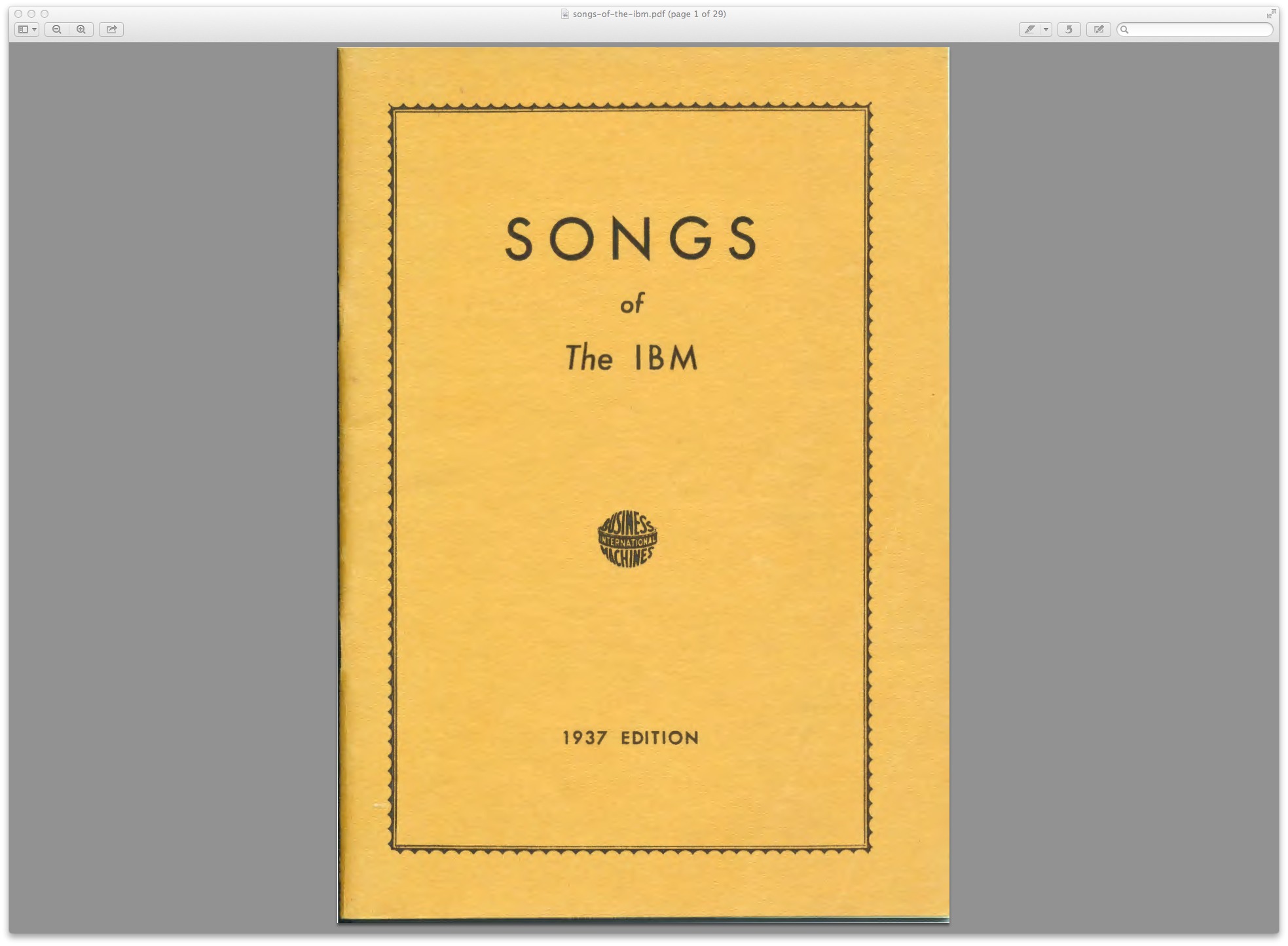
IBM’s 1937 corporate songbook is something of a hoot

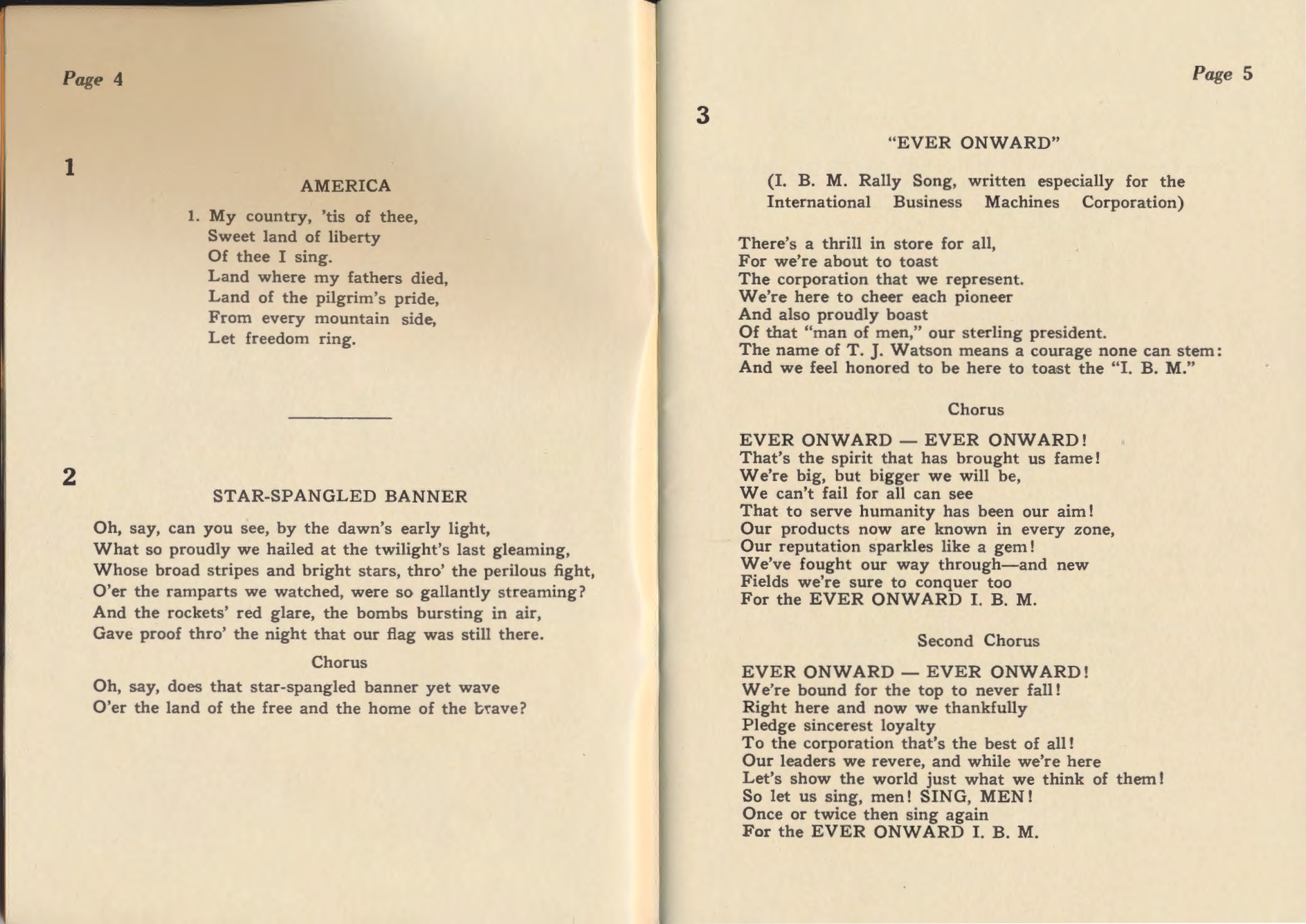
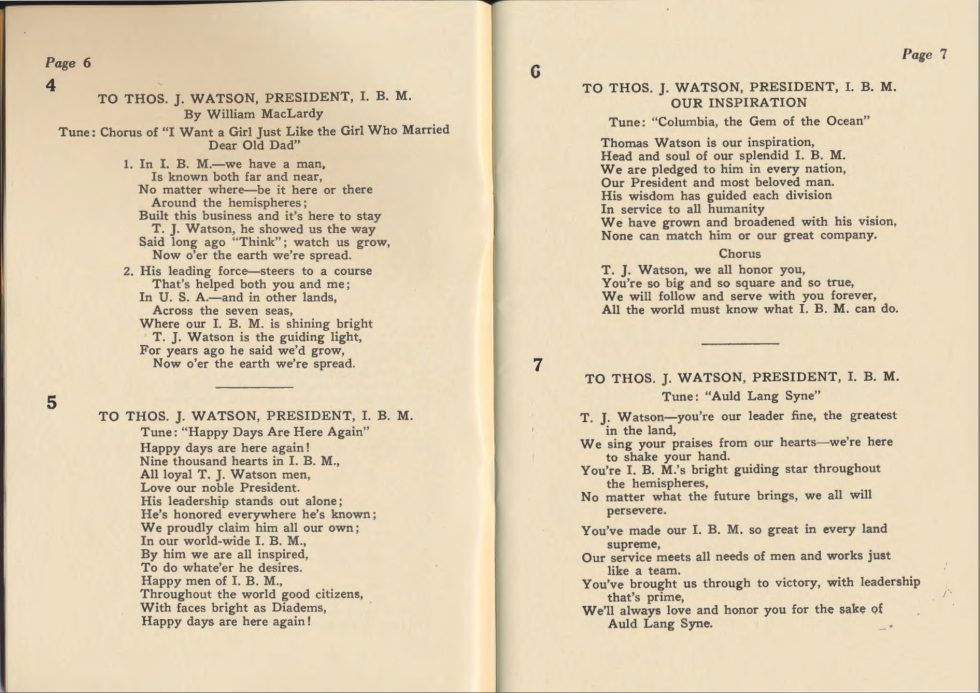
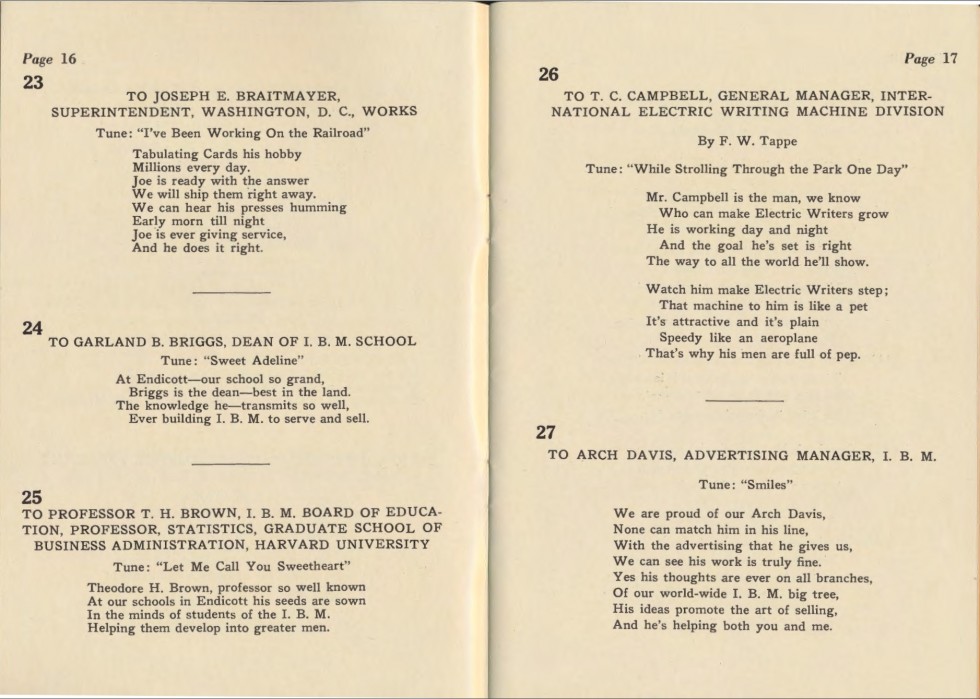
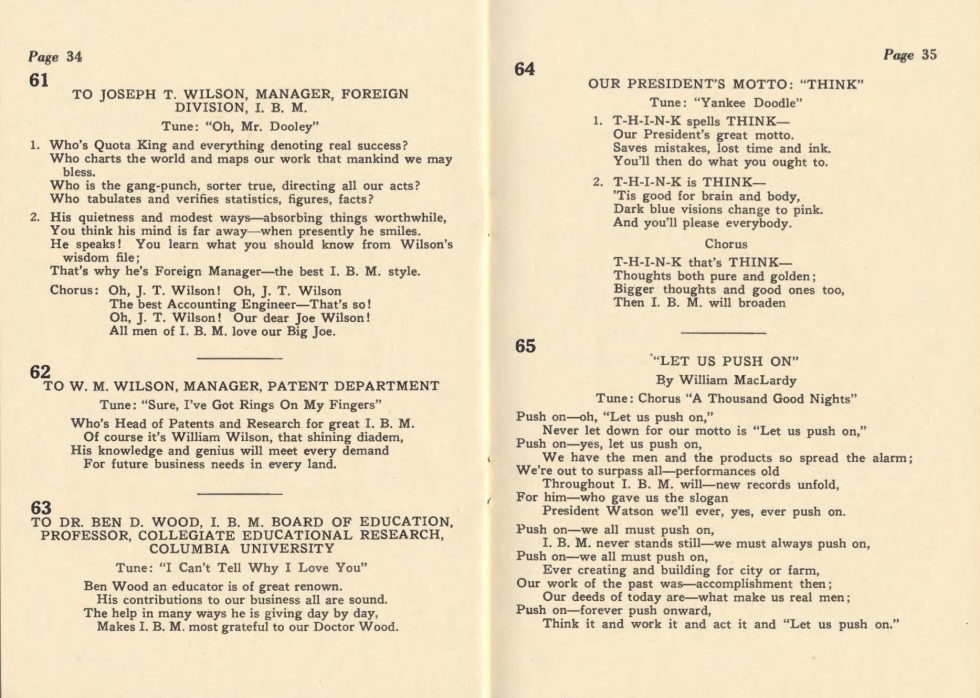
A bit of IBM history: "For thirty-seven years," reads the opening passage in the book, "the gatherings and conventions of our IBM workers have expressed in happy songs the fine spirit of loyal cooperation and good fellowship which has promoted the signal success of our great IBM Corporation in its truly International Service for the betterment of business and benefit to mankind."

TO THOS. J. WATSON, PRESIDENT, I. B. M. OUR INSPIRATION

Tune: "Columbia, the Gem of the Ocean" 

Thomas Watson, Sr.
Thomas Watson is our inspiration, 
Head and soul of our splendid IBM. 
We are pledged to him throughout all nations, 
He’s our President and most beloved man. 
His great wisdom has guided each division 
In such service to all humanity 
That we all unite to make this one decision, 
None can match him or our worldwide company. 

Chorus 

T. J. Watson, we all honor you, 
You’re so big and so square and so true, 
We will follow and serve with you forever, 
All the world shall know what I. B. M. can do.

Computing-Tabulating-Recording Company, the
 precursor to IBM, was founded on June 16, 1911
OTTO E. BRAITMAYER, VICE-PRESIDENT I. B. M. 
Tune: "Tipperary" 

We adore you, Otto Braitmayer 
Our great pioneer, 
You’re a wise and able leader. 
And you always are sincere. 
You’re our President’s right bower- 
Our Manufacturing Guiding Star,
I. B. M. will honor you forever 
Vice-President Braitmayer.

OUR I. B. M. SALESMEN 
Tune: "Jingle Bells"

I. B. M., Happy men, smiling all the way. 
Oh what fun it is to sell our products night and day. 
I. B. M., Watson men, partners of T. J. 
In his service to mankind-that’s why we are so gay.

I've pasted a few pages below, but the full version of the 1937 songbook is available as a PDF here and a plain text version of the the 1935 songbook is here - I haven't compared them but assume that they're largely (if not entirely) identical. There's a .wav version of the official IBM theme song, Ever Onward, here and more music clips here.

As an aside, my mom worked as a secretary for Tom Watson Sr. at IBM during WWII while they were making munitions - once the war was over all of the women were fired to make jobs available for the returning "boys".


More at Ars Technica, Business Insider and the links above.

Tuesday, August 8, 2017

RIP Glen Campbell - here's his heartbreaking Alzheimer's-related song : "I'm Not Gonna Miss You"

From his website:

Glen Travis Campbell 1936-2017
It is with the heaviest of hearts that we announce the passing of our beloved husband, father, grandfather, and legendary singer and guitarist, Glen Travis Campbell, at the age of 81, following his long and courageous battle with Alzheimer's disease.
Glen is survived by his wife, Kim Campbell of Nashville, TN; their three children, Cal, Shannon and Ashley; his children from previous marriages, Debby, Kelli, Travis, Kane, and Dillon; ten grandchildren, great- and great-great-grandchildren; sisters Barbara, Sandra, and Jane; and brothers John Wallace “Shorty” and Gerald.
In lieu of flowers, donations can be made to the Glen Campbell Memorial Fund at BrightFocus Foundation through the CareLiving.org donation page.
From 2014: After being diagnosed with Alzheimer's in 2011, 78 year-old country music singer/songwriter Glen Campbell recorded the footage in this music video (other than the old videos, of course) as his disease progressed; the final sessions are from last year (2013). Currently in stage 6 of the disease, he's been living in a full-time care facility in Nashville since March of this year.


Part of the lyrics he sings to his wife, Kim:

You're the last person I will love
You're the last face I will recall
And best of all, I'm not gonna miss you.
Not gonna miss you.

I'm never gonna hold you like I did
Or say I love you to the kids
You're never gonna see it in my eyes
It's not gonna hurt me when you cry

I'm never gonna know what you go through
All the things I say or do
All the hurt and all the pain
One thing selfishly remains

I'm not gonna miss you

Here's the Alzheimer's Association website, and here's more on Campbell and his Alzheimer's.